SPECS Optical Facade Award of Excellence
Alchemy Architects Sh…
SPECS Optical Facade Award of Excellence
Alchemy Architects Shrubbery shrouded this 100-year-old building’s façade and local signage regulations kept its owners, SPECS Optical in Minneapolis, from installing a sign that could be seen from behind the bushes. Alchemy Architects in neighboring St. Paul, Minn., devised a high-tech solution that keeps the existing structure’s facade intact while alerting passers-by to the goings on inside: a 5/8-inch-thick rigid crystalline envelope made out of triple-layered greenhouse polycarbonate, shaped into protruding, self-supported triangles. Read
ARCHITECT magazine’s project coverage
here.
AIA California Council
Mobile Dwelling Unit Award of Excellence
SPACEFLAVOR Thi…
Mobile Dwelling Unit Award of Excellence
SPACEFLAVOR This
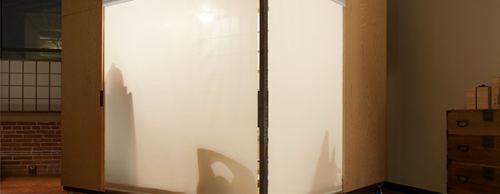
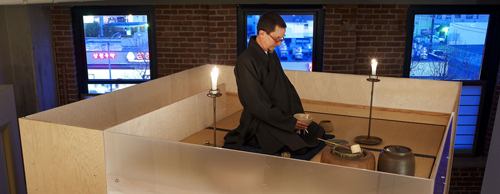
mobile unit balances (and rebalances) the yin and yang uses of one feng shui practitioner’s 1,100-square-foot, Oakland, Calif., industrial loft in which he lives and holds classes. The 8-foot-by-8-foot cube sequesters the space needed for personal activities (sleeping, studying, and meditating) with wheels that allow it to be reoriented in different directions concurrent with the Chinese calendar or to be closed up and moved over when a class is held. The cube, which was designed by architecture, interior design, and feng shui specialists SPACEFLAVOR, features components that were prefabricated to come apart and fit through a 3-foot-wide door.
AIA California Council
SPACEFLAVOR'S Mobile Dwelling Unit
OS House Award of Excellence
Johnsen Schmaling Architects LEED…
OS House Award of Excellence
Johnsen Schmaling Architects LEED Platinum-certified and with a view of Lake Michigan,
OS House in Racine, Wis., encompasses a series of outdoor and indoor spaces in a single rectangular volume. Thin concrete panels function as a rainscreen and help create an 8-inch-deep ventilated, insulated envelope, transforming into a veil of metal rods in the outdoor rooms that maintain the view but also define the spaces’ boundaries. Photovoltaic roof laminates couple with a freestanding solar array to produce 80 percent of the home’s power, supplemented by a deep-well geothermal system.
Johnsen Schmaling Architects' OS House.
Saint Nicholas Antiochian Award of Excellence
Marlon Blackwell…
Saint Nicholas Antiochian Award of Excellence
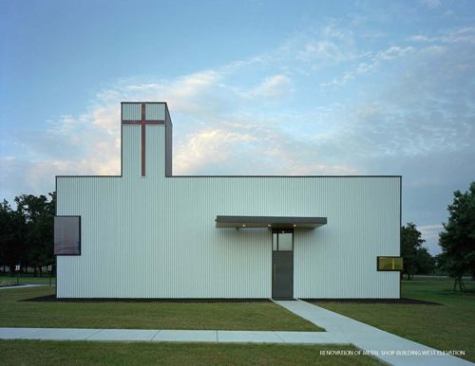
Marlon Blackwell Architect An old metal workshop in Springdale, Ark., is the framework for an Eastern Orthodox church that with the addition of a small tower, box-ribbed metal panels, and an out-of-use satellite dish (sanctuary dome), came in at a total project cost of $100 per square foot. The space measures 3,052 square feet at ground level and includes a 720-square-foot mezzanine. All that was enough for it to
win a design award from our sister publication ARCHITECT magazine in 2010, and helped the firm
earn a spot on ra’s list for last year’s leadership awards.
Ghost Houses Award of Excellence
Curb The
Ghost Houses in Kno…
Ghost Houses Award of Excellence
Curb The
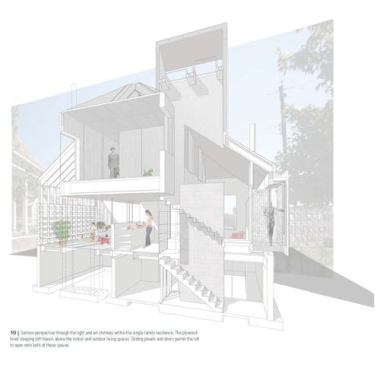
Ghost Houses in Knoxville, Tenn., proved as much a lesson in reconfiguring historical notions of a blighted urban infill lot as it was one in jockeying local zoning codes via permission requests, meetings, and public hearings. The result? Two additional structures on either side of an existing duplex home on a corner lot, proposed and built by architect/clients Tricia Smith and Ted Shelton of
Curb. The project includes two affordable rental units, an office/studio, and a new home.
Bercher House Award of Excellence
Robert M. Gurney Architect B…
Bercher House Award of Excellence
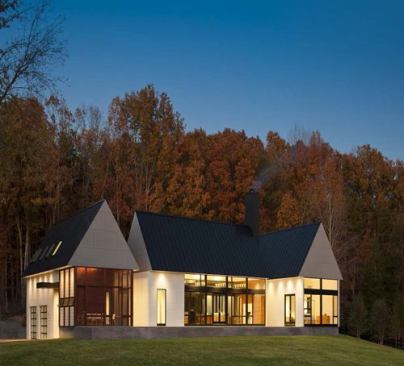
Robert M. Gurney Architect Becherer House in Charlottesville, Va., was designed by Robert M. Gurney Architect and offers views of the Albemarle County, Va., countryside and a wooded area via two glass walls in the central living area—a construction that also allows for ample natural light. A screened porch and bluestone terrace run the length of the house, and join the standing seam black metal gable roofs and clapboard siding for a contemporary rural aesthetic.
L Residence Award of Excellence
Min|Day This Omaha, Neb., pent…
L Residence Award of Excellence
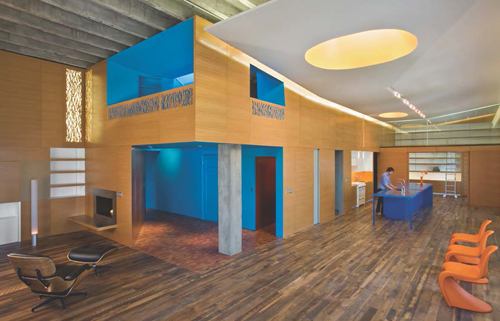
Min|Day This Omaha, Neb., penthouse apartment makes visual use of physical “pockets” of space to hide service areas. Because the space had 15-foot ceilings but small, low windows, Min|Day conceived of a design that pushed the utilitarian spaces together into a two-story pocket, forming an open L-shaped interior that allows the living space to function as a “pseudo exterior” partially framed by a smooth, wood-veneer wall.
Shade Platform Award of Merit
SmithGroup JJR An extension of a…
Shade Platform Award of Merit
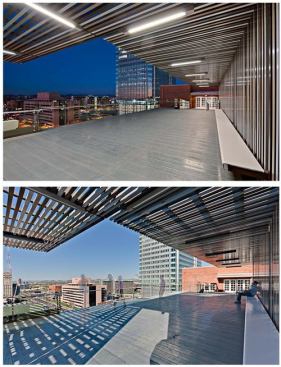
SmithGroup JJR An extension of a re-roofing project for the Maricopa County Security Center Building in Phoenix, SmithGroup’s Shade Platform incorporates an elevated deck that offers contrast with the historical structure’s roof while providing a shaded area in a sun-drenched urban environment. A steel frame was built to span the existing roof deck and ties into existing structural supports, completed with structural steel planks and glass rails; colored aluminum tubes were distributed randomly on the south and west edges for added depth.
Stacked Cabin Award of Merit
Johnsen Schmaling Architects
Sta…
Stacked Cabin Award of Merit
Johnsen Schmaling Architects
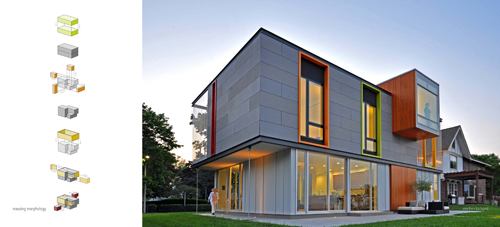
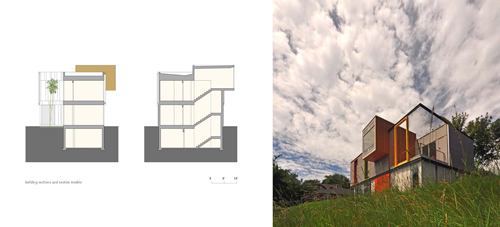
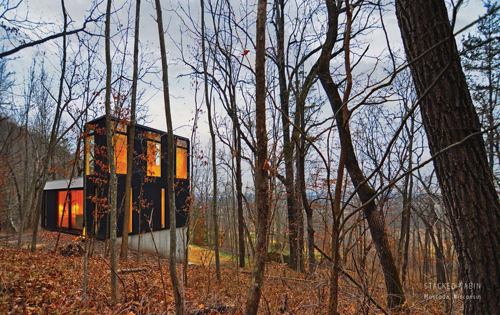
Stacked Cabin sits on a wooded, sloped site at the end of an old logging road in rural southwest Wisconsin. Rather than incorporating the open floor plan typical of regional cabin design, however, the architects stacked the spaces (living space, bathroom, toolshed) to minimize the building’s physical footprint. The bottom level supports the first floor, which includes an open living room, galley kitchen, and small bedrooms separated by movable curtains. Large windows can be transformed into screened openings, making the living space an outdoor room in the summer.
Yao_Residence Award of Merit
Perimeter Architects Yao_Residenc…
Yao_Residence Award of Merit
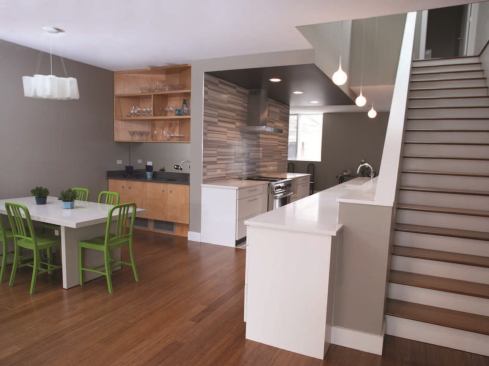
Perimeter Architects Yao_Residence sits 30 feet from a major rail-transit hub on Chicago’s north side, a proximity that required attention to sound, views, and opportunities to incorporate natural light. The 3,000-square-foot wood-framed single-family structure’s west wall, which faces the tracks, was fitted with a standing seam metal panel cladding and filled with open-cell spray foam insulation to buffer noise. The wall was limited to one 6-foot-squared deep set window, with existing skylights offering additional natural light and ventilation. Architects added a “slice” to the existing roof to offset weight from a weak wood frame and hide mechanical equipment.
Cape Russell Retreat Award of Merit
Sanders Pace Architecture &…
Cape Russell Retreat Award of Merit
Sanders Pace Architecture The architects designed and oversaw construction on a 176-square-foot
lakeside pavilion in Sharps Chapel, Tenn., crafted to be an off-the-grid weekend getaway that features integrated water reclamation and photovoltaic technology. A secondary skin of 2×4 vertical cedar boards backed with an insect screen, offering visual transparency and passive cooling, is able to be attached via tabs on the lightweight steel structure. An 8-foot-by-8-foot sliding screen panel offers easy access to the waterfront while a cedar butterfly roof collects and directs rainwater to a cistern beside the pavilion.
The AIA’s Small Project Practitioners (SPP) Knowledge Community hosts an annual design competition for projects that are less than 5,000 square feet. The competition is open to all architects registered in the United States who are invited to enter any building type or architectural element, including residential. New projects as well as renovations and additions are welcome. According to the competition description, the program “strives to raise public awareness of the value and design excellence that architects bring to all project types…no matter the limits of size and budget.”
Categories have been revised this year to offer divisions by project budget and type. New categories include objects or details designed and built for less than $150,000, unbuilt projects, and small projects largely fabricated or built by the designing architect. The deadline for all submissions is before 5 p.m. Eastern time on Nov. 12.