

Charles Mayer Photography
Environmental regulations made permeable landscaping a requireme…
Landscape architect Isabelle Greene of Isabelle Greene & Associates, Santa Barbara, Calif., is fond of paved driveway strips with a grass or thyme median. And as a versatile masonry alternative, she says crushed granite has a nice way of packing, making it easy to walk and drive on. “I’m not a neatnik and I generally don’t believe in edging,” Greene says. “When I use a crushed granite path next to plants, I let the plantings encroach so there’s a soft edge.”
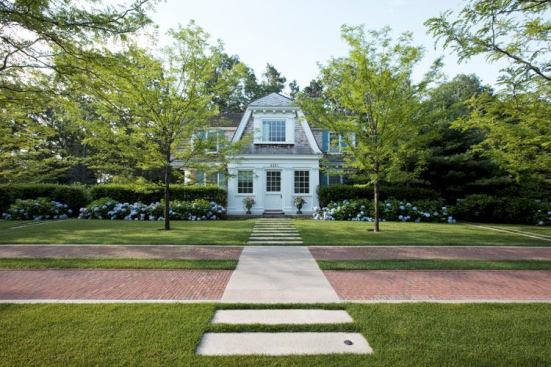
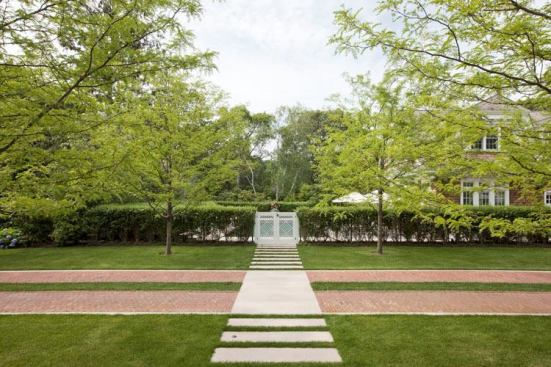
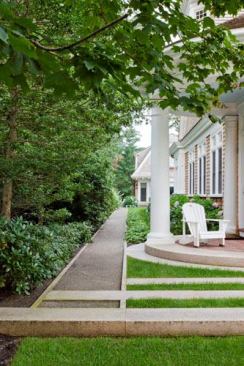
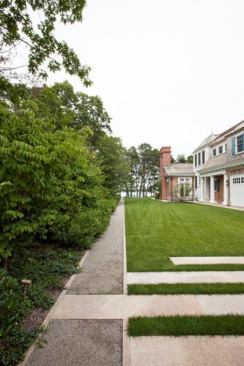
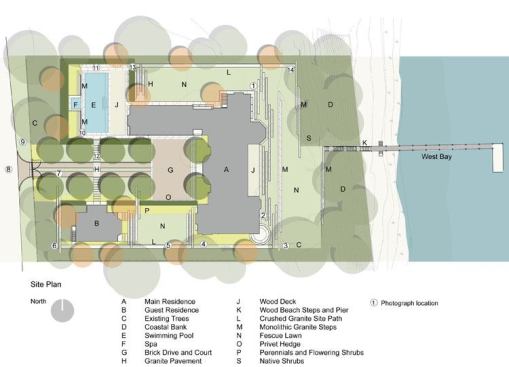
Joseph Wahler, senior landscape architect at Stephen Stimson Associates Landscape Architects in Falmouth, Mass., speced crushed granite walkways for a recent project on Cape Cod. The 1-inch-deep crushed granite was installed over an 8-inch base of ¾ -inch stone. A matching flush granite curb, 3 inches wide and 12 inches deep, creates a solid permanent edge that suits the estate’s formal layout. “You want to spec crushed granite rather than decomposed granite, which uses a chemical process that can darken the color,” Wahler advises. “Color is chosen based on the parent material.”
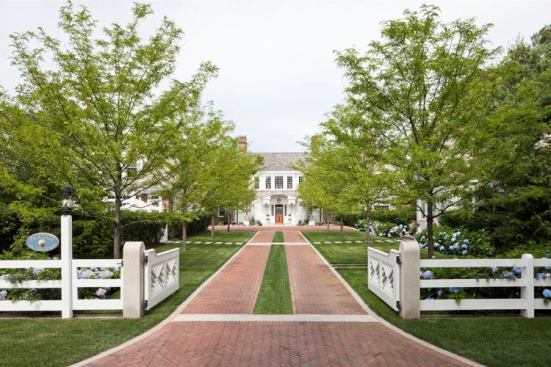
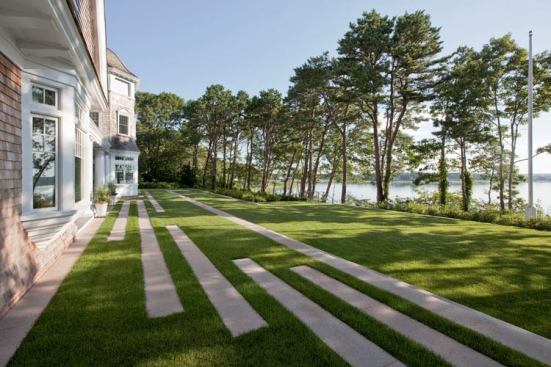
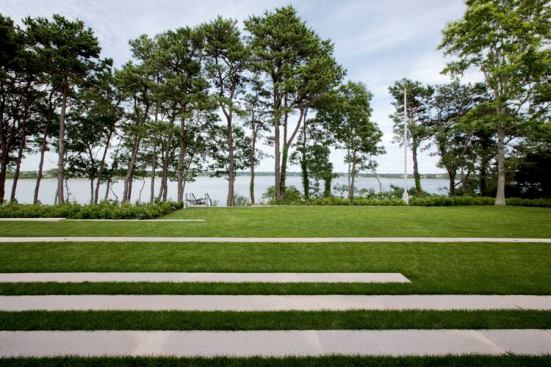
Permeability need not be sacrificed for party-friendly surfaces either. The Cape Cod property included a long, elegant driveway with dry-laid brick wheel strips in a grassy median, and behind the house, a lawn terrace artfully fortified with a series of flush, 6-foot-long-by-18-inch-wide granite strips. In this case, what lay beneath the surface was of equal concern. “If our clients are going to use a lawn area for big events, or if it’s near the house and they want to use it as an indoor-outdoor connection, we’ll work with a soil consultant to make sure the soil drains quickly and resists compaction,” he says.
Structural Soil
Soil scientist John C. Swallow, Ph.D., a co-principal of Pine & Swallow Environmental in Groton, Mass., works with builders and landscape architects to gauge the permeability of existing soils and create a mix that supports an area’s specific use. For example, a sand-based soil layered with organic matter keeps pervious pavement structurally true, while also encouraging the vigorous growth of nearby plants by allowing water and air to circulate freely. By contrast, a generic coarse soil is a sufficient sub-base for permeable driveways and parking courts without adjacent trees and shrubs.
Either way, “you want to provide a reservoir for water to accumulate under the pavers to maximize the opportunity for deep infiltration,” Swallow explains. “In both cases you must have structural integrity, so the ground doesn’t settle. The difference between the two is the gradation of coarseness and the percentage of organic matter.”
The government anticipates water shortages in at least 36 states in the next few years, and some jurisdictions, such as Santa Monica, Calif., already mandate the reduction of urban runoff from newly developed single-family parcels. It’s wise to inform custom home clients about permeable landscape principles now, before they’re forced to comply.