Spain’s furniture and lighting scene has entered a rare sweet spot: a fertile overlap of heritage craft, industrial capability, and design culture that understands how people actually live today. The results—tactile woods and fibers, precise metalwork, expressive yet disciplined forms, and lighting that’s as architectural as it is atmospheric—are resonating in homes, workplaces, and hospitality projects from Barcelona to Boston.
If you want to see the movement in one concentrated dose, go to València. Each fall, the city’s Feria Hábitat València becomes the most complete survey of Spanish furniture and lighting anywhere, layered with a citywide design energy that spills far beyond the fairgrounds.
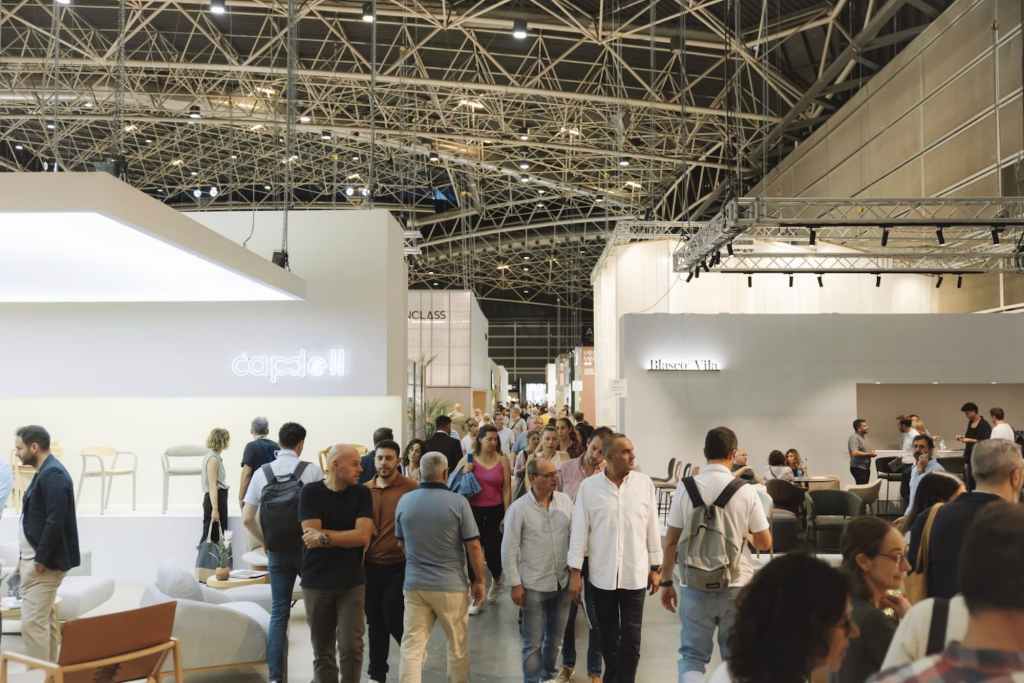
Feria Hábitat València has solidified its status as Spain’s leading furniture, lighting, and décor trade fair, attracting over 925 exhibiting brands from 16 countries across its composite events—including Hábitat, Textilhogar Home Textiles Premium, and Espacio Cocina SICI—between 30 September and 3 October 2024.
The show occupied a record-setting 96,000 m² of exhibition space across eight pavilions, underscoring its expansion and popularity. Visitor interest was equally robust, with organizers expecting around 60,000 attendees, and having already invited over 3,000 international buyers from 70 countries to enhance global engagement.
Beyond pure numbers, what sets Feria Hábitat València apart is its curated fusion of local Mediterranean design leadership and international relevance. Unlike larger, more sprawling fairs that can feel overwhelming, València offers highly thematic presentations, including Salón Nude’s spotlight on emerging talent, “Hotel Hábitat” immersive installations, and targeted zones for contract- and hospitality‑grade furniture, textiles, and kitchen outfitting.
The fair’s walkable layout, combined with its integration of complementary exhibitions—Textilhogar and Espacio Cocina SICI—makes it not only more navigable but deeply focused on trends that matter to professionals in hospitality, contract, and residential design alike. It’s this blend of scale, curation, and industry intelligence that makes València a compelling, must-visit event for anyone serious about contemporary design and its real-world application.
This is not a flash-in-the-pan moment. It’s the product of decades of investment in design education, regional manufacturing clusters, and a Mediterranean sensibility that privileges longevity, repairability, and pleasure. Here’s why Spain is center stage—and why València is the must-visit show to understand it.
Why València? Because the Whole Ecosystem Shows Up
You can visit individual showrooms in Madrid or Barcelona and get a slice of the story. In València, you get the whole cake. Feria Hábitat València—Spain’s leading international furniture, lighting, and décor fair—brings the ecosystem together: heritage manufacturers and audacious startups, upholstery specialists and outdoor pioneers, task lighting and sculptural pendants, contract seating and collectible editions. It’s the annual checkpoint for Spanish design, with a strong international presence hovering around it.
Several factors make the fair essential:
- Depth and breadth. You can walk a hall of precision task chairs, turn the corner into a landscape of outdoor daybeds, and then find a corridor of lighting that doubles as installation art. The scale means you can compare solutions quickly and spot macro-trends at a glance.
- The ‘nude’ platform for new talent. València’s long-running “nude” program is a juried showcase for young designers and studios. It’s the scouting ground where manufacturers and editors meet tomorrow’s names; many successful collaborations started here.
- Programming that actually informs practice. The fair’s talks and exhibitions are curated for working designers: material innovations, case studies from hospitality and workplace, circular strategies that go beyond slogans, and conversations with leading Spanish and international voices. If you’ve sat through too many sterile panel sessions elsewhere, the candor in València feels refreshing.
- Citywide design energy. Since its tenure as World Design Capital in 2022, València has leveraged that momentum into a year-round design culture. During the fair, studios open their doors, galleries run design-adjacent shows, and manufacturers stage off-site installations. You’ll see prototypes in the morning and dine under a Spanish lighting system by evening.
- Proximity to production. Many factories and workshops lie within a day trip. Some brands schedule tours or open their local facilities, letting visitors see finishes, testing rigs, and joinery lines up close. It’s an industrial tourism that demystifies quality.
A Mediterranean Modernism Built for Real Life
Spanish design rarely shouts. It’s warm, edited, and clever — built on the conviction that comfort and rigor can coexist. Where Northern European minimalism can skew austere, Spain’s “Mediterranean modern” favors rounded edges, generous proportions, and materials that patinate well: ash and oak, stuccoed or limewashed finishes, ceramic, wicker, leather, and stone. It’s modernism with a human pulse.
That humanism shows up in the typologies that Spanish brands continually refine: stackable chairs and stools that look good in a café or a kitchen; modular sofas sized for compact apartments and generous lobby lounges; outdoor collections that stand up to salt and sun; and lighting that layers intimate glow with technical performance. The language is consistent—soft geometry, honest joinery, restrained color—yet the expressions feel refreshingly plural.
Craft + Industry: Spain’s Quiet Superpower
Spain’s manufacturing geography is unusually well suited to furniture and lighting. València and Alicante specialize in wood and rattan; Barcelona and its environs are strong in lighting and metalwork; the Basque Country and Navarre bring precision fabrication; and Castellón is a world center for ceramics and surface innovation. Many Spanish companies are still family-run, which has two advantages: long memory of materials and processes, and the agility to push new ideas into production quickly.
That mix of craft and industry is especially potent in lighting. Spanish makers helped popularize wood-veneer shades and thin-profile LED systems that feel architectural rather than gadgety. They excel at warm dimming, glare control, and the choreography of shadow—technical topics translated into sensorial experience. In furniture, rattan and outdoor aluminum have been elevated from casual to couture; soft-edge plywood and solid wood frames show meticulous sanding, radiusing, and grain matching; powder-coated steel bases bring color without fuss.
A Design Culture That Exports—Beautifully
Spanish design draws its vitality from a culture where hospitality and the outdoors are inseparable from daily life. Spain’s cities and villages spill into plazas, terraces, and courtyards where people gather for long meals, late-night conversations, and community events. This culture of conviviality naturally informs the way Spaniards approach furniture and lighting: pieces are designed to invite interaction, comfort, and adaptability, whether for a sunlit café terrace in Barcelona or a shaded courtyard in Seville.
The result is furniture that balances elegance with ease—chairs that stack gracefully, modular sofas that accommodate large gatherings, and lighting that softens rather than dominates a space, all shaped by a lifestyle where social connection is paramount.
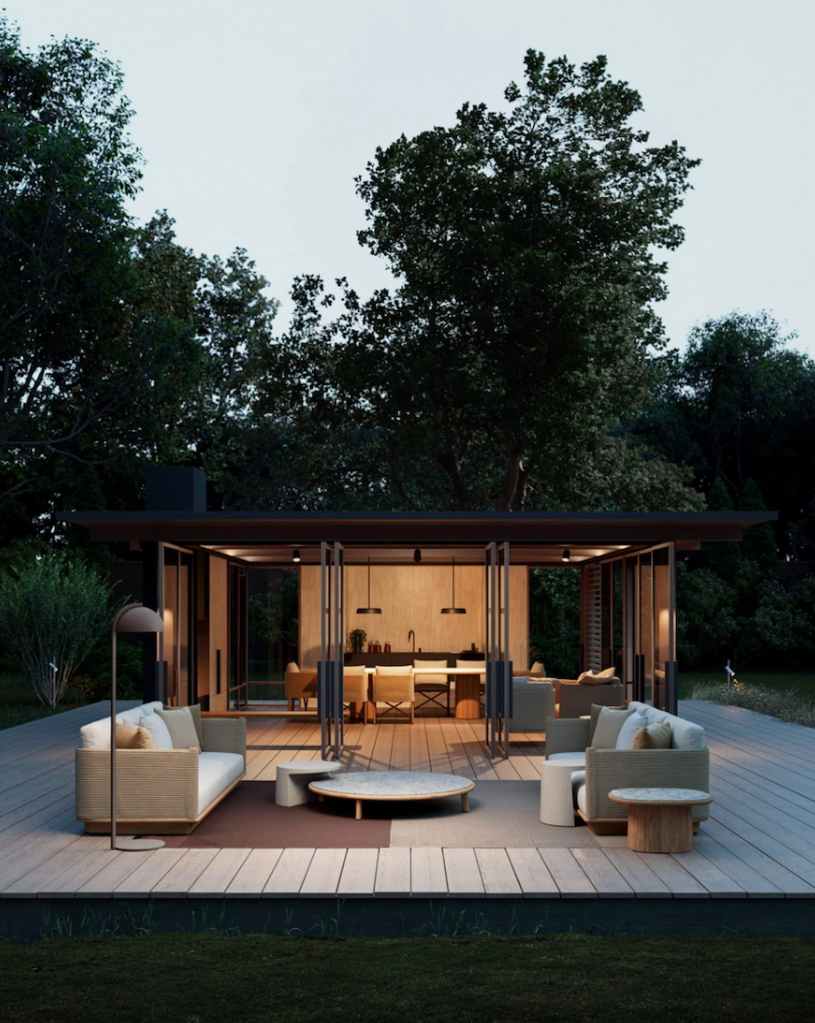
Spain’s culture of hospitality, where life naturally flows onto terraces, courtyards, and plazas, is mirrored in pieces from brands like Kettal and Expormim. Founded in Barcelona in 1966, Kettal designs modular outdoor collections—like the iconic Insula and Nuez Outdoor—that combine teak, aluminum, and woven materials with sculptural elegance, perfectly suited for social gatherings under the Mediterranean sky.
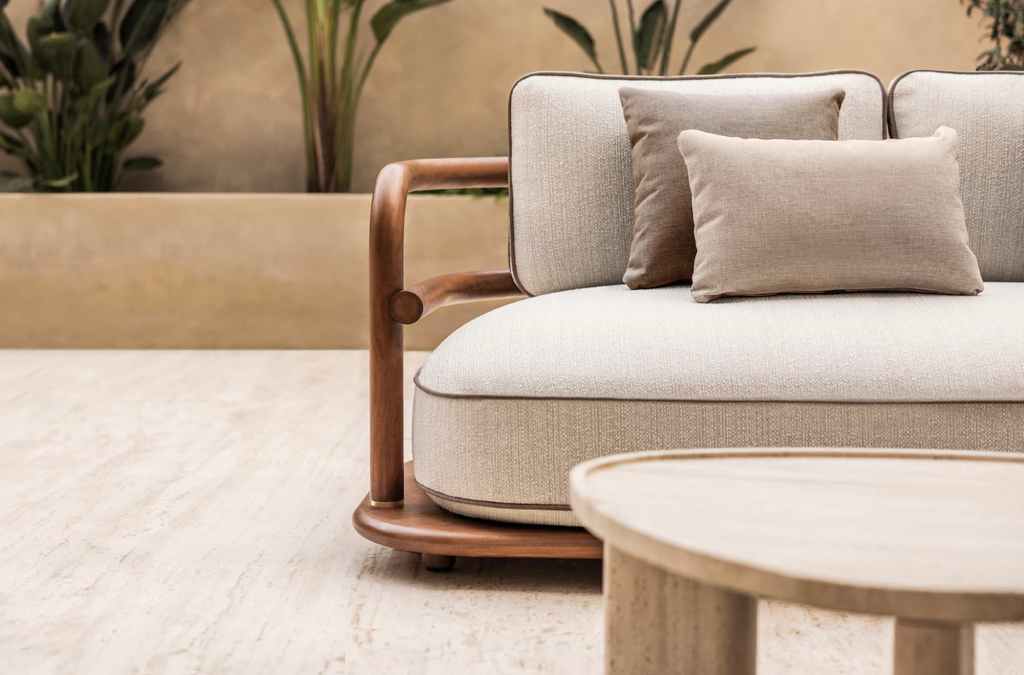
Similarly, Expormim elevates traditional rattan furniture into contract-grade pieces, engineered for hospitality with clean lines and outdoor durability. On the lighting side,
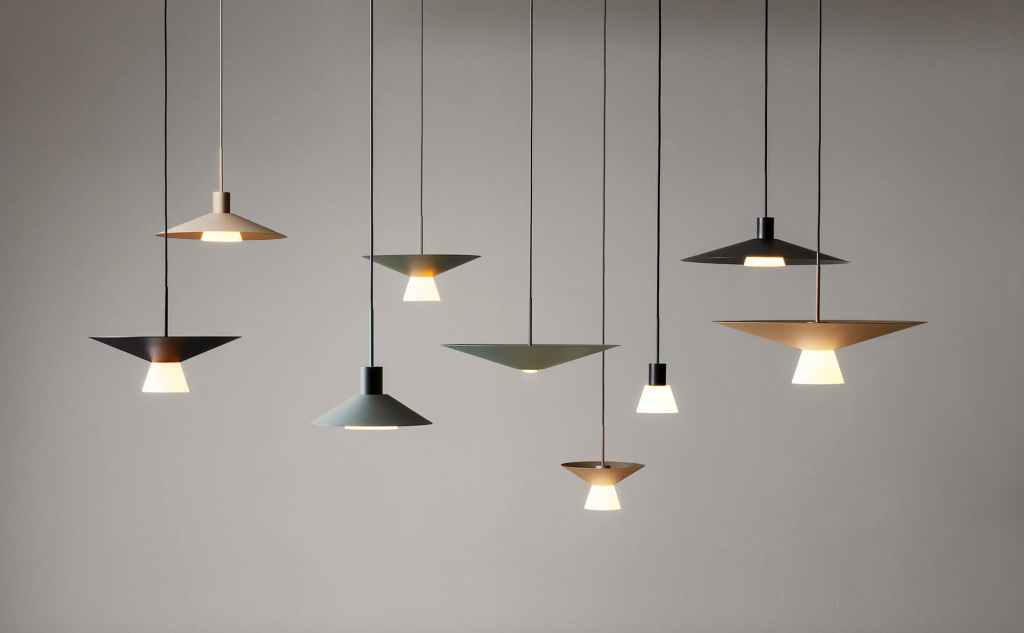
Estiluz, based in Catalonia with over 50 years of experience, blends craftsmanship and warmth in lighting fixtures that “illuminate with soul,” softening and enriching gathering spaces with their poetic presence.
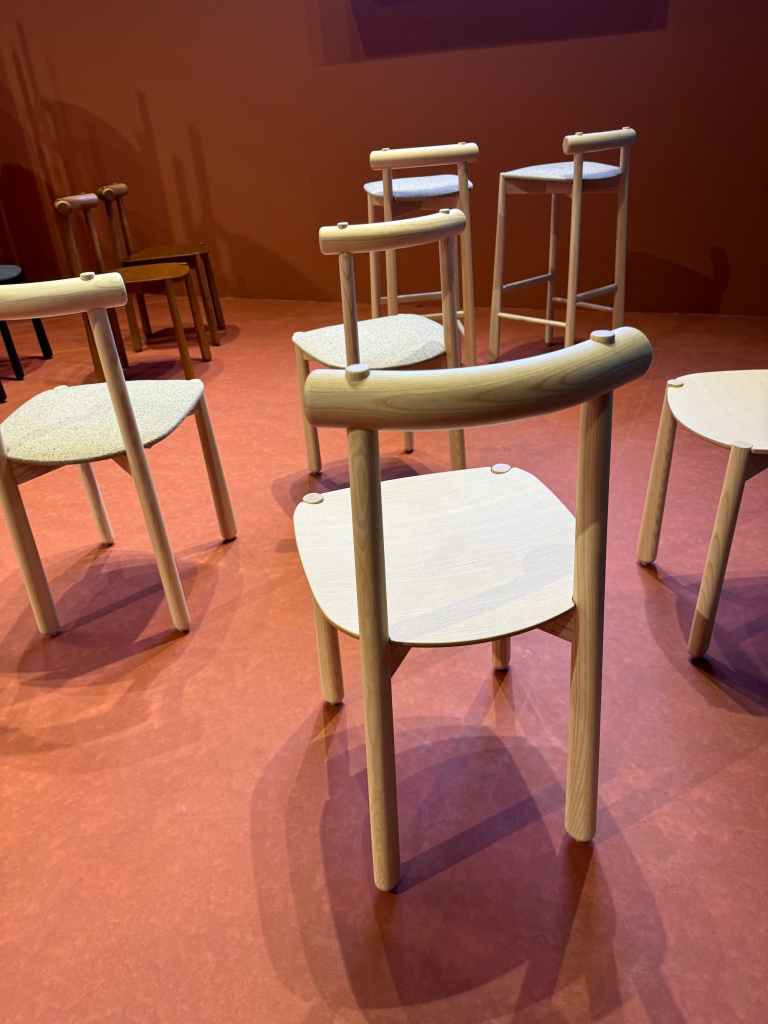
Ondarreta is a family-run furniture company from San Sebastián that creates contemporary, sustainable tables and chairs blending Basque heritage, craftsmanship, and modern design.
Spain’s deep connection to the Mediterranean climate and outdoor living also inspires design that bridges indoor and outdoor with seamless refinement.
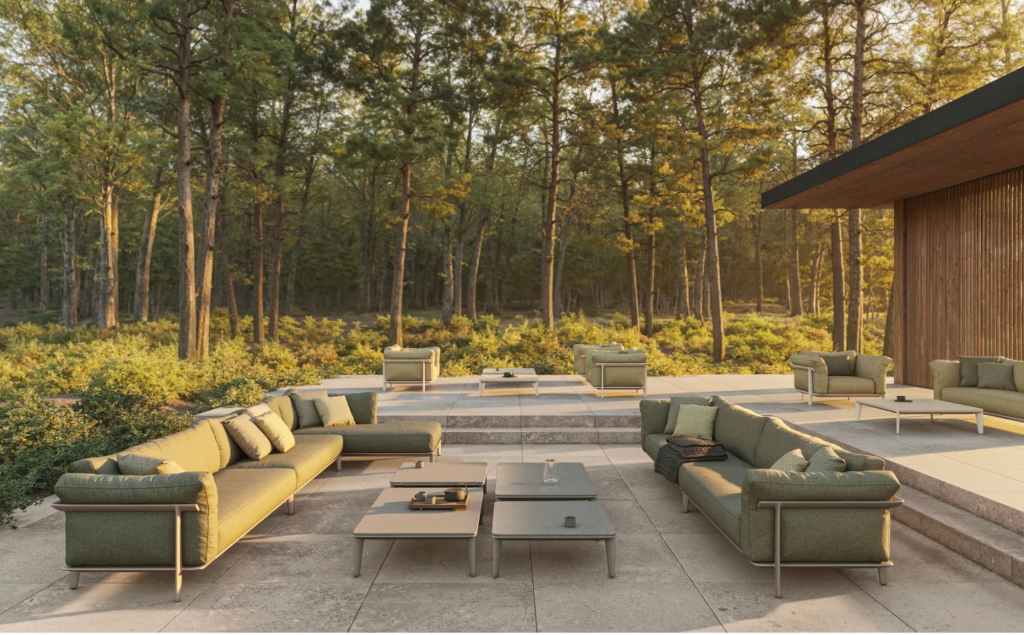
Vondom, headquartered in València, creates bold “In & Out” furniture, planters, and outdoor lamps using recyclable materials and innovative profiles that feel contemporary yet welcoming.
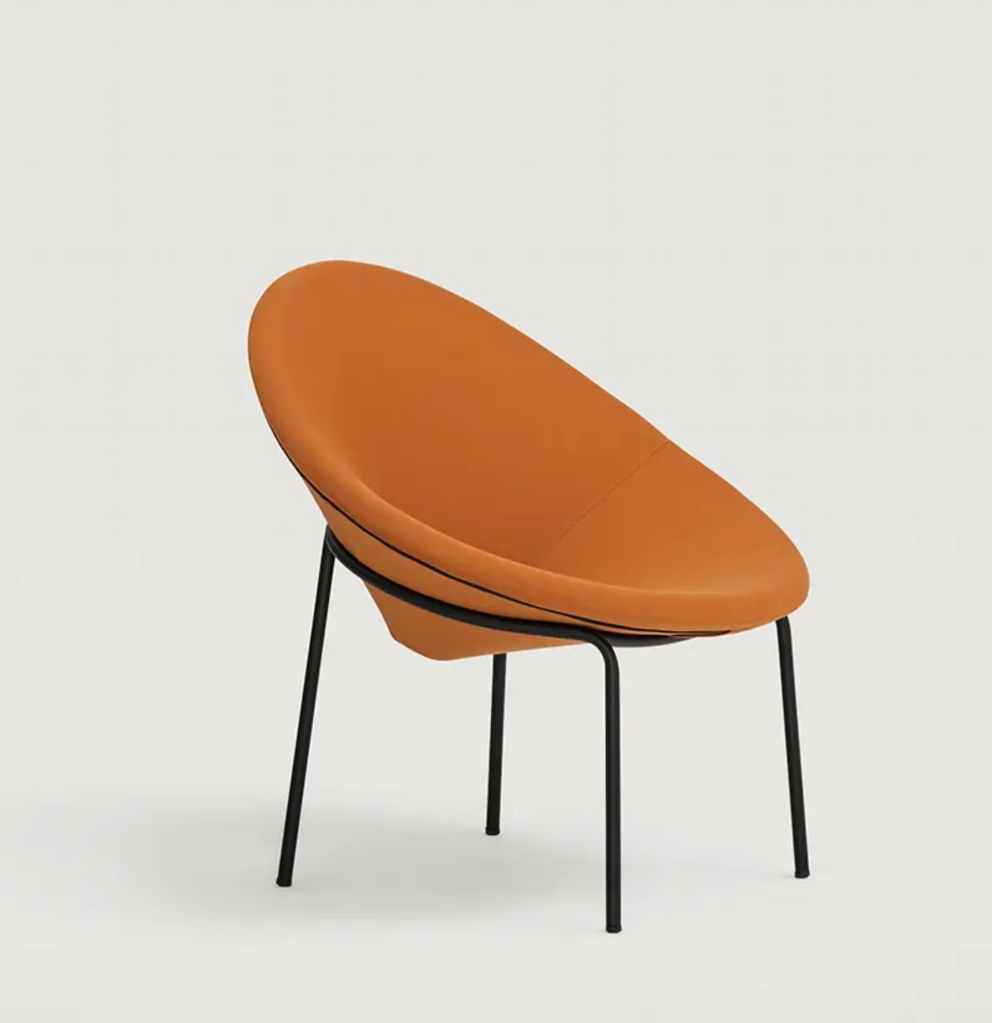
Capdell, founded in 1967 near Valencia, is known for blending craftsmanship, sustainability, and contemporary design in its chairs and furniture.
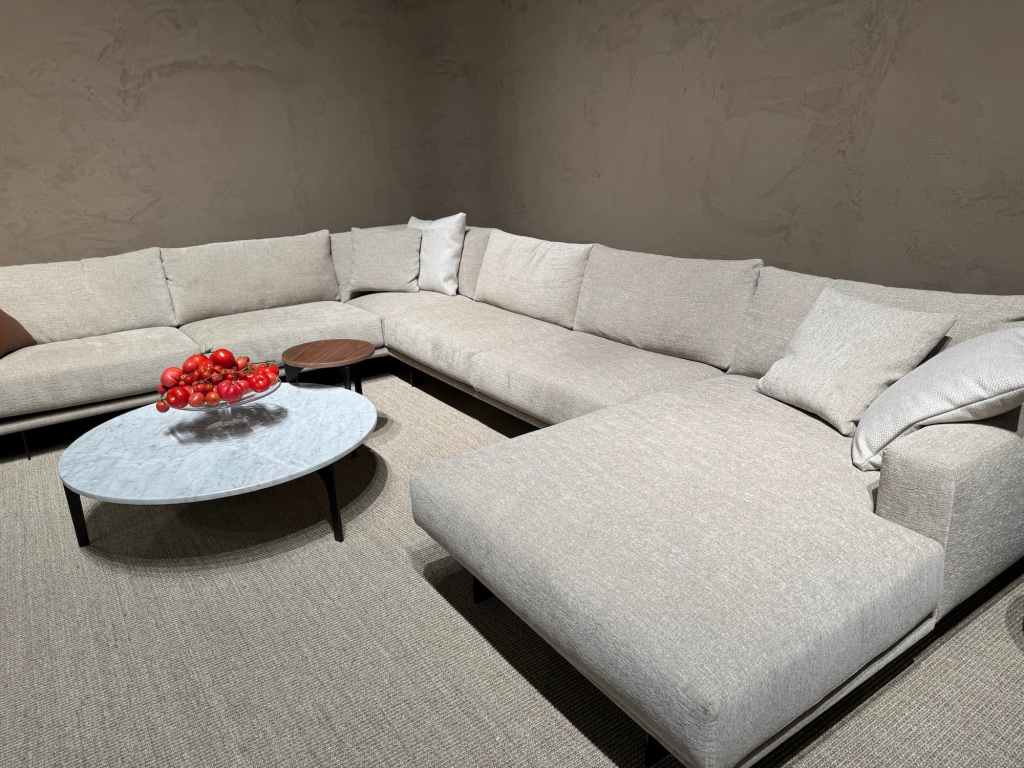
Finally, Joquer, founded in 1984 near Barcelona, combines Mediterranean-inspired simplicity, high-quality artisanal and sustainable craftsmanship, to create customizable upholstered sofas, beds, and furniture for the residential and contract markets.
Equally important is Spain’s deep connection to the Mediterranean climate—long summers, mild winters, and an architectural tradition of blurring interior and exterior spaces. Designers and manufacturers instinctively think across thresholds: outdoor furniture carries the same refinement as indoor collections, with durable materials like teak, aluminum, ceramics, and woven fibers adapted for weather resistance without sacrificing aesthetics.
Shaded pergolas, adjustable lighting, and breezy textiles reflect centuries of architectural wisdom about sun, shade, and airflow. Together, Spain’s hospitality culture and love of the outdoors give its design language a warm modernism—functional, sustainable, and deeply human-centered, perfectly suited for today’s emphasis on flexible, hybrid living spaces.
Spain’s global influence is amplified by hospitality. As one of the world’s top tourism destinations, the country is a living laboratory for hotels, restaurants, coworking hubs, beach clubs, and museum cafés—all demanding contract-grade durability with domestic-grade charm. Spanish brands learned to deliver both, mastering certifications and logistics while keeping the Mediterranean DNA intact. For architects and interior designers abroad, that translates into spec-ready products with short lead times and a reliable supply chain.
Equally important is collaboration. Spanish companies court a mix of homegrown and international designers—pairings that keep collections fresh while maintaining brand identity. You’ll see products by Spanish talents like Jaime Hayon, Inma Bermúdez, Jorge Pensi, Mario Ruiz, Francesc Rifé, MUT Design, Yonoh, and Lagranja alongside global heavyweights and rising studios. The throughline is editorial clarity: each product earns its place.
Sustainability That’s Pragmatic—Not Performative
Spanish manufacturers tend to be pragmatic about sustainability: fewer manifestos, more measurable improvements. Expect FSC-certified timbers, water-based finishes, low-VOC glues, recycled aluminum, removable covers, componentized frames, and clear spare-parts policies. Outdoor lines often use marine-grade aluminum and high-tenacity textiles that are recyclable at end of life. Several brands publish reparability scores or modular assembly diagrams, making refurbishment straightforward. Spanish manufacturers tend to be pragmatic about sustainability: fewer manifestos, more measurable improvements.
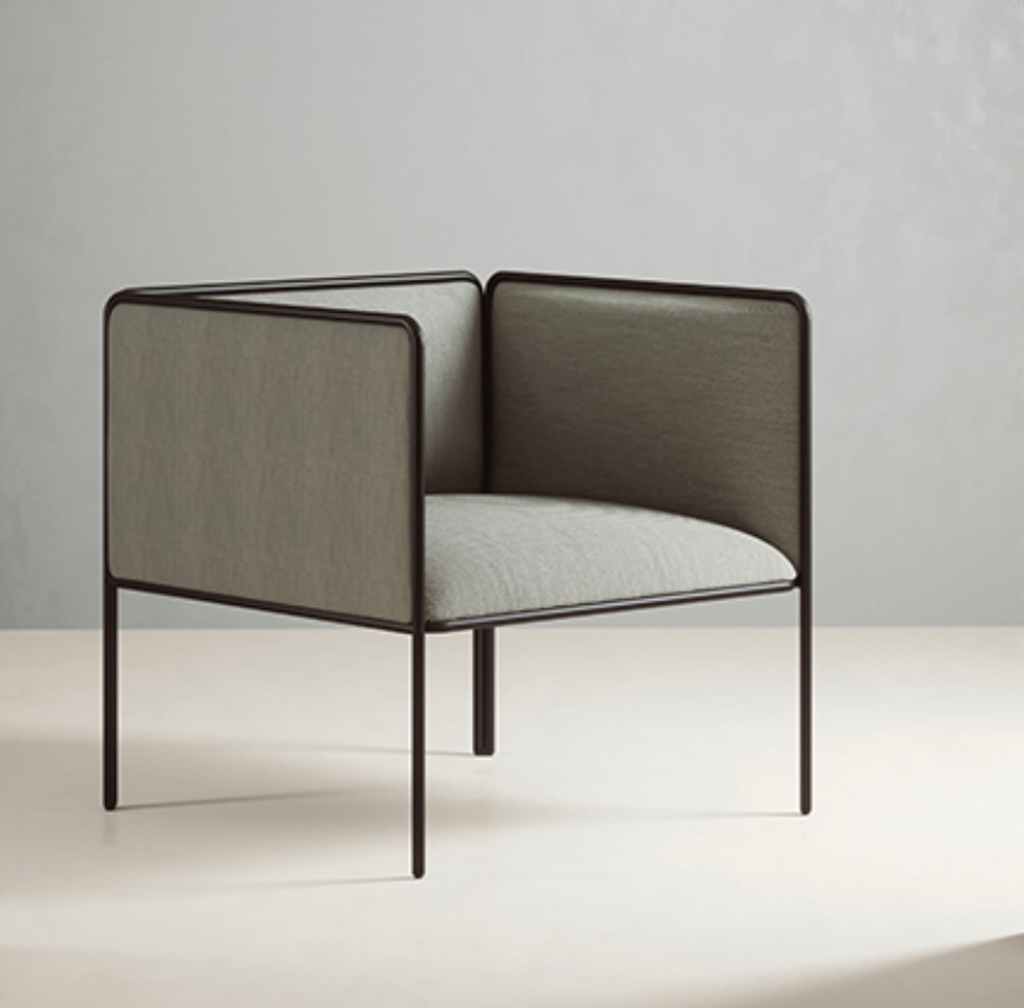
Actiu, based in Alicante, powers its entire production with solar energy and designs workplace furniture with removable covers, componentized frames, and full end-of-life recycling plans.
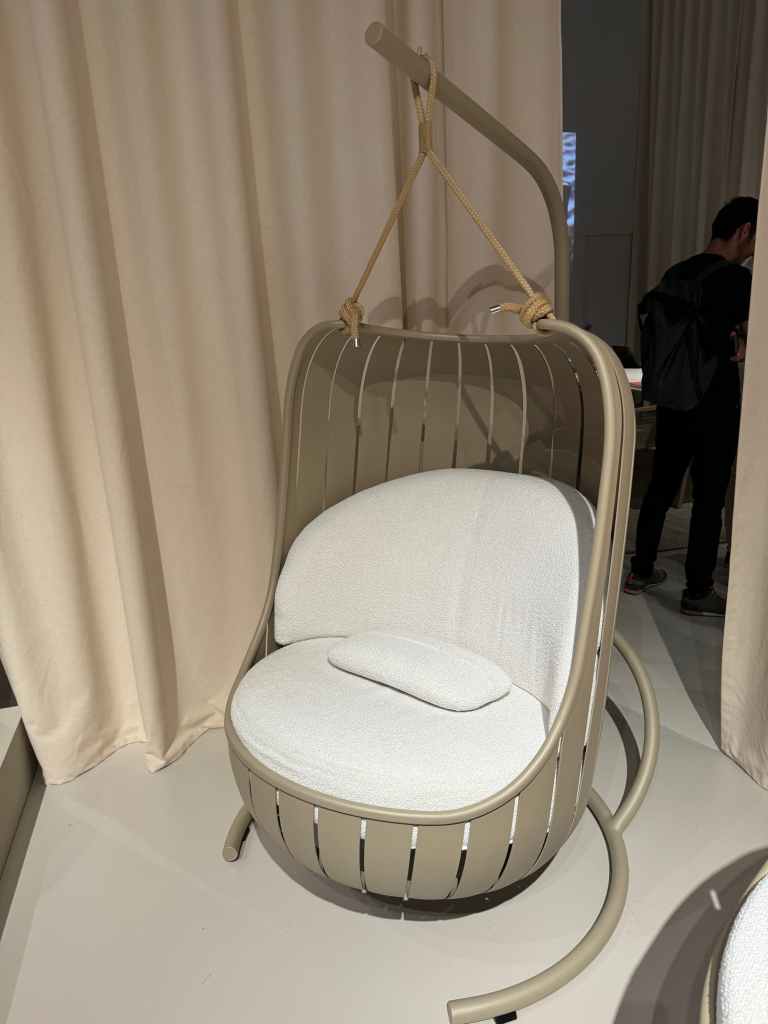
Outdoor lines from Gandia Blasco Group employ marine-grade aluminum and high-tenacity textiles that are recyclable at the end of their lifespan, while the company also develops modular assembly diagrams to make refurbishment and replacement straightforward.
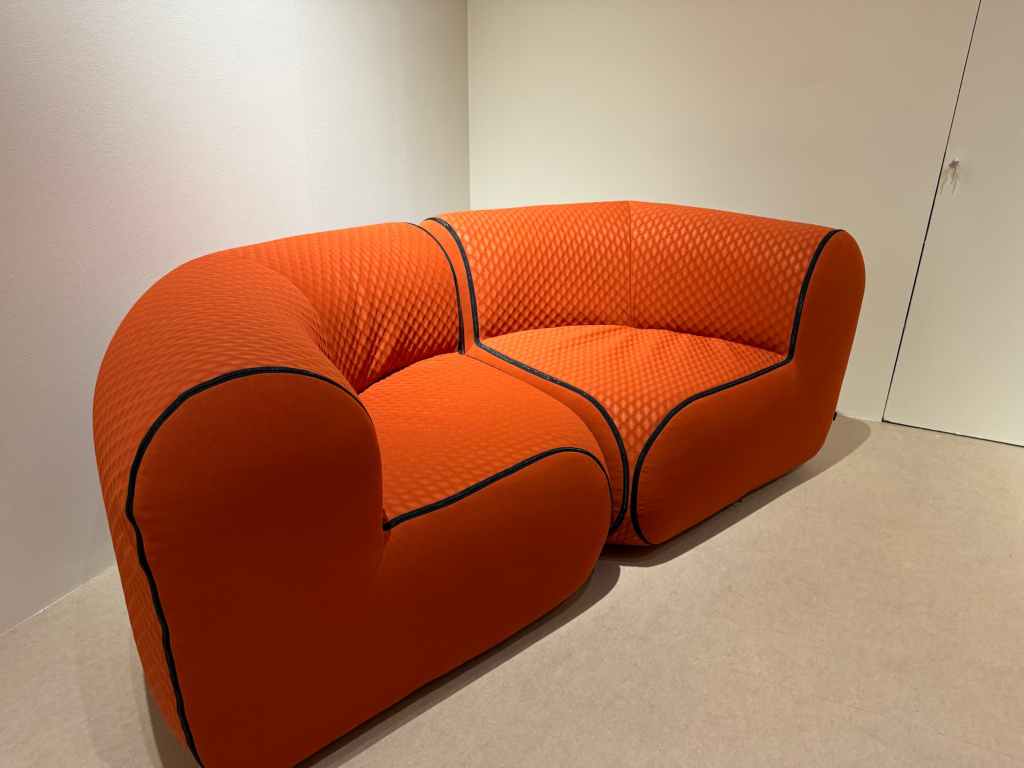
Annud, based in Valencia, emphasizes local manufacturing within 25 km of its facilities, uses eco-certified and recycled materials, and creates enduring, thoughtfully crafted pieces.
Lighting makers are equally methodical. Lighting makers are equally methodical: field-replaceable LED engines and drivers, standardized optics, and durable finishes. The aesthetic result is quiet longevity—products designed to be reupholstered, and re-loved rather than replaced.
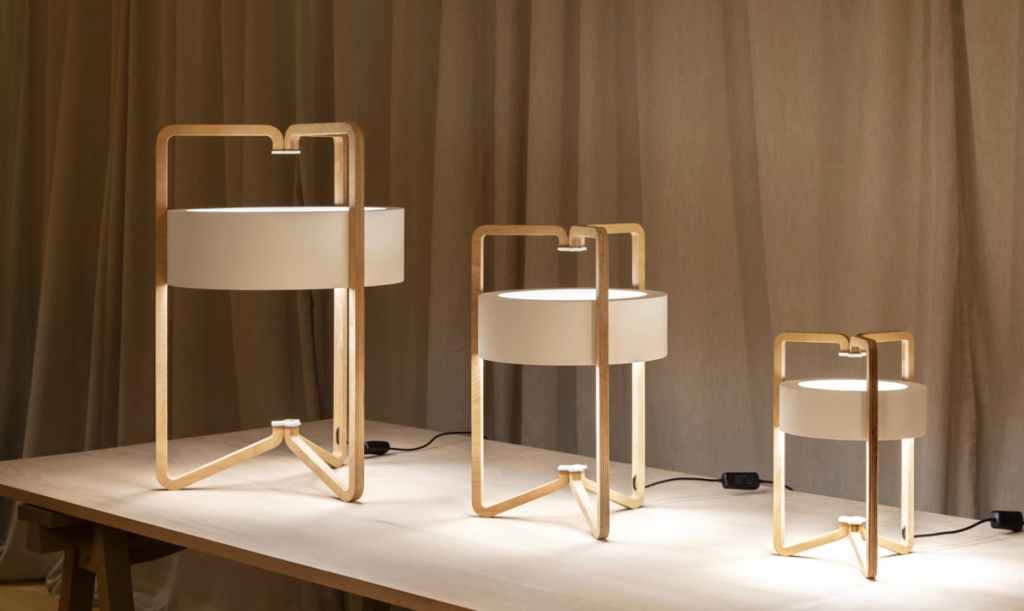
Bover Barcelona Lights integrates field-replaceable LED engines, standardized optics, and durable finishes into architectural and decorative collections, ensuring products can be re-lamped rather than discarded.
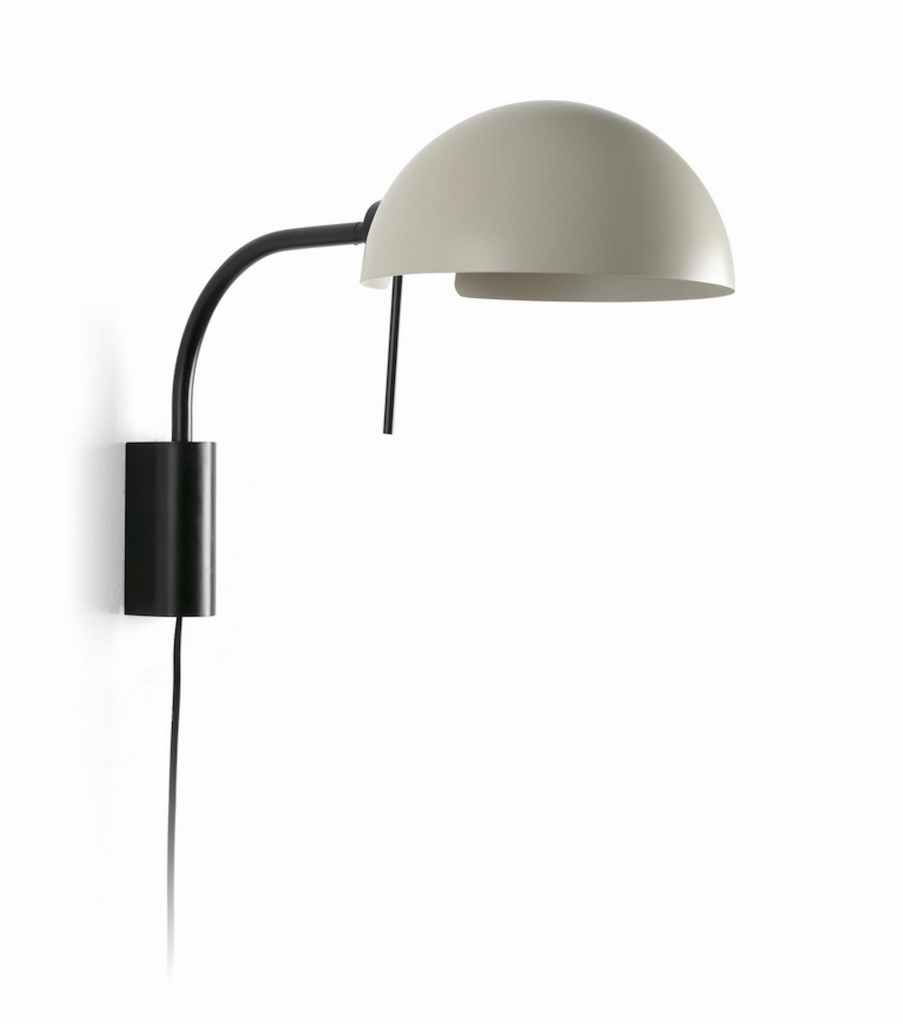
Faro Barcelona goes further, designing lighting with modularity and spare-parts accessibility in mind while experimenting with materials like recycled plastics and certified woods. The aesthetic result across these brands is quiet longevity—lighting and furniture designed to be repaired, upgraded, and re-loved rather than replaced, proving sustainability can be both technically rigorous and visually timeless.
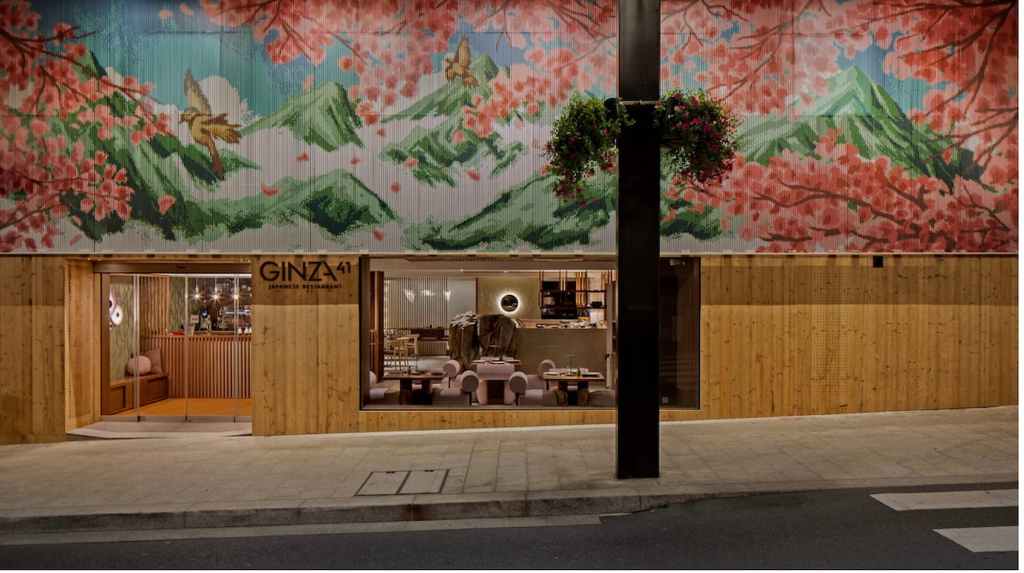
Kriskadecor creates custom metal chain curtains—used for space dividers, ceilings, façades, and artistic installations—combining lightweight versatility with striking visual impact.
The New Spanish Spectrum: From Playful to Architectural
The current wave spans a striking stylistic range:
Playful rigor. Upholstered pieces with cartoonish curves are disciplined by sharp tailoring; color appears as a confident accent, not a gimmick.
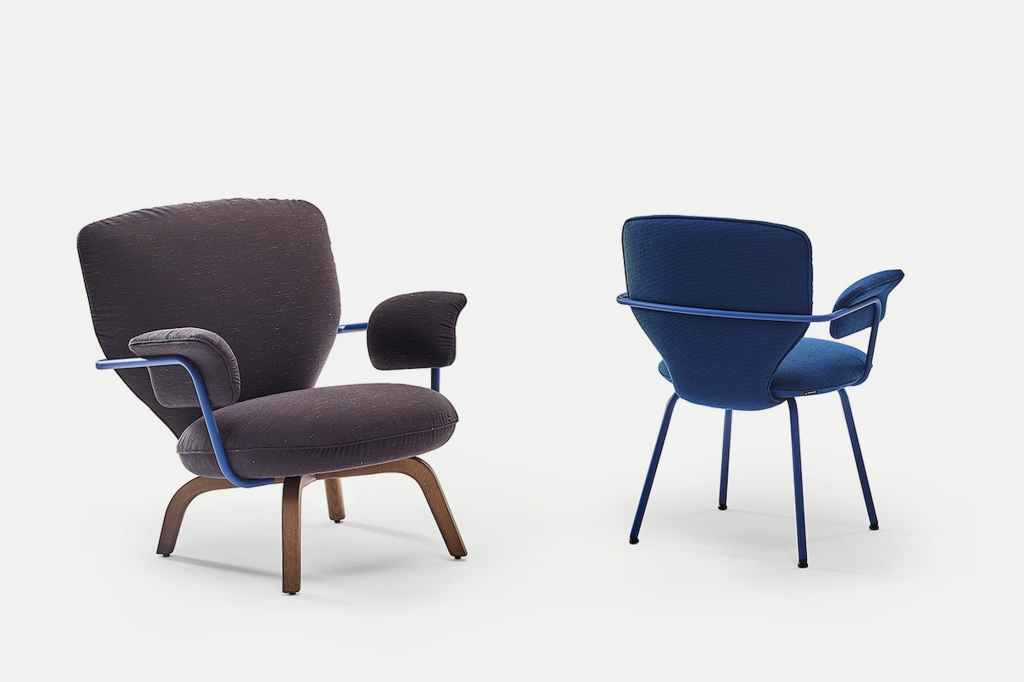
Brands like Sancal bring humor and geometry together in upholstery, offering sofas and chairs with sculptural curves disciplined by expert tailoring and bold but controlled use of color. Their pieces often appear in hospitality and cultural projects where personality matters as much as comfort.
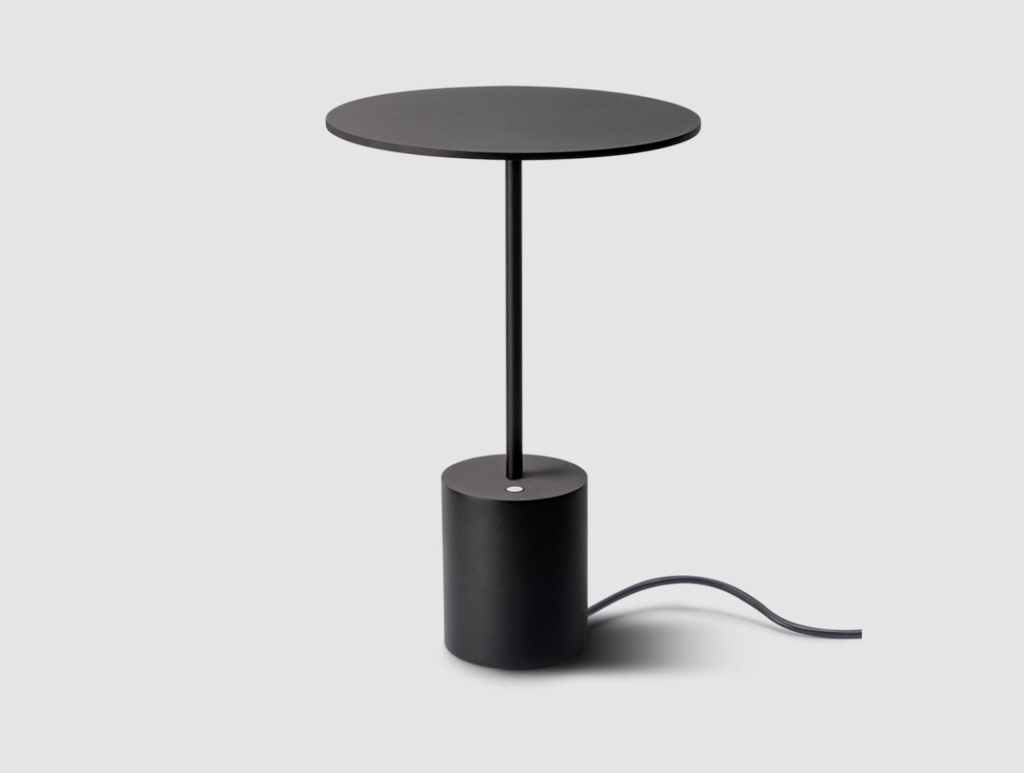
Architectural lighting. Arkoslight, based in Valencia, develops minimal trackless and cable-free systems like Black Foster and Fit that read as linear drawings of light, using opal diffusers and high-efficiency LEDs to balance visual precision with softness.
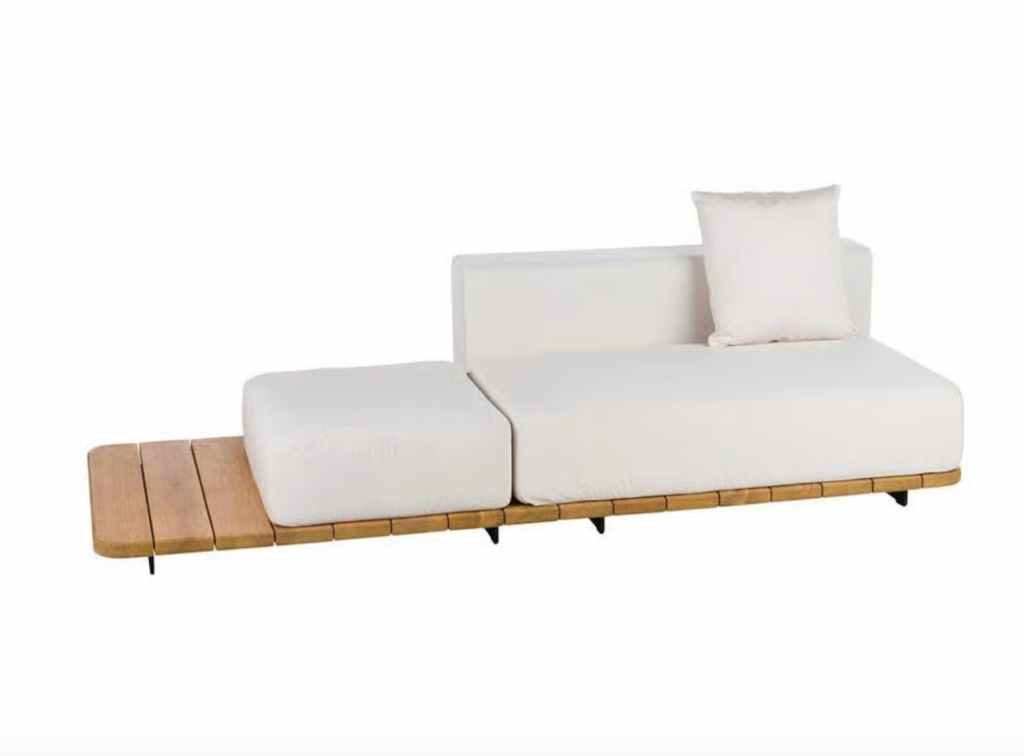
Outdoor sophistication. Point, with roots in Alicante since 1920, crafts outdoor furniture using aluminum, teak, and weatherproof synthetics, elevating terraces and rooftops with collections like Weave and Pal. Their detailing and material durability give residential spaces the feel of luxury resorts.
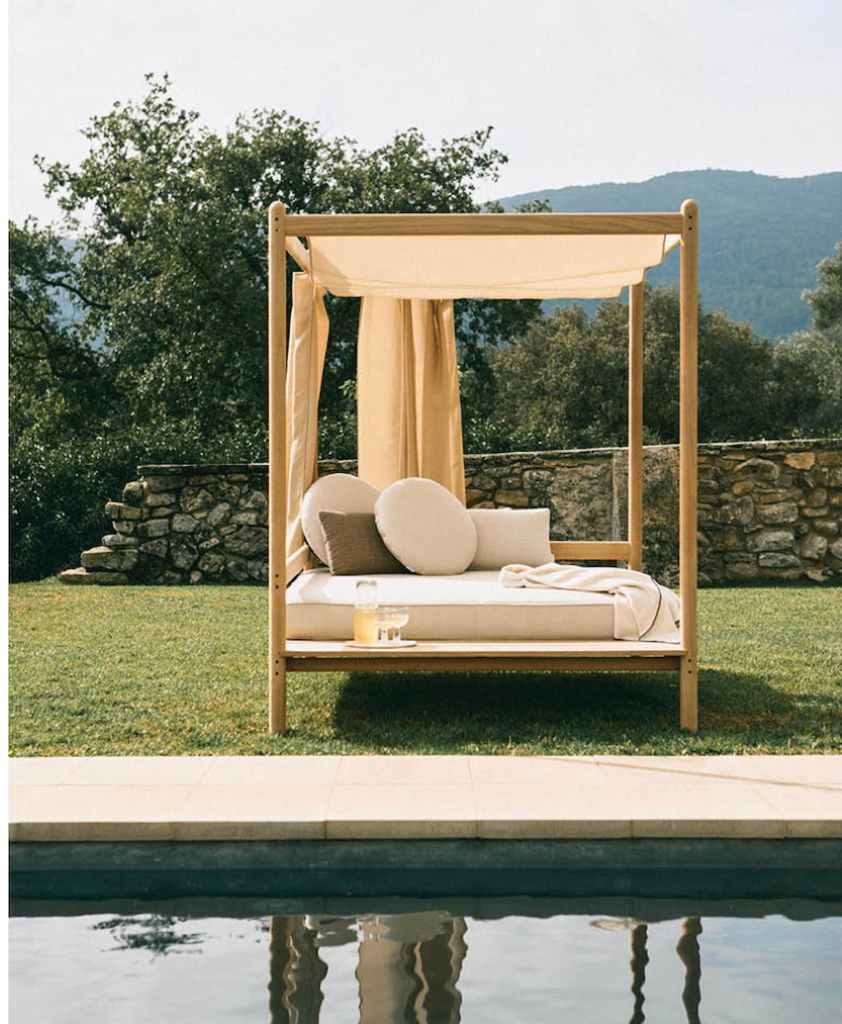
Woven intelligence. Calma Outdoor experiments with contemporary silhouettes combining artisanal tactility with contract-grade engineering. Their seating and loungers bring a handmade warmth to modern hospitality projects.

Work/life hybrids. Sellex headquartered in the Basque Country, designs multi-functional tables and seating systems—like the Slam Soft Bench—that integrate usb connections and ergonomic considerations, bridging home and workplace environments seamlessly.
You can trace these tendencies back to a Spanish appetite for hospitality and sociability: spaces that encourage gathering, and objects that invite touch.
What We Saw on the Floor
While each year has its surprises, several threads consistently reward attention:
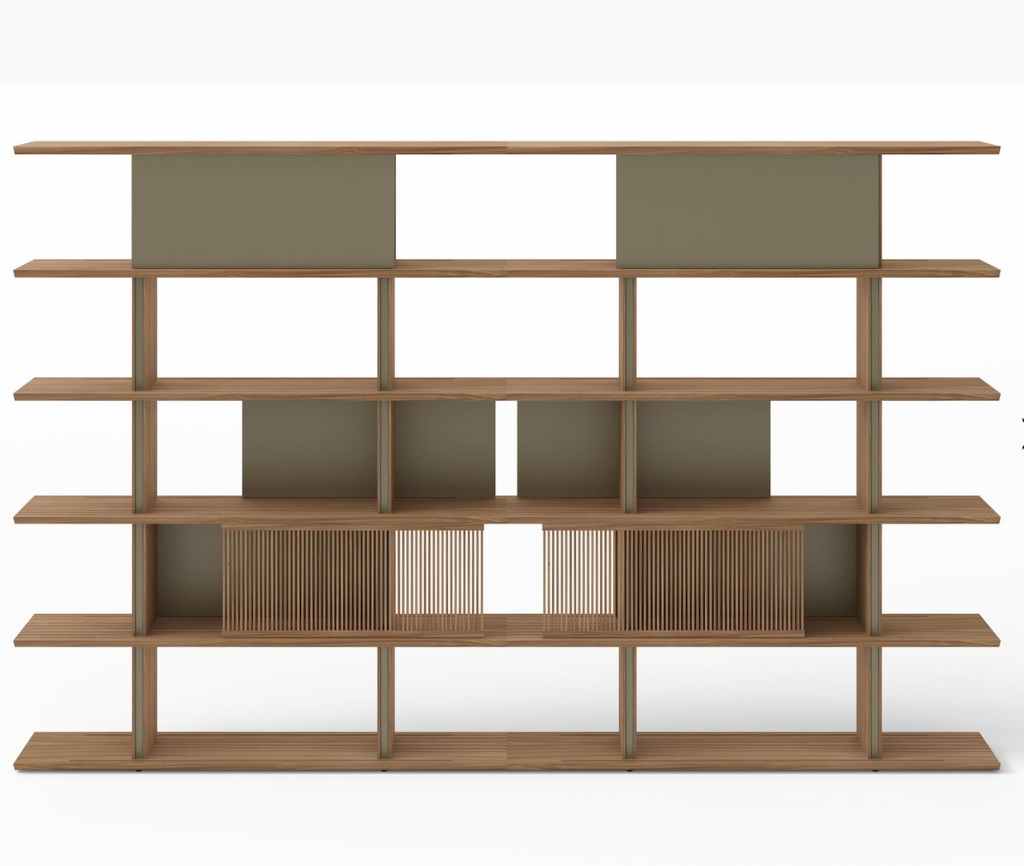
Material honesty. Punt Mobles debuted the Stockholm shelving system, designed by Mario Ruiz, using FSC-certified oak and walnut with minimal metal framing, showcasing wood grain as a design feature rather than hiding it under finishes. Their approach favors tactile, low-VOC materials and visible craftsmanship.
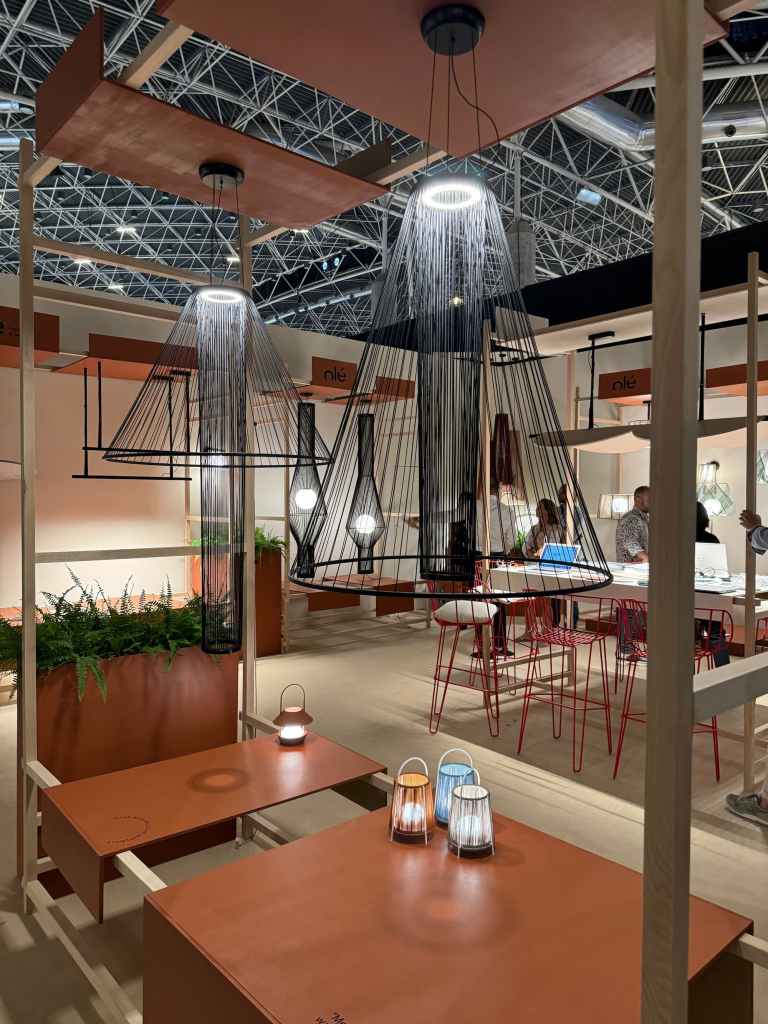
Sustainable tech in lighting. Olé Lighting is a Valencia-based brand creating handcrafted, sustainable, and design-driven lighting that transforms spaces into warm, atmospheric environments.
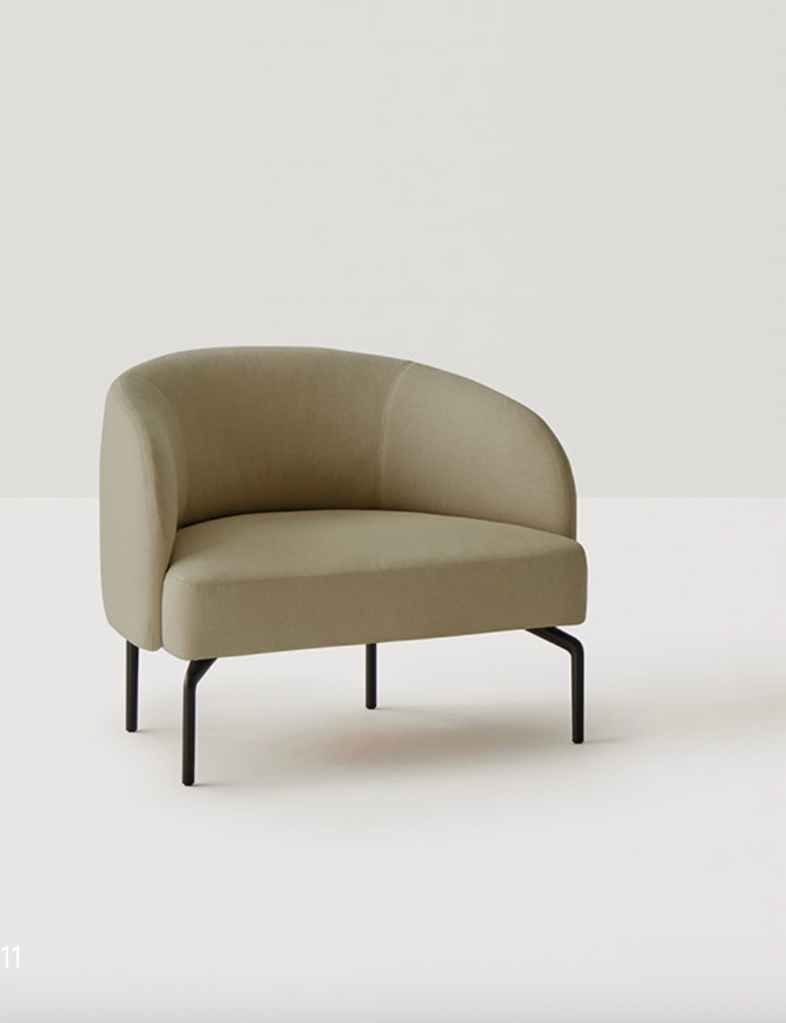
Flexible working elevated. Inclass launched Kern, a modular seating sytem elements designed for gathering and waiting. Kern modules can be easily rearranged to create modern and flexible spaces to wait, meet, work, or simply relax.
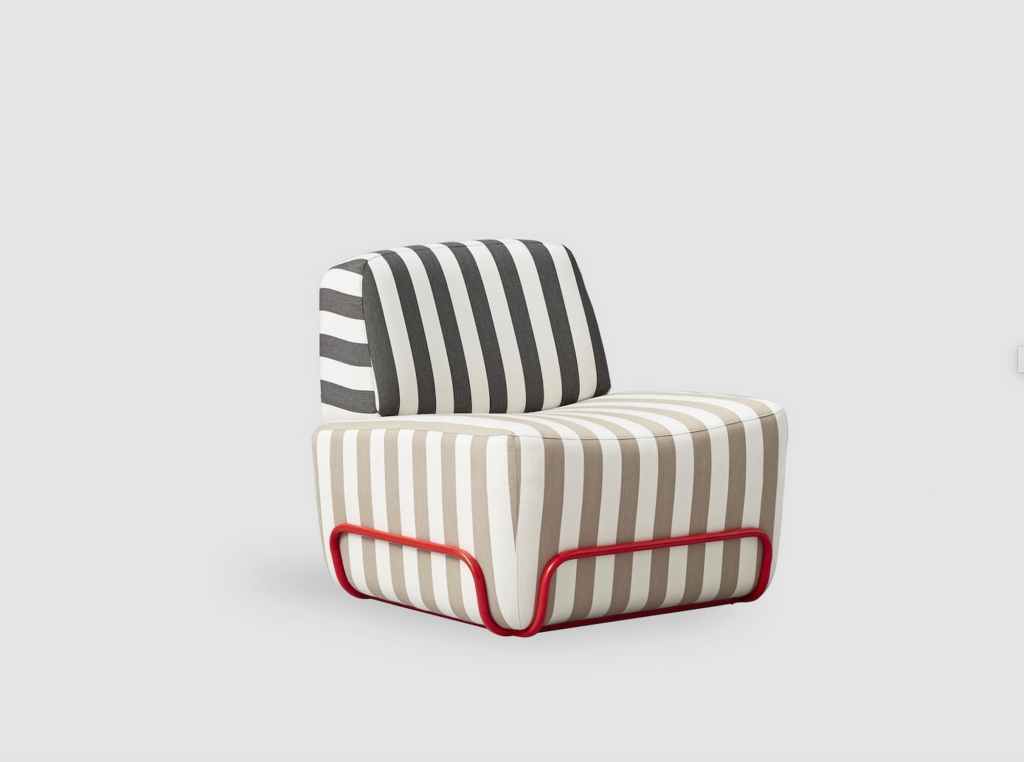
Color as character. Missana introduced Pigro lounge chairs and sofas with powder-coated frames in earthy terracottas and deep blues paired with monochrome upholstery, using color as an architectural element rather than a decorative afterthought.
5 Spanish Companies to Watch
From heritage craft to cutting-edge sustainability and bold design collaborations, these Spanish brands are shaping the future of how we furnish and light our spaces:
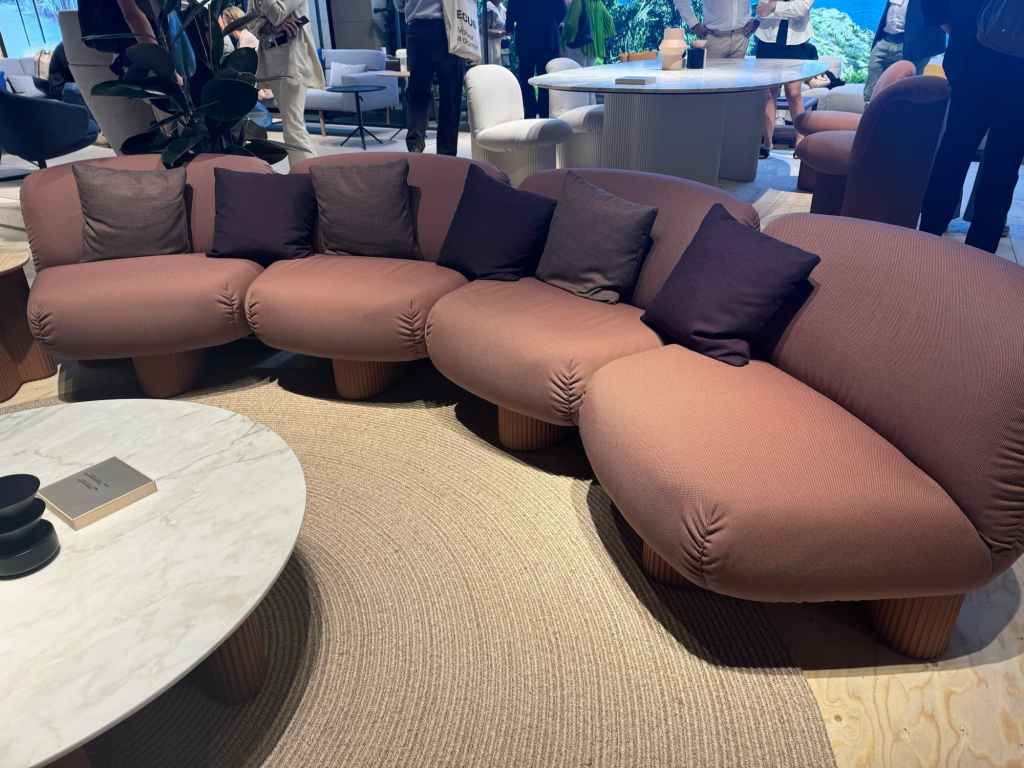
Andreu World, founded in 1955 in Alcoy, Alicante, Spain, where the company is based with its deep commitment to circularity, embedding sustainable design and closed-loop practices at the core of its operations. The brand pushes boundaries with innovative material technologies, from bioplastics to responsibly sourced woods, while collaborating with leading designers like Patricia Urquiola to create timeless yet forward-looking collections. With an expanded presence at THE MART in Chicago, Andreu World is cementing its role as a global leader in sustainable, design-driven furniture.
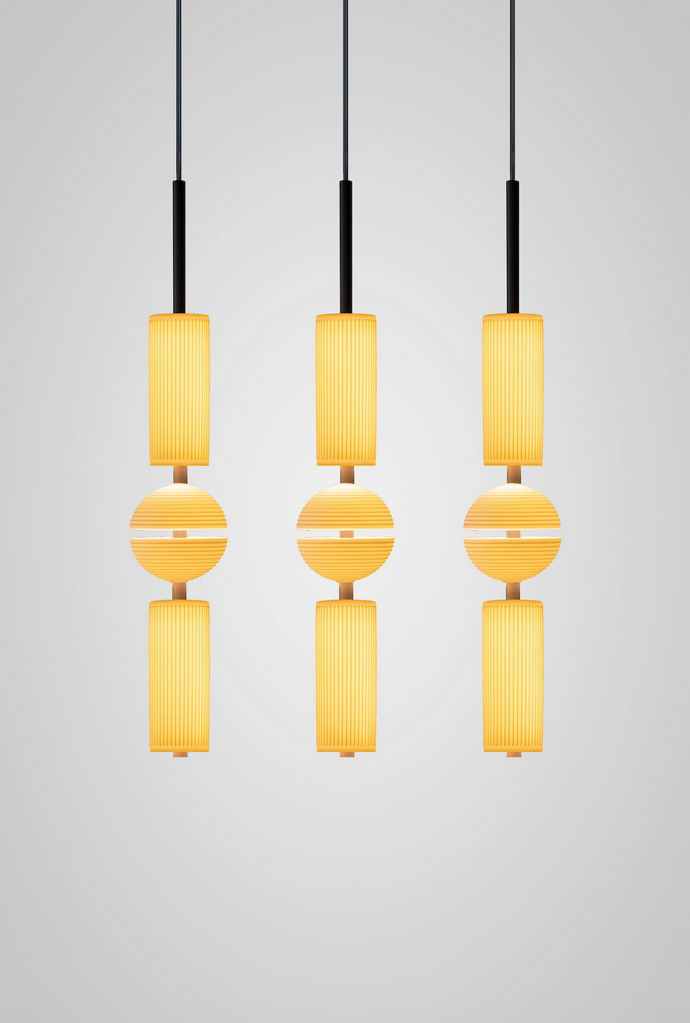
Lladró, founded in Valencia in 1953, the company is known globally for its porcelain art, and has evolved into high-end lighting and sculptural home objects—a testament has been its Nightbloom lamps blending poetic, handcrafted design with functional form.
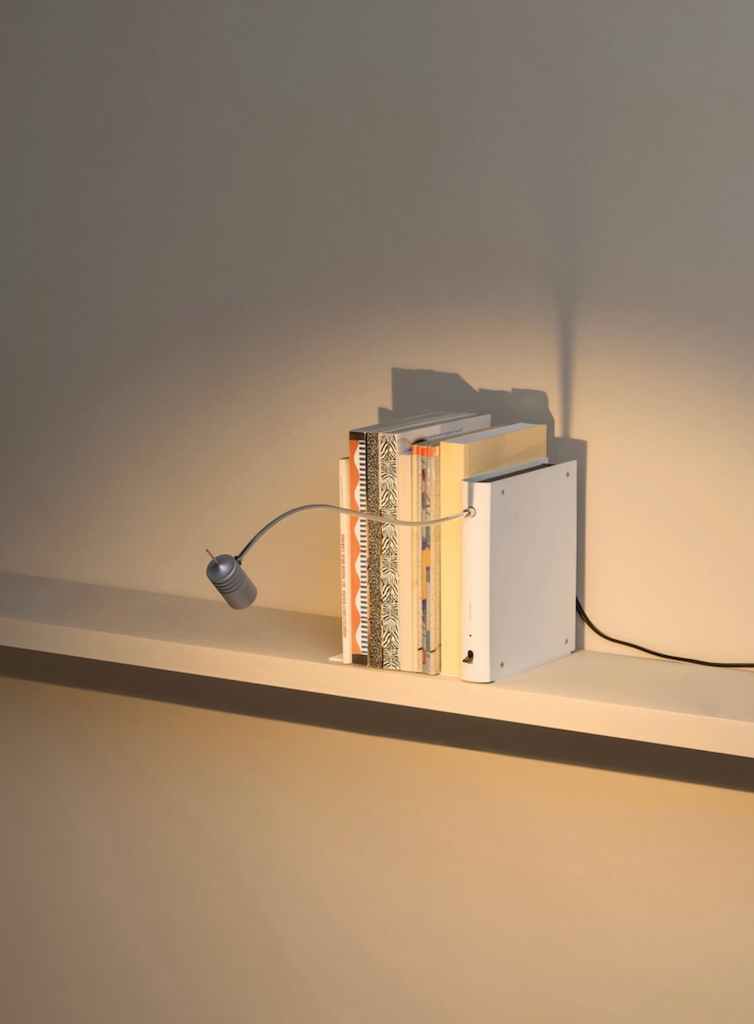
Santa & Cole, founded in Barcelona in 1985, this company is a leading editor of iconic lighting and urban furnishings, which combines Bauhaus-inspired design principles with creative collaborations and intellectual property stewardship.
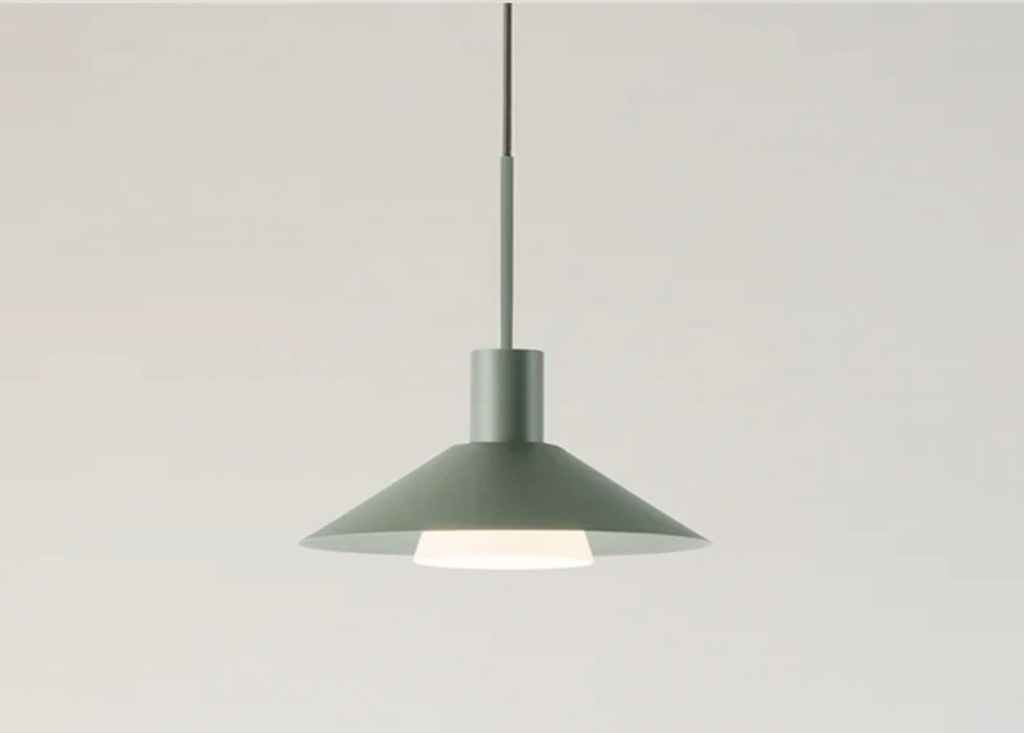
Estiluz, founded in Barcelona in 1969, this pioneer in contemporary decorative lighting, pairs craftsmanship with creativity in elegant, customizable luminaires enjoyed in prestigious spaces worldwide.

Systemtronic specializes in contemporary, minimalist furniture and accessories that combine functionality, modularity, and sustainability for workplaces and living environments.
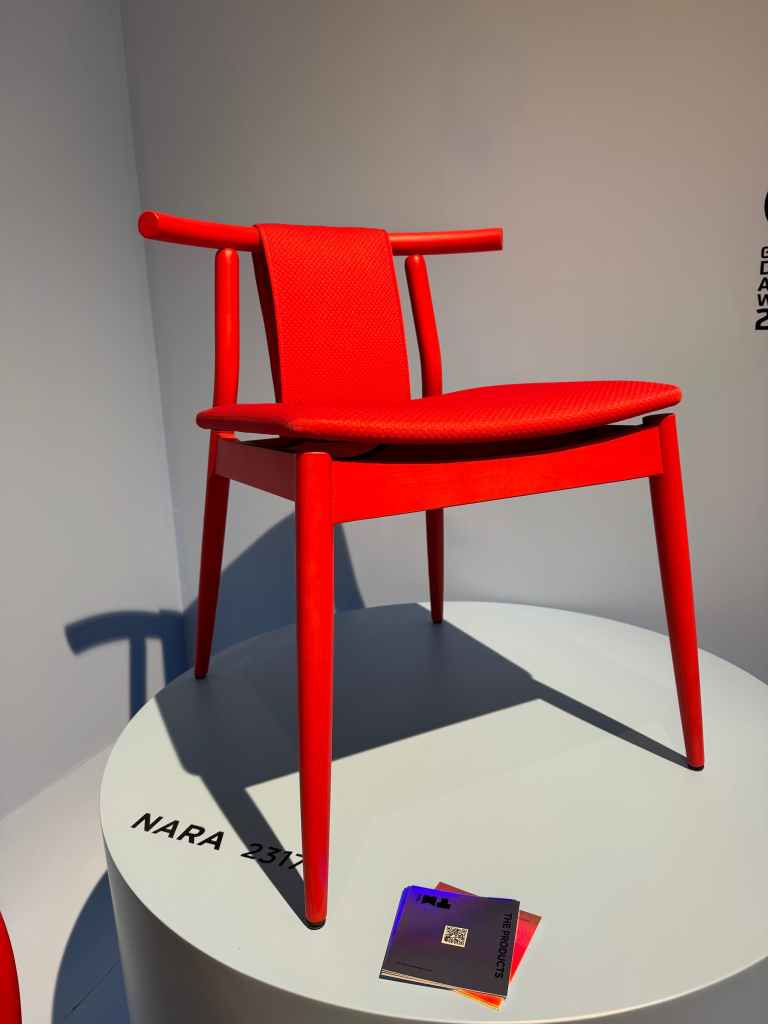
TM Leader Contract specializes in contract furniture solutions, offering contemporary, durable, and customizable designs for hotels, restaurants, offices, and public spaces.
The Bottom Line
Spanish furniture and lighting are thriving because Spain has aligned the things that matter: craft and industry, warmth and precision, sustainability and service, tradition and technological savvy. Products feel good to use, hold up under pressure, and look better with time. The aesthetic is clear yet open, capable of sliding into multiple contexts without losing character.
To grasp the full scope of that momentum, València is the place. The fair concentrates the best of Spanish design—and the broader Mediterranean way of living—into a format that’s both inspiring and actionable. You leave with a sketchbook of ideas, a phone full of contacts, and a renewed sense that design, at its best, is not a style but a standard: human, durable, and quietly joyful.
The next edition of the Valencia Furniture Fair is 29 September – 2 October, 2025.