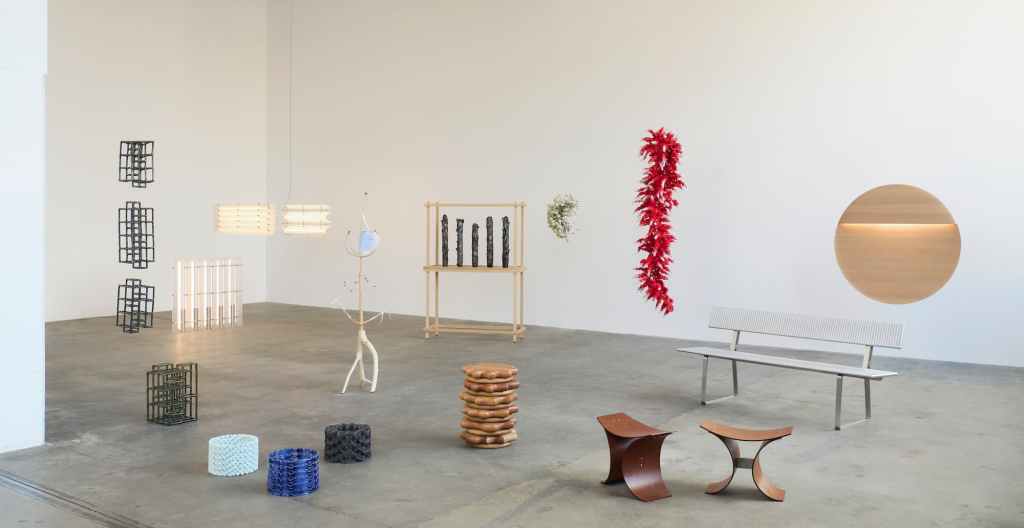
When the doors of The Lab open on October 2, 2025, visitors will find a Danish design exhibition that looks less like a trade fair and more like a lesson in natural science. The Mindcraft Project, an international platform for Danish design and craft, has chosen a striking post-industrial setting with six-meter-high ceilings and vast open spans as the stage for its annual showcase.
“This year’s edition of The Mindcraft Exhibition offers a peek into how nature’s geometry and laws of physics inspire and influence some of Denmark’s most unique designers and makers,” says curator Pil Bredahl.
Curatorship Rooted in Craft and Change
For 2025, Copenhagen Design Agency (CDA), which directs The Mindcraft Project, selected Pil Bredahl—designer, communicator, and veteran of Denmark’s craft and design communities—to lead the exhibition.
“The depth and breadth of Pil Bredahl’s experience within the Danish design and craft community makes her the perfect person to guide this year’s selected designers and craftspeople through an important time in our collective history. What makes Pil unique is her ability to draw on Denmark’s deep knowledge of material and craft, whilst having an unwavering devotion towards the power of innovation and radical thinking as a driver of change,” say Anders Kongskov and Kristian Kastoft, founders of CDA and co-directors of The Mindcraft Project.
Lessons in Modularity and Growth
The exhibition brings together ten designers whose works share a fascination with natural systems. From expressive growth patterns to explorations of efficiency, their projects act as both aesthetic statements and new models of production.
“Craft and design has the potential to explain and teach us about our world. The real world. In The Mindcraft Exhibition 2025 you will find a variety of different ways in which elements from natural systems have been an integral part in the shaping of objects. In a digitalized everyday world, it is becoming increasingly important for us to be reminded that a lot of the answers to our questions are already found in the logic of nature,” says Bredahl.
Designer Spotlights
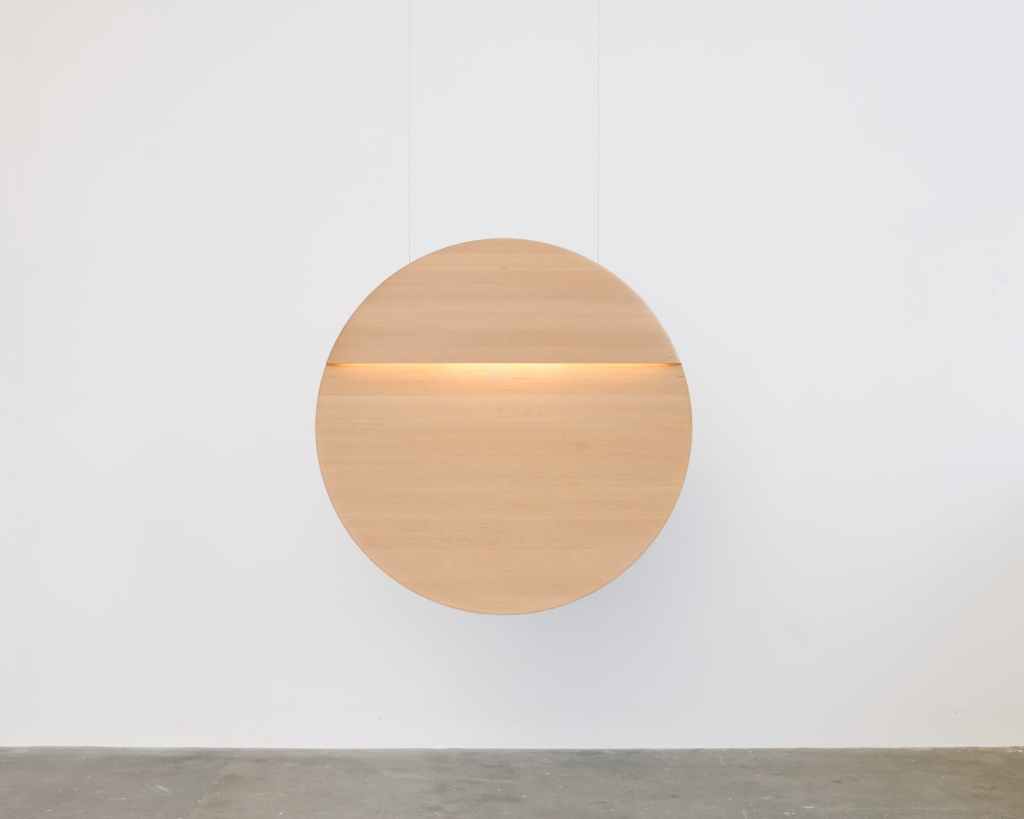
Ahm × Lund — Ray
A suspended circular light made of Oregon pine, steel, and LEDs, Ray evokes sunbeams and the transport systems within wood. The designers draw on Japanese uzukuri brushing to reveal growth rings, blending scientific research with poetic form.
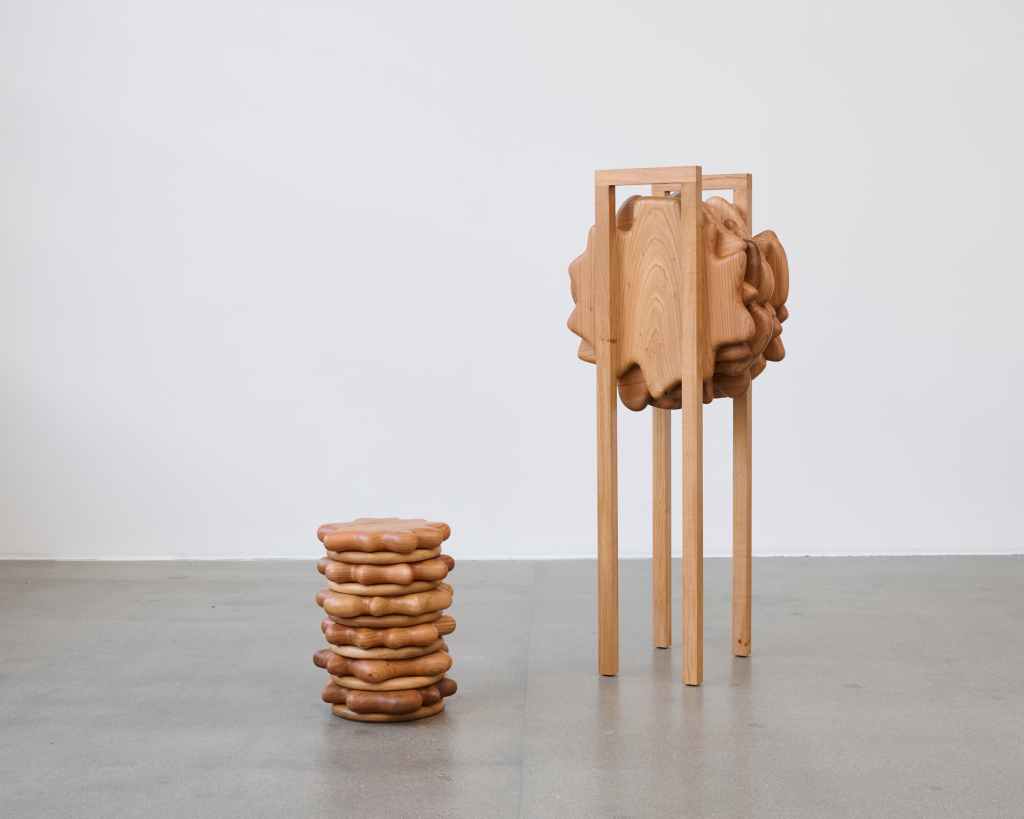
Anne Brandhøj — Veins & Grains
Brandhøj’s pedestal and console explore contrasts between oak’s structural rhythm and elm’s organic, leaf-like bends. The work demonstrates how wood’s intrinsic properties can be orchestrated into compositional harmony.
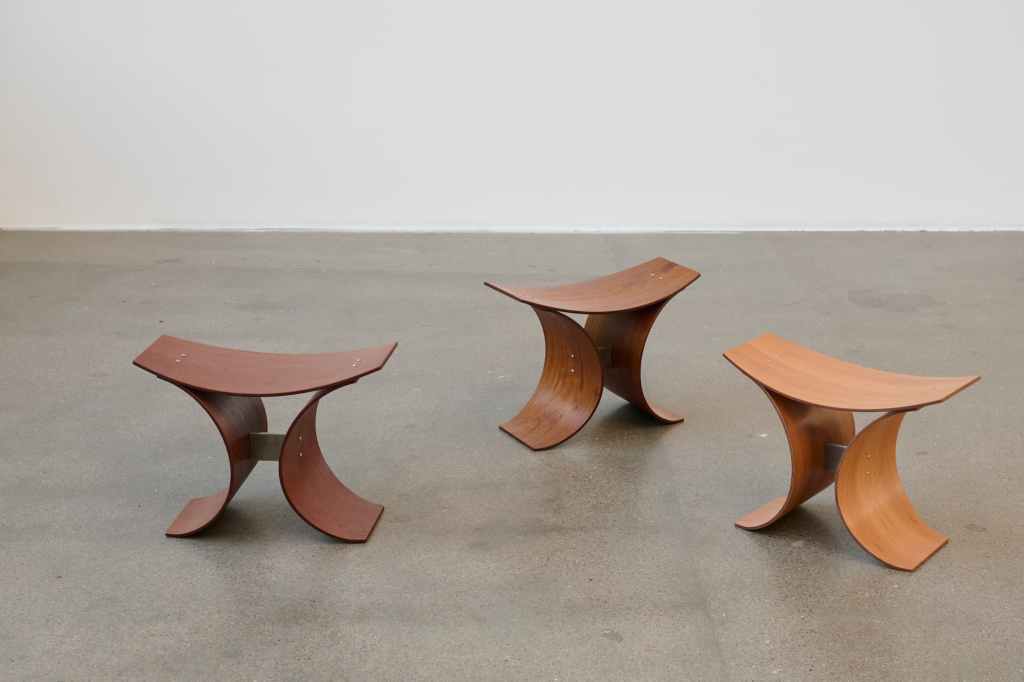
Anne Dorthe Vester — RO Stools
Crafted from pressure-molded veneer layers joined by a steel bracket, Vester’s stools show how industrial processes like lamination can generate both efficiency and expressive sculptural qualities.

Bendixen & Baruël — Forest Sphere and Little Blue
Towering over three meters, Forest Sphere is built from salvaged branches bound by beeswax-coated cotton threads. These works treat discarded wood as raw structural material, turning ecological debris into monumental form.

Hilda Piazzolla — Infill Works
Piazzolla embraces the hidden geometries of 3D printing by leaving infill structures intact. The resulting ceramic forms combine structural necessity with ornament, turning digital byproducts into new craft aesthetics.

Jeppe Søndergaard — Bonds
Using recycled bricks subjected to extreme re-firing, Søndergaard creates objects that melt and warp into new geological forms. His work suggests that even the most rigid building material carries a memory—and a potential return to nature.
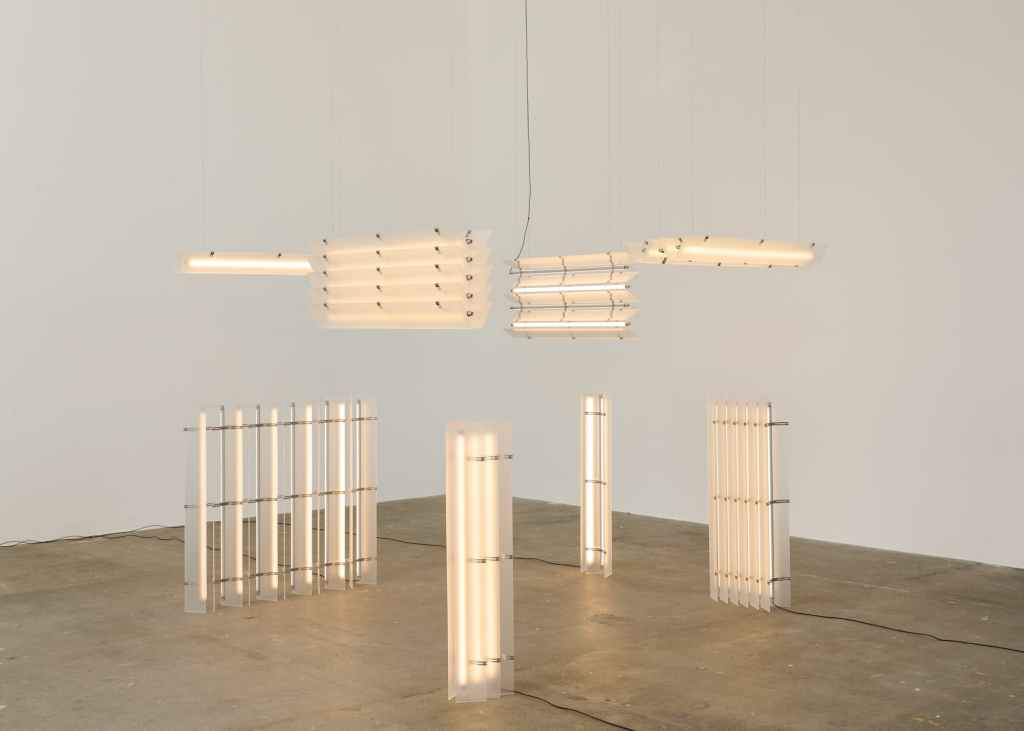
Kasper Kyster — Strata
A modular lighting and furniture series built from steel brackets and frosted acrylic plates, Strata grows in multiple orientations. Its intuitive modularity echoes natural systems of replication and branching.
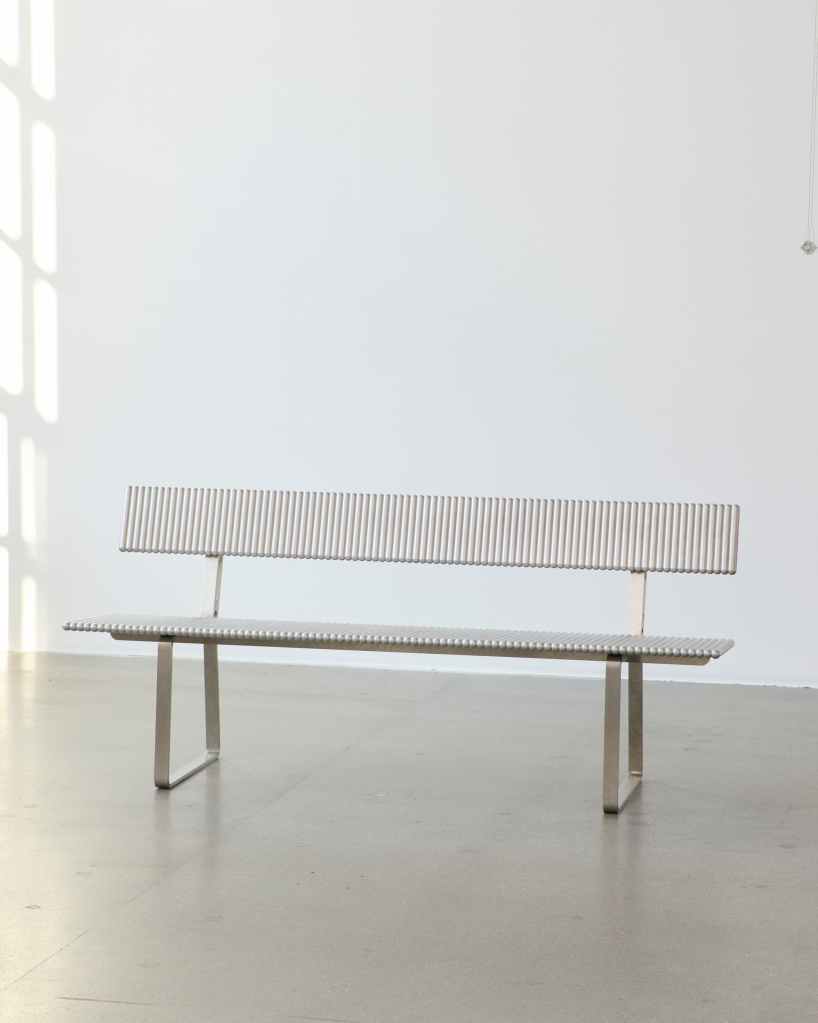
Kasper Kjeldgaard — The Bench and Small Ones
Kjeldgaard contrasts the heaviness of milled aluminum rods in The Bench with the suspended lightness of Small Ones. His work explores balance, repetition, and the fine line between stability and fragility.
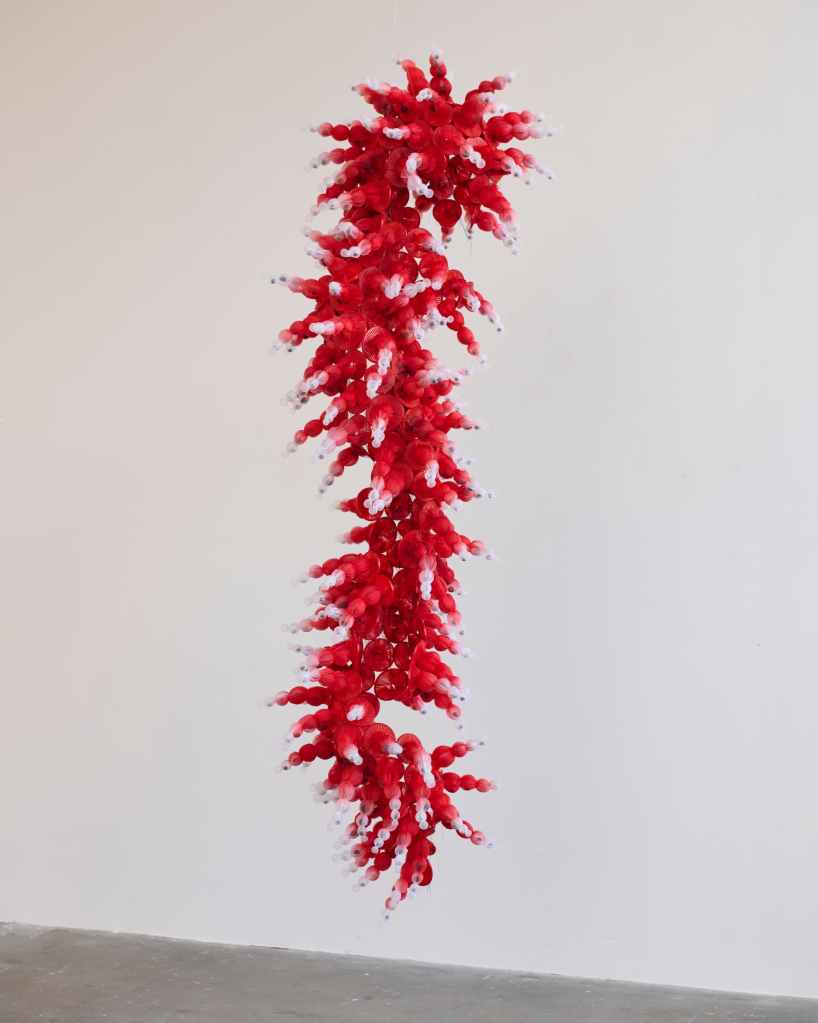
Lærke Lillelund — FIG 02 and FIG 03
Textile-based sculptural works using shibori, digital print, and heat-setting techniques, Lillelund’s suspended pieces mimic natural organisms. Silk and polyester organza respond differently to light and movement, creating dynamic, quasi-living forms.

Morten Klitgaard — Aragonit
A pinewood cabinet holding five branch-like glass sculptures, Aragonit explores fragility and geological form. Klitgaard incorporates crushed stone into molten glass to create surfaces that blur natural and artificial textures.
Material Agency and Translation
Across these works, the exhibition emphasizes the tension between raw material and human intervention. Many of the pieces foreground the agency of glass, soil, wood, or metal, rather than disguising it.
“This year’s exhibition displays works in materials from the mineral kingdom, to soil, glass, wood and textile, all in different stages of man-made processing. All the selected exhibitors have their personal aesthetic language where they translate ancient knowledge through modern and relevant craft and design,” notes Bredahl.
Mindcraft’s Broader Mission
Since 2008, The Mindcraft Project has carved a distinct role in elevating Danish craft and design. Once a fixture at Milan Design Week, it now unfolds annually in Copenhagen while extending its reach globally through digital exhibitions. The hybrid model, say organizers, underscores the project’s ambition to merge “experimental, innovative, and conceptual design approaches with craftsmanship and material knowledge.”
For architects, the exhibition raises critical questions: How might design learn from modularity in natural systems? What happens when craft is treated not as nostalgic preservation, but as a testing ground for future-oriented making?
Exhibition Details
- Dates: October 2–5, 2025
- Venue: The Lab, Vermundsgade 40B, Copenhagen (Free Admission)
- Digital Viewing: mindcraftproject.com, live October 2, 2025
- Opening Reception: October 2, 16:00–18:00