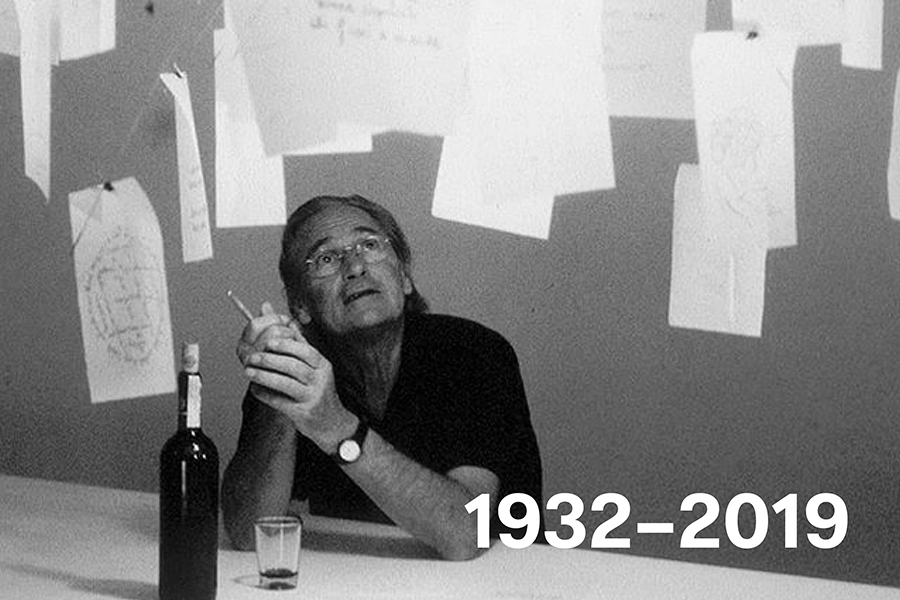
German industrial designer Ingo Maurer, best known for his innovative lighting products and installations, died on Oct. 21. He was 87 years old.
Best known for his creativity and constant reinvention, Maurer cwas celebrated throughout his career for designing minimalist, iconic, and provocative luminaires. “My perception of light is so strong and distinctive, almost an obsession,” Maurer said in a 2007 interview with Architectural Lighting. “This forces me to continuously play and experiment with the reflection and the art of light.”
“[He was] the most inventive and creative lighting designer of the century,” said Design Museum, London director Deyan Sudjic in a tweet.
Maurer was born in 1932 on the island of Reichenau on Lake Constance in Germany. After studying graphic design in Munich, he moved to the U.S. to work as a freelance designer in San Francisco and New York. In 1963, Maurer returned to Germany and opened his design studio, which he operated with his wife Jenny Lau until her death in 2014. In 1969, Maurer gained notoriety for Bulb, which has been part of the collection at the Museum of Modern Art in New York in 1969. Maurer was also awarded the Chevalier des Arts et des Lettres from the French government for his design of Bulb.
In the subsequent decades, Maurer continued to push the boundaries of luminaire design, working with LEDsand, more recently, with OLED technology. He released the EL.E.Dee LED table lamp in 2001, and his Early Future OLED Lamp, created in collaboration with Osram Opto Semiconductors, is often regarded as the first luminaire to employ OLED technology. Additional designs include the whimsical Lucellino (1992), a winged-lamp that is seems to fly off the wall; Porca Miseria! (1994), an intricate pendant featuring shards of dishware; YaYaHo (1994), an adjustable, low-voltage halogen lighting system on suspended horizontal cables; and Zettel’z (1997), a lamp with 31 printed and 49 blank sheets of Japanese paper for personalization.
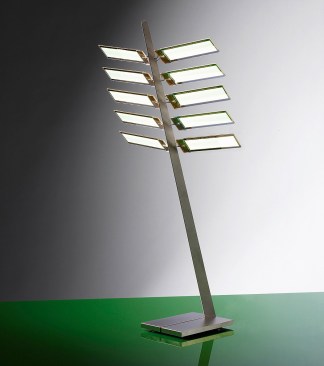
Ingo Maurer GmbH, Munich
Early Future by Ingo Maurer

Ingo Maurer GmbH, Munich
YaYaHo fixture, designed by Ingo Maurer
Maurer was the subject of multiple exhibitions including Ingo Maurer: Light Chance Reflection at the Fondation Cartier pour l’Art Contemporain near Paris in 1989; Ingo Maurer – Light – Reaching for the Moon, which traveled throughout Europe and Japan in 2002; and Provoking Magic: Lighting of Ingo Maurer at the Cooper-Hewitt National Design Museum in New York in 2007.
Ingo Maurer
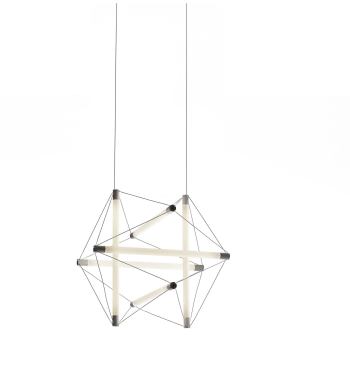
Ingo Maurer and Peter Hamburg's Light Structure. The luminaire features six glass tubes connected and held in tension by insulated wire.
Ingo Maurer
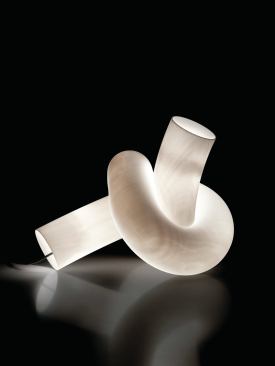
Ingo Maurer's Knot table lamp.
The designer’s eponymous firm released a statement announcing Maurer’s death on Oct. 22: “We mourn our founder and mentor. The company was his family, and so we always felt. … We will always remember him and continue his work in his spirit.”