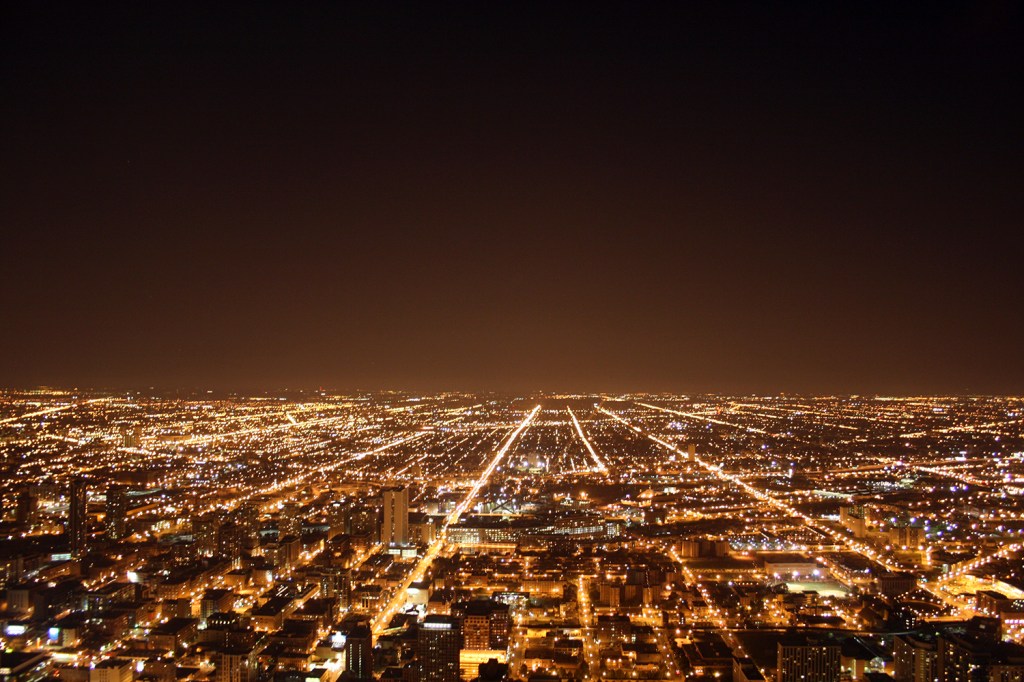
Architects have twin obsessions: downtown and heroic architects. Though I will readily admit to being all too fascinated by those who make form with bravura, at least I do not share the former preoccupation. Perhaps it is because I have not lived in an area you could properly describe as a downtown since I left New York in 1980. I have not worked in one for almost as long, other than a year commuting to an office along what was then a sad pedestrian mall in Santa Monica during the 1990s. From my remove, it continues to astonish me how architecture and architectural criticism concentrates its energies on built-up city cores. The single-mindedness of this focus helps to cause a chicken and egg situation: Because architects ignore everything around those bastions of power and wealth, what gets built in the ‘burbs is generally dreadful and, because there is so little to admire there, architects and critics shy away from those vast territories where most Americans live.
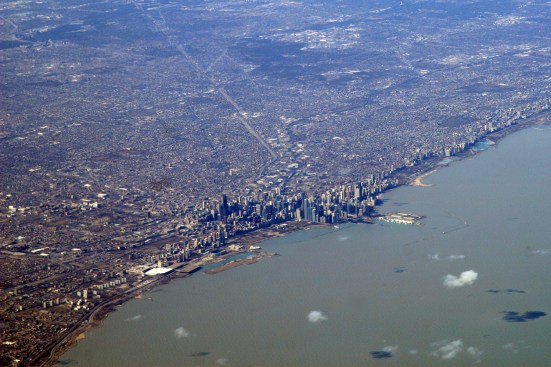
Downtown Chicago
I keep coming back to this issue because it does not go away. It might even be getting worse now that the educated middle class, which includes architects, is moving back to urban cores. I recently attended my inaugural meeting as a member of my local AIA Advisory Committee. The whole session was devoted to the issues of downtown. What made this even more remarkable was that the presentation that kicked it all off, by the head of a local downtown promotion agency, made it clear that there is an ongoing and massive investment taking place in the area. Downtown, in other words, is taking care of itself. What architecture there is, other than a few university buildings, has little interest, as office and housing construction are driven by economics and favor the wealthy who are now moving back to these well-serviced sites. I do not see the overwhelming need to concentrate on this tiny patch of economic production.
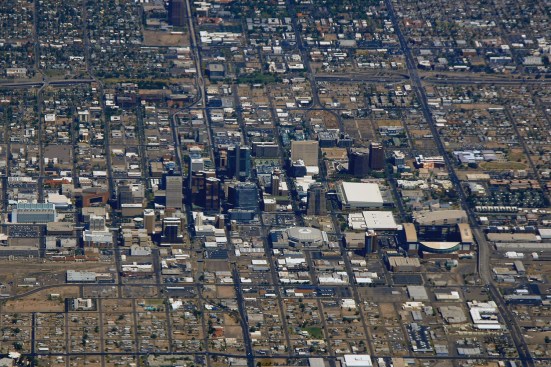
Downtown Phoenix
To get to that meeting, I had to drive for more than half an hour through sprawl. Everywhere there was the formlessness that is proper to our urban environment. Only a few (again) university buildings, “signature office developments,” and sports stadia stood stolidly in this anemic landscape. I turned to drive along the light rail line, and found that within a block or two of downtown the rental barracks of Type 3 apartment buildings overshadowed the fanciful graphics of the transit line and the imported vegetation that lines it. A block behind them the parking lots and Circle Ks took over again.
What is to be done? First and foremost, we need to look at this landscape. Let’s face it: downtown is for strong forms that represent the will of the rich and the powerful. The true architecture of democracy must take place in the vast plains where everybody else lives. It is there that we have to figure out what is to be done. The task at hand there is probably not the erection of eye-catching forms. Nor is the suppression of this reality through the erection of moments of density presenting themselves as washed-out versions of a past that never existed.
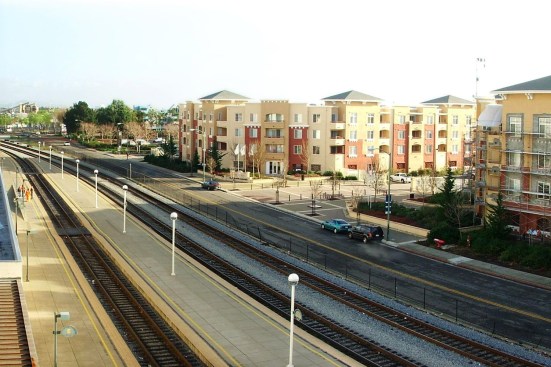
Oakland tranist-adjacent development
The only response architects have articulated for this reality is a regressive one. A few months ago, I went to a presentation on “form–based code.” The presenter had the audacity (or stupidity) to show codes for Phoenix, Cincinnati, Savannah, and—I am not making this up—Accra that were all the same as if this was something good. He also showed, first, those standard renderings with pastel colors and kids with balloons of “transit oriented development” in Pleasanton, California and then, without blanching, the horrid reality of what had been built. This will not work.
I have said it before and I will keep saying it: architects must abandon their obsession with making ever fancier forms for ever denser Command and Control Centers, and start worrying about how to make better—more sustainable, more socially connective, and more beautiful—places out there.