




Courtesy Adrian Smith + Gordon Gill Architecture
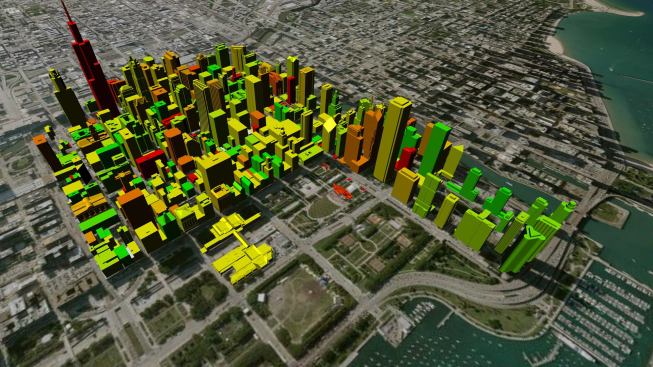
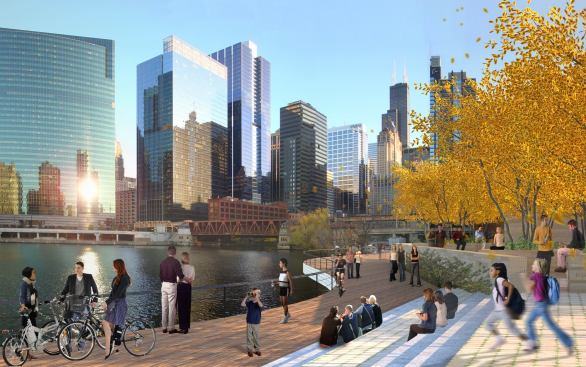
This comprehensive plan maps out a strategy for the more than 550 buildings in Chicago’s Central Loop to meet both the city’s Chicago Climate Action Plan and the 2030 Challenge. The plan employs eight strategies that would reduce carbon emissions from existing commercial infrastructure and encourage building owners to retrofit their properties, while also addressing transit. The city was recently awarded $25 million in grants from the U.S. Department of Energy to implement the plan.
Jury: “This ambitious proposal shows how a dense urban area can effectively continue to reduce greenhouse gas emissions and lessen the carbon footprint of its business district.”
Client: “Ultimately our goal was energy efficiency, but … [the architects] had a much broader vision that helped us look at a comprehensive transformation by adding water, waste, and whole other categories. It’s a very exciting vision that helps people who don’t deal with … [sustainable development] get excited about achieving these multiple purposes.” —Suzanne Malec-McKenna, commissioner of environment, City of Chicago
2011 Institute Honor Awards for Regional and Urban Design
Jury
Daniel Williams, FAIA, (chair), Daniel Williams Architect
C.R. George Dove, FAIA, WDG Architecture
Vivien Li, Boston Harbor Association
Claire Weisz, AIA, WXY Architecture + Urban Design
Bernard Zyscovich, FAIA, Zyscovich Architects
Chicago Central Area DeCarbonization Plan, Chicago
Community | City: Between Building and Landscape. Affordable Sustainable Infill for Smoketown; Louisville, Ky.
Beijing CBD East Expansion; Beijing, China
Low Impact Development: A Design Manual for Urban Areas
Townscaping an Automobile-Oriented Fabric; Farmington, Ark.
Gowanus Canal Sponge Park, New York