
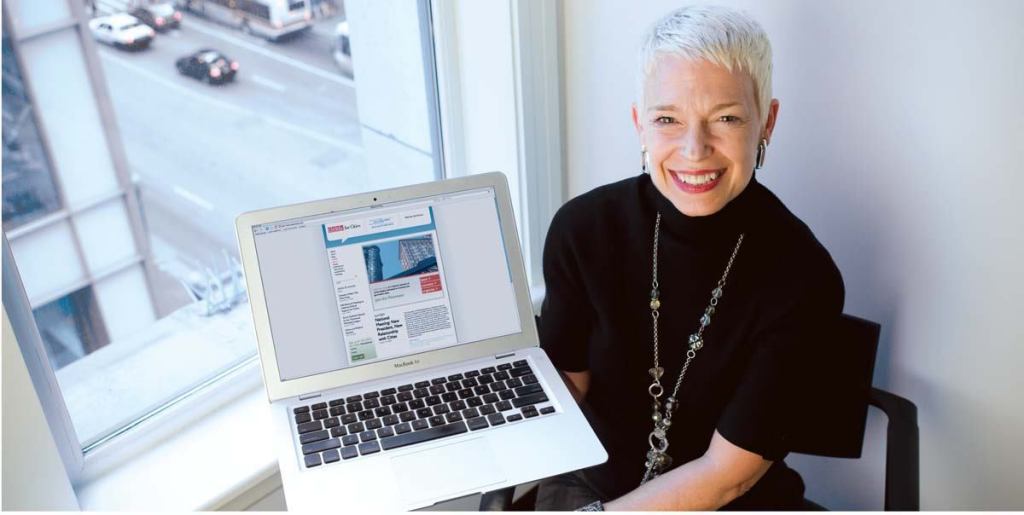
It’s early October in Chicago, and Carol Coletta, president and CEO of CEOs for Cities, is blogging about the smell of burning leaves. Innovative chef Grant Achatz of Alinea inspired the post by capturing the familiar autumnal smell—a fragrance rich with memories—in a dish at a cooking demonstration. Following his example, Coletta’s entry is a concise musing on the potential of emotional response to shape cities. And it is representative of the kind of creative urban thinking that takes place on ceosforcities.org.
CEOs for Cities was founded in 2000 as a kind of think tank, bringing together mayors and executives to tackle issues facing U.S. cities: economics, diversity, sustainability. But the nonprofit’s website is a resource for anyone—not just the suits—engaged in the urban realm. Via its blog posts, news reports, white papers, and the social network and forum My City, the site advocates for innovation and change. Coletta also hosts the weekly radio program Smart City (archived at smartcityradio.com), where she interviews contemporary thinkers and business leaders, tapping their expertise for the cause. “We use [our] site to make our research more available, so that people can make cities better for people to live, work, play, and learn,” says Coletta. “Part of the problem with the field we are in is that there is a lot of data, [and] people don’t always get around to using it. The site is not a file cabinet. It is there to shape decisions.” For instance, CEOs for Cities member Joe Cortright’s white paper “Portland’s Green Dividend” discusses how a good relationship between urban form and transportation makes for a greener city. The points the economist makes dovetail with the architecture profession’s move toward eco-conscious design. Coletta foresees architects leveraging Cortright’s paper and other research on the site to inform clients about the importance of sustainability, especially a viewpoint that goes beyond the building’s footprint. “Architects today are trying to get their clients to be better clients,” she notes. “We provide tools that may help architects do their work smarter.”
