

Courtesy Skidmore, Owings & Merrill
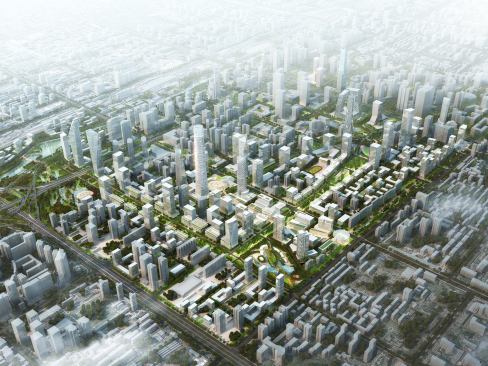
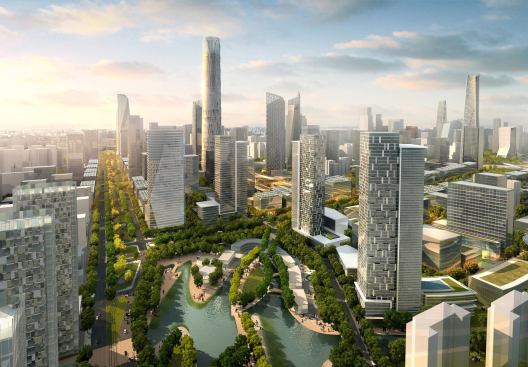
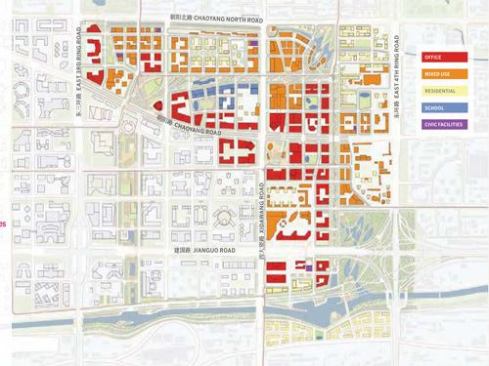
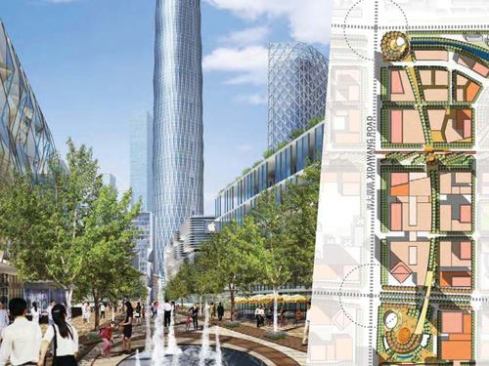
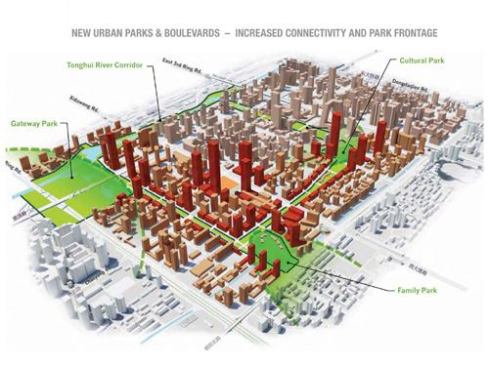
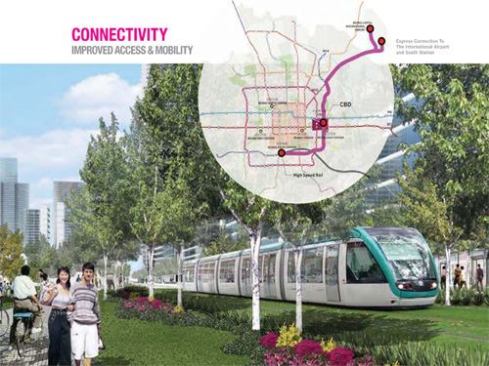
The Central Business District in Beijing needs to expand in order to accommodate a robust market for new commercial and industrial space as well as arts and cultural facilities. The 1.2-square-mile site was designed to accommodate future growth while implementing sustainable systems—such as advanced public transportation and infrastructure with smart-technology-controlled utilities—that ensure a large-scale, low-carbon development with a vast network of open space, parks, and green boulevards.
Jury: “This project shows how planning for a cohesive central business district is the best strategy for truly sustainable development.”
Client: “The scheme submitted by Skidmore, Owings & Merrill is very mature. … The connection with the original CBD Central District has been considered in the design of a green system, business facilities, underground development, and road systems, to show an integrated area. The design also considers the city’s density and massing, and also pedestrian-friendly and comfortable spaces to create a vital city life.” —Wang Qingfeng, chief of the Planning Administration Division, Beijing Central Business District Administration Committee
2011 Institute Honor Awards for Regional and Urban Design
Jury
Daniel Williams, FAIA, (chair), Daniel Williams Architect
C.R. George Dove, FAIA, WDG Architecture
Vivien Li, Boston Harbor Association
Claire Weisz, AIA, WXY Architecture + Urban Design
Bernard Zyscovich, FAIA, Zyscovich Architects
Chicago Central Area DeCarbonization Plan, Chicago
Community | City: Between Building and Landscape. Affordable Sustainable Infill for Smoketown; Louisville, Ky.
Beijing CBD East Expansion; Beijing, China
Low Impact Development: A Design Manual for Urban Areas
Townscaping an Automobile-Oriented Fabric; Farmington, Ark.
Gowanus Canal Sponge Park, New York