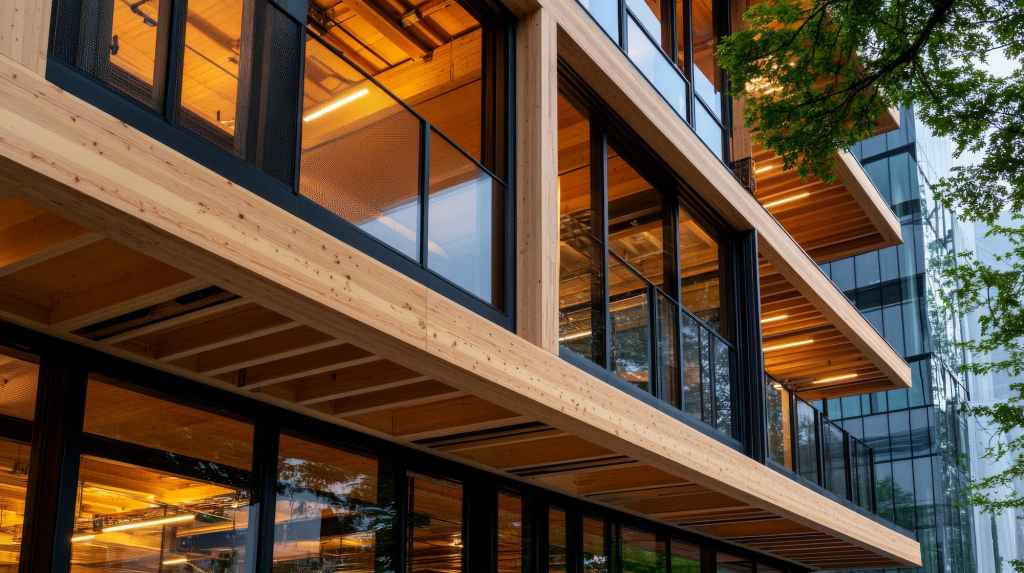
Mass timber is gaining momentum as a structural material that, along with many other attributes, can reduce the embodied carbon in new buildings and retrofits. Despite this potential, and widespread enthusiasm in the design community, the uptake of mass timber has been relatively slow.
Architecture 2030 and Pilot Projects Collaborative’s new report, Mass Timber Tipping Point, provides a cross section of experiences from design firms of all shapes and sizes and uncovers the most common challenges that hinder design firms in delivering these innovative construction systems. Authors Vincent Martinez, CEO of Architecture 2030, and Scott Francisco, Founder and Director of Pilot Projects, provide their insights on the findings.
Over the past decade Architecture 2030 and Pilot Projects have been engaged in numerous dialogues and debates on the sustainable and low-carbon features of mass timber construction. This innovative construction system shows promise in reducing the climate impact of new construction across North America and other high growth regions around the world. Yet it is clear that while the mass timber industry is growing, it has struggled to reach a tipping point where it readily competes with conventional steel and concrete structural systems.
How was this project different?
The key differentiator of this project was our commitment to tap into the particular experience and knowledge of architecture and engineering design teams, given their central position in the chain of decision-making.
We started with the observation that many firms have invested a tremendous amount of effort in advocating for these solutions, including costly investments in research, policy advocacy, and creative solutions to challenging design and budget constraints. We believed these investments offered a trove of battle-tested insights simply unavailable elsewhere.
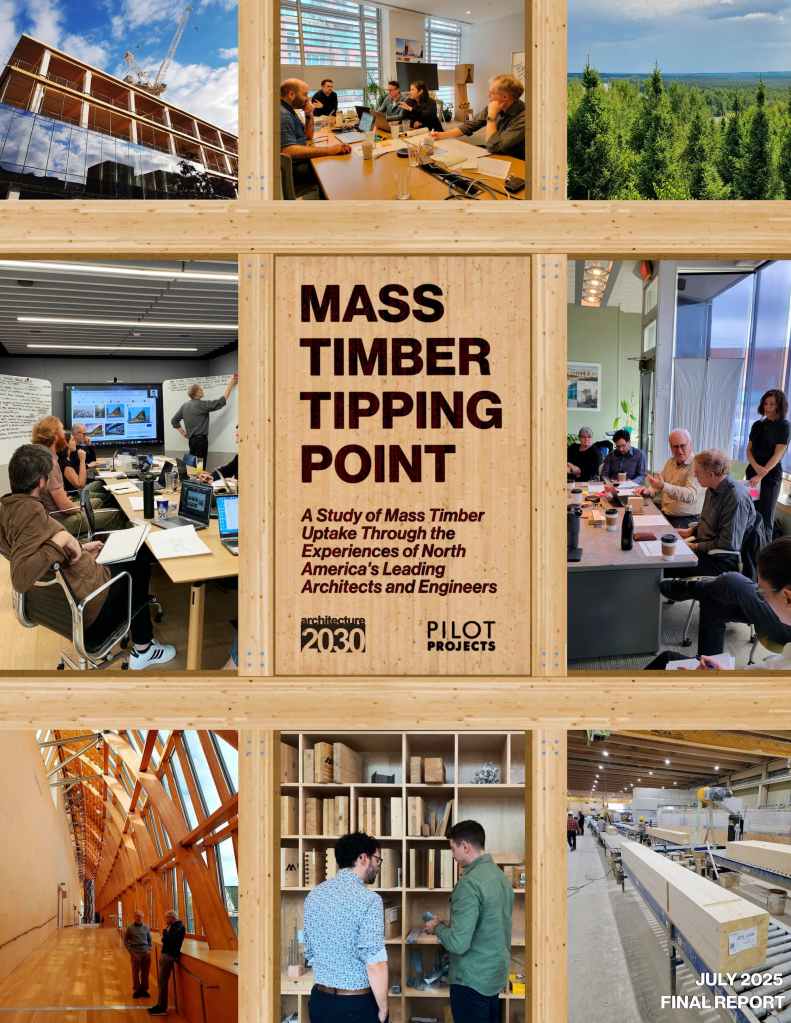
The Mass Timber Tipping Point project began with a conventional survey, tailor-made for firms across North America. The heart of the research, however, came from an in-person listening tour across the US and Canada with a true cross section of architecture and structural engineering firms. Our goal was to learn from their real-world experiences with mass timber, not just hear the opinions of its most vocal champions.
We facilitated these in-person workshops with twelve firms that represent a mix of regions, sizes, and, most importantly, varying levels of mass timber experience and success. The workshops were carefully designed to create an intimate environment for candid dialogue about their specific experience and challenges in implementing mass timber design. We ensured that diverse voices within each firm could be heard, from C-Suite leaders and project managers to marketing teams and interior designers. This was crucial to expanding insights beyond sustainability experts and mass timber champions and gathering a full, honest picture of the challenges in implementing mass timber design
What did we learn?
After evaluating the workshop and survey results (including over 1200 pages of live conversation transcripts), we identified 25 distinct challenges that are impeding the adoption of mass timber. These challenges revealed interconnected barriers across technical, financial, and cultural domains, and could be viewed through 6 crosscutting themes: Experience, Cost, Confidence, Sourcing, Policy, and Carbon.
We found that Cost and Experience (often a lack thereof) were the two most significant hurdles, but the majority of challenges were interrelated. This led to the realization that addressing one challenge might successfully mitigate others in a virtuous chain reaction.
While many of the challenges that prevent mass timber from reaching its tipping point are significant, design firms still find ways to successfully implement mass timber solutions. Our research identified numerous projects, practices, research publications, and policies that successfully address the identified challenges.
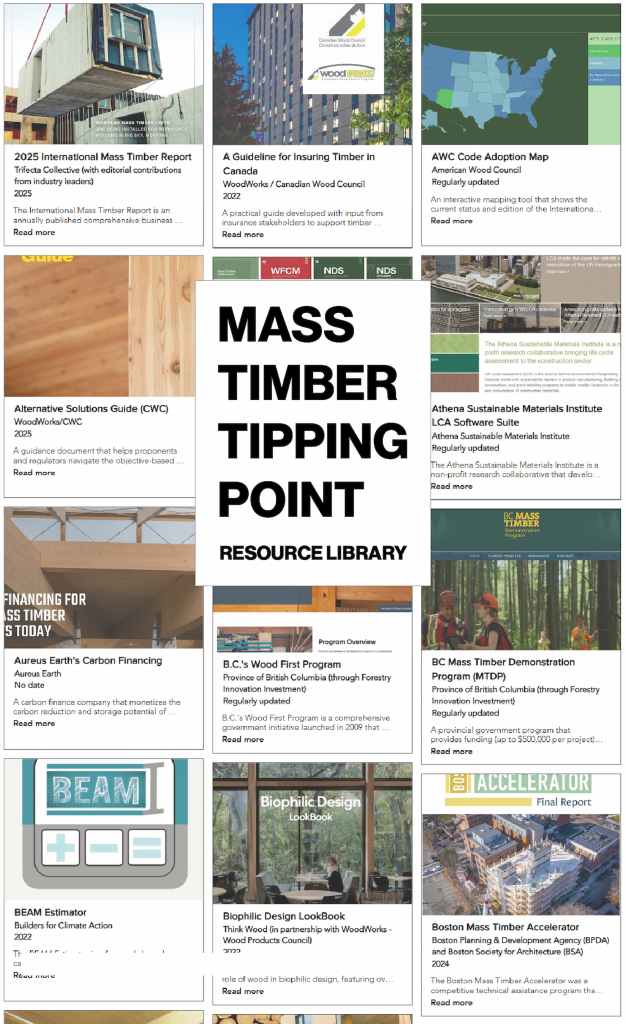
Additionally, it was clear from our conversations that many impactful resources that can unlock a scaling-up of mass timber projects already exist. However these resources are not yet used systemically and could be better organized, supported, and leveraged by key stakeholders, including architects and engineers, building contractors, the mass timber supply chain, government agencies, and industry influencers.
What’s Next?
Mass timber stands at a potential tipping point, poised to play a transformative role in sustainable construction and storing carbon in our built environment, if it can be successfully scaled to meet this opportunity. The challenges to achieving mass timber at scale are real and specific, and the potential for positive impact is even greater.
The Mass Timber Tipping Point Report shows that architects and engineers are eager to innovate, collaborate, and drive change—but they cannot do it alone. The shift will demand new levels of awareness, coordination, and skills across all sectors and stakeholders delivering our built environment.
We encourage designers to read the full report, and we look forward to sharing the next phase of our work as we ask similar questions to the builders, policymakers, and industry leaders who are likewise contributing to our shared environments of practice, action, and planetary health.