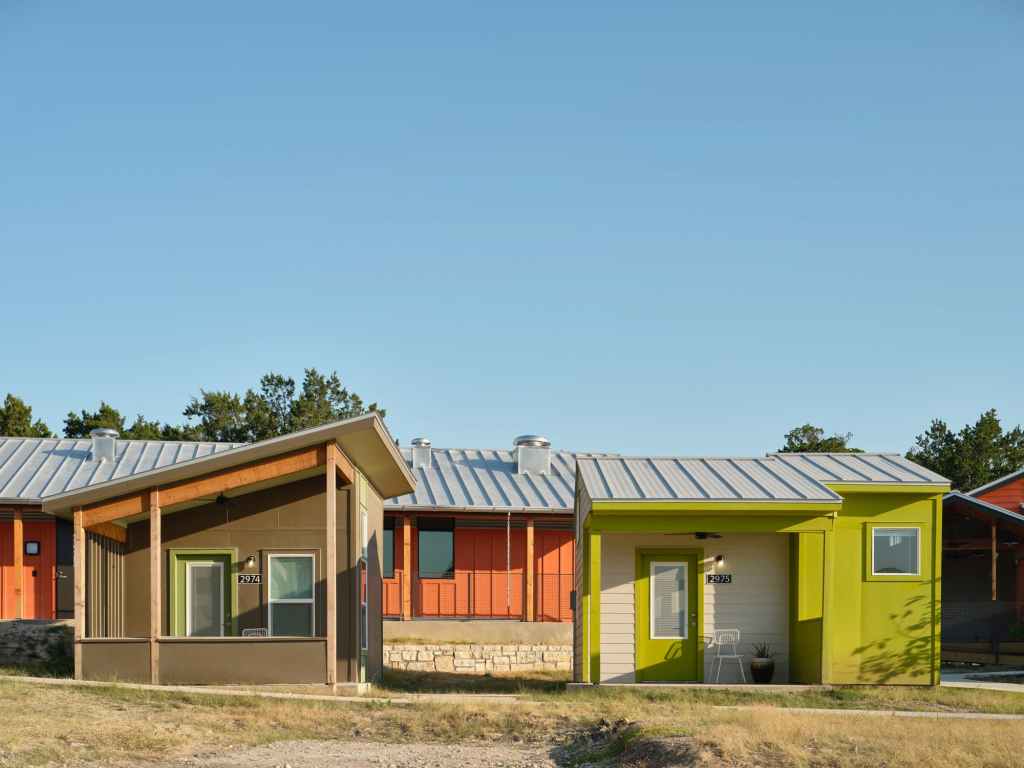
On the far northeast edge of the city, just beyond the hum of US-183, a different kind of neighborhood rises from the Texas soil. Community First! Village—already home to more than 420 men and women who once lived on the streets—is celebrating a decade of operation. Its newest chapter, the Hog Eye Road expansion, signals not just physical growth but a renewed articulation of the idea that architecture can be a tool for belonging.
Designing for Dignity and Daily Life
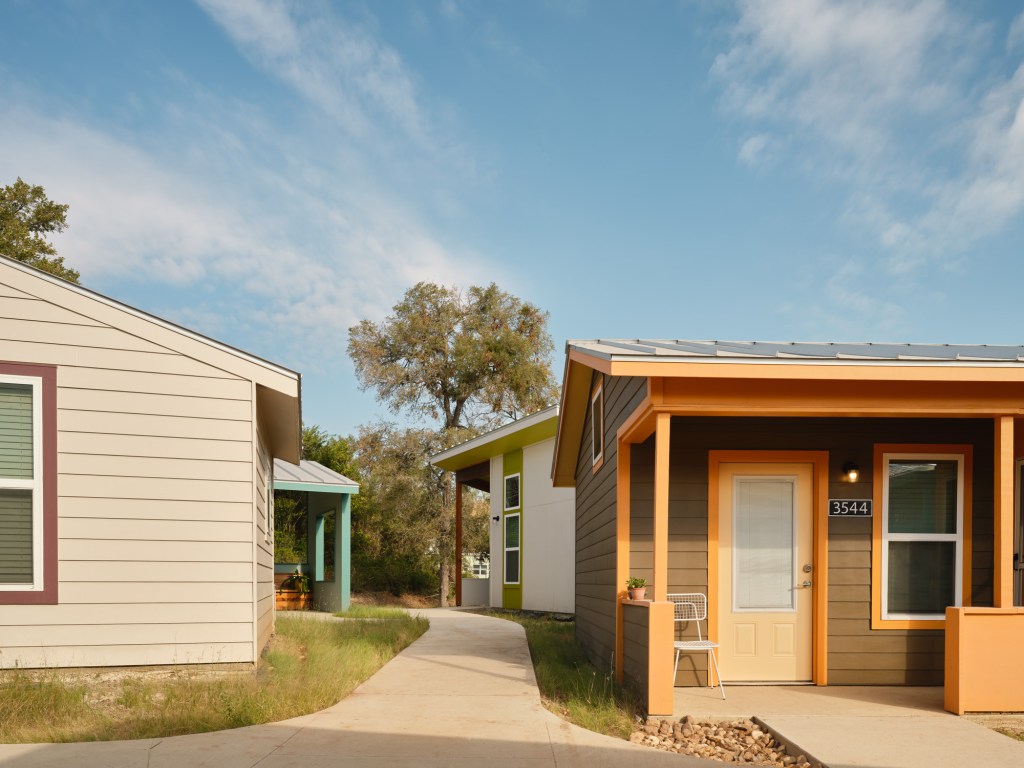
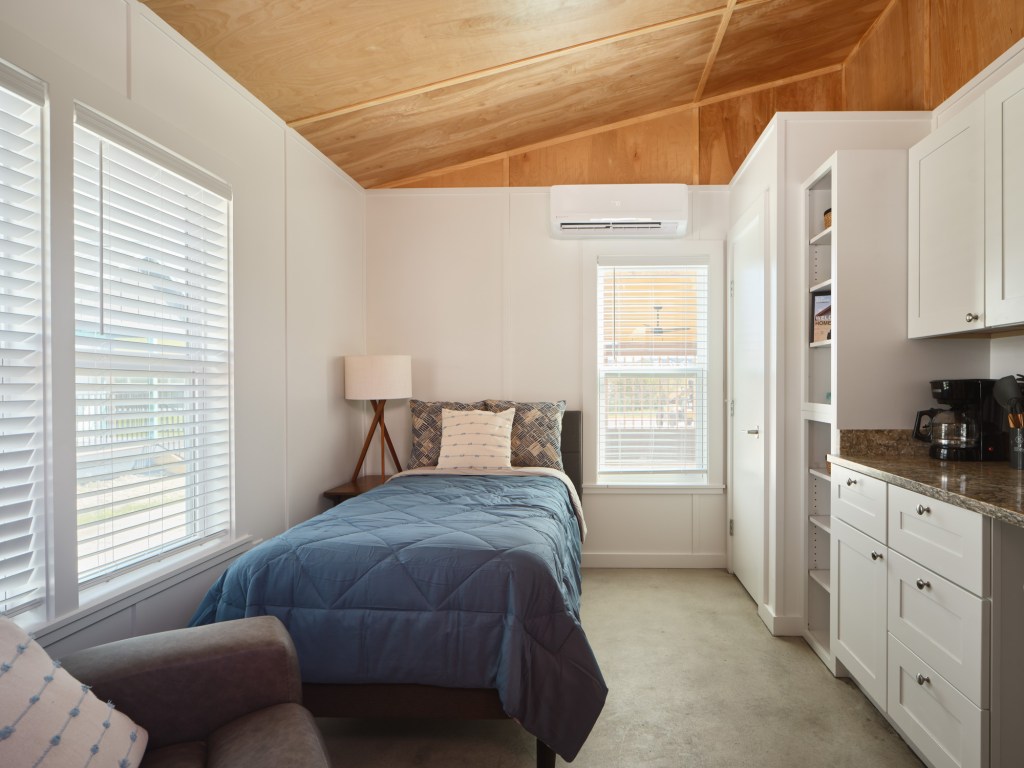
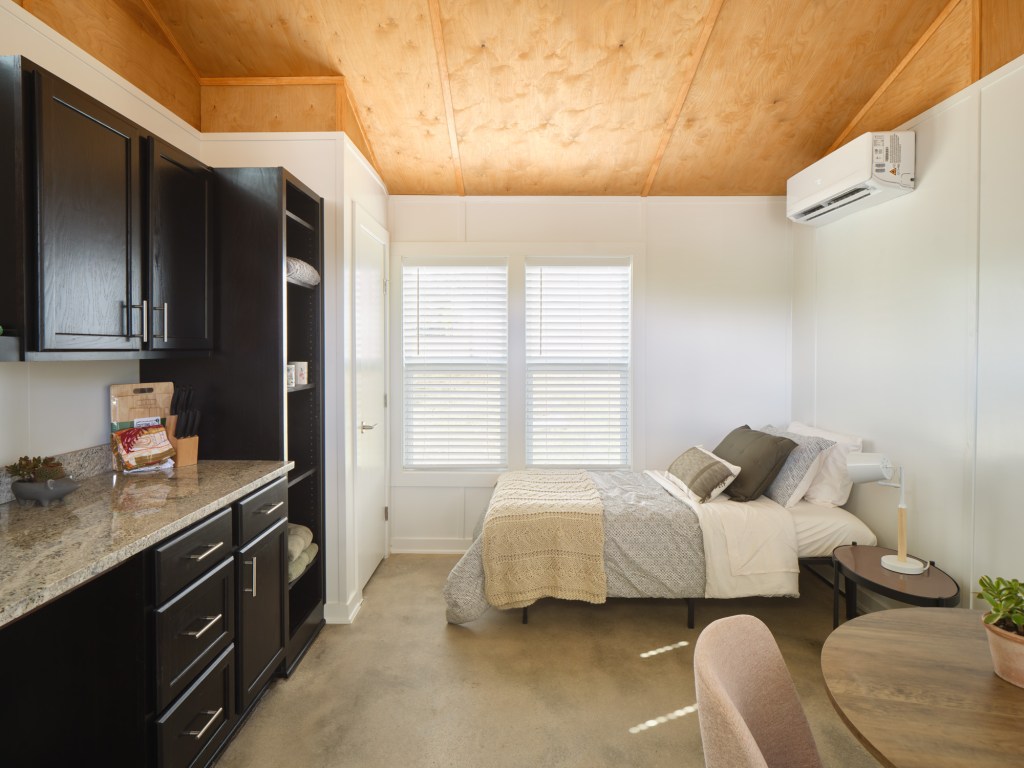
At the center of this expansion is Mark Odom Studio, the award-winning Austin practice that has developed six distinct microhomes ranging from 144 to 200 square feet. Far from simply shrinking conventional houses into tiny form, each model is crafted around the daily rhythms, behavioral patterns, and emotional needs of its future residents. For a population emerging from chronic homelessness—often carrying trauma, hypervigilance, or the need for solitude—architecture cannot be generic. It must be precise.
Two Housing Typologies, Six Distinct Microhomes
In this context, the firm’s typologies fall into two broad families. Three of the homes, with names like The Alcove House, The Bungalow, and El Camino a Casa, are designed for extroverted residents who gravitate toward social interaction. These plans emphasize open porches, clear sight lines to neighboring dwellings, and spatial cues that invite conversation. The remaining three, known as The Delight House, The Birdwatcher, and The Happy Hideaway, prioritize privacy through carefully framed windows, sheltering overhangs, and interior layouts that create a personal refuge.
Scalable Growth Through Architectural Diversity
Each of the six models will be repeated across the expansion and interspersed with three additional housing prototypes contributed by other collaborators. Once complete, the Hog Eye Road phase will add 600 new homes to the Village, bringing significant diversification in scale, form, and architectural language.
Planning “Neighborhoods of Knowingness”
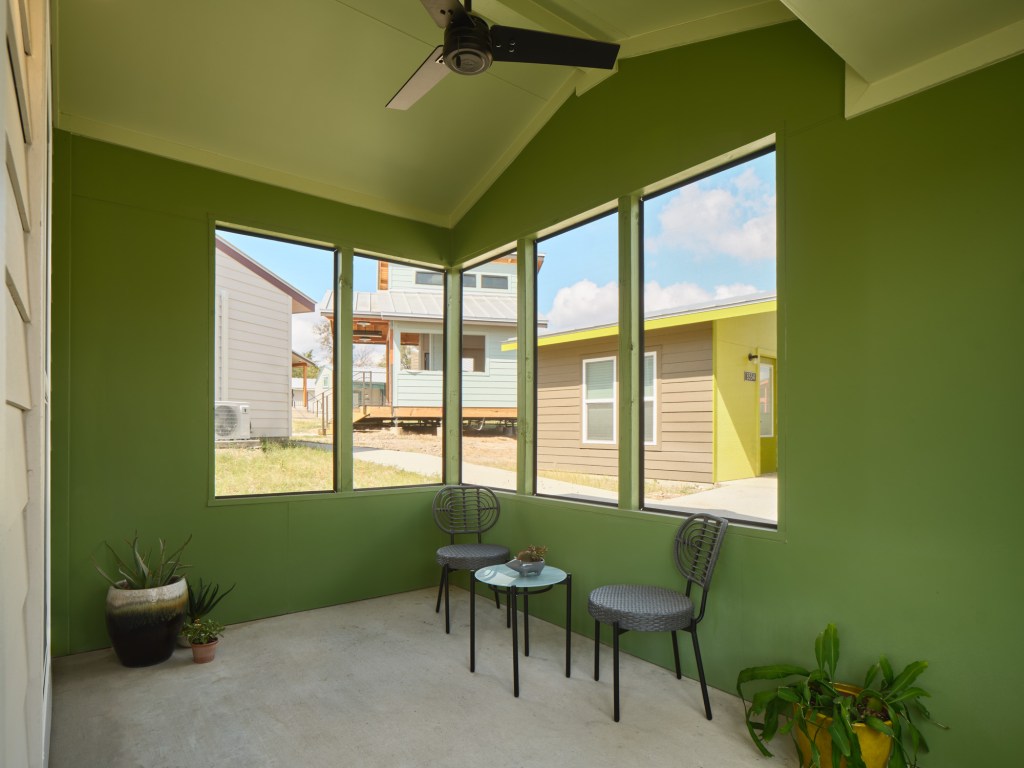
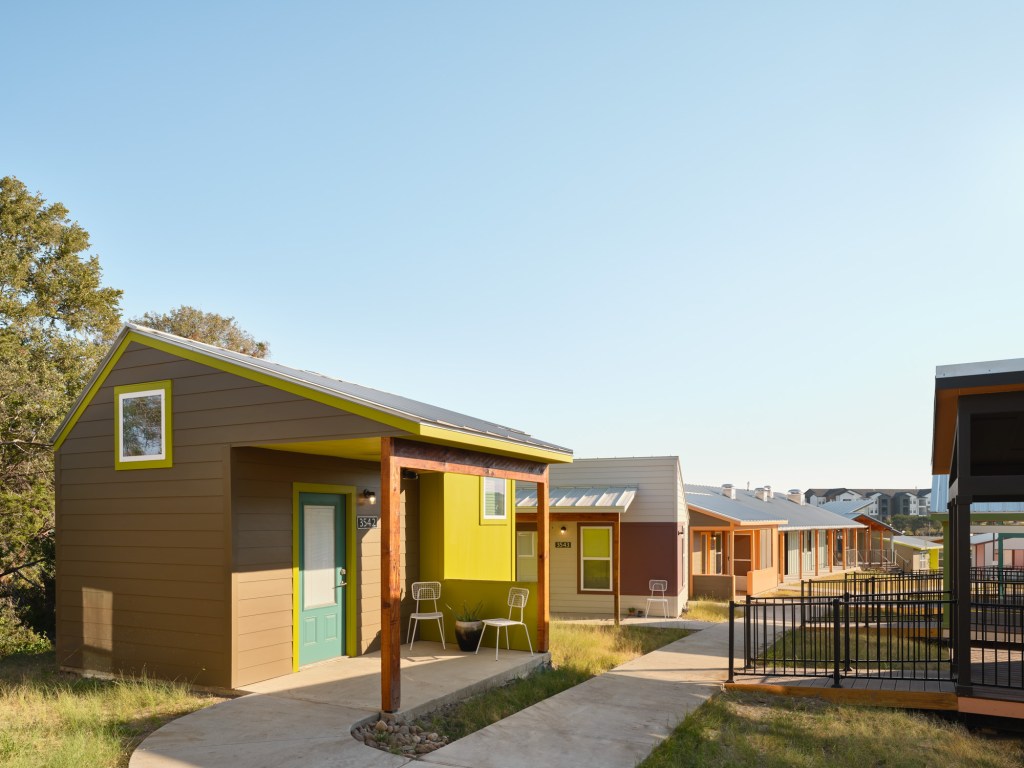
The architecture, however, extends beyond the houses themselves. Mark Odom Studio partnered closely with Mobile Loaves & Fishes—the nonprofit that founded and operates Community First! Village—to shape the layout of the broader site. The result is a new organizational idea the team refers to as the “Neighborhoods of Knowingness.” These 14 clusters introduce an alternative to traditional supportive-housing blocks by creating intimate districts of homes centered around a shared building and a common gathering space. Instead of linear rows or rigid grids, paths meander between front porches, native plantings, community rooms, and open lawns designed to prompt regular interaction. The sequence from front door to path to communal space creates a choreography intended to strengthen social ties and support structures.
Architecture as a Form of Care
For many residents, this gentle spatial framework is as important as the house they occupy. Social isolation is one of the largest predictors of recidivism back into homelessness. Architecture that subtly encourages daily contact—without overwhelming those who need privacy—becomes a form of care.
Designing with Inspiration, Efficiency, and Empathy
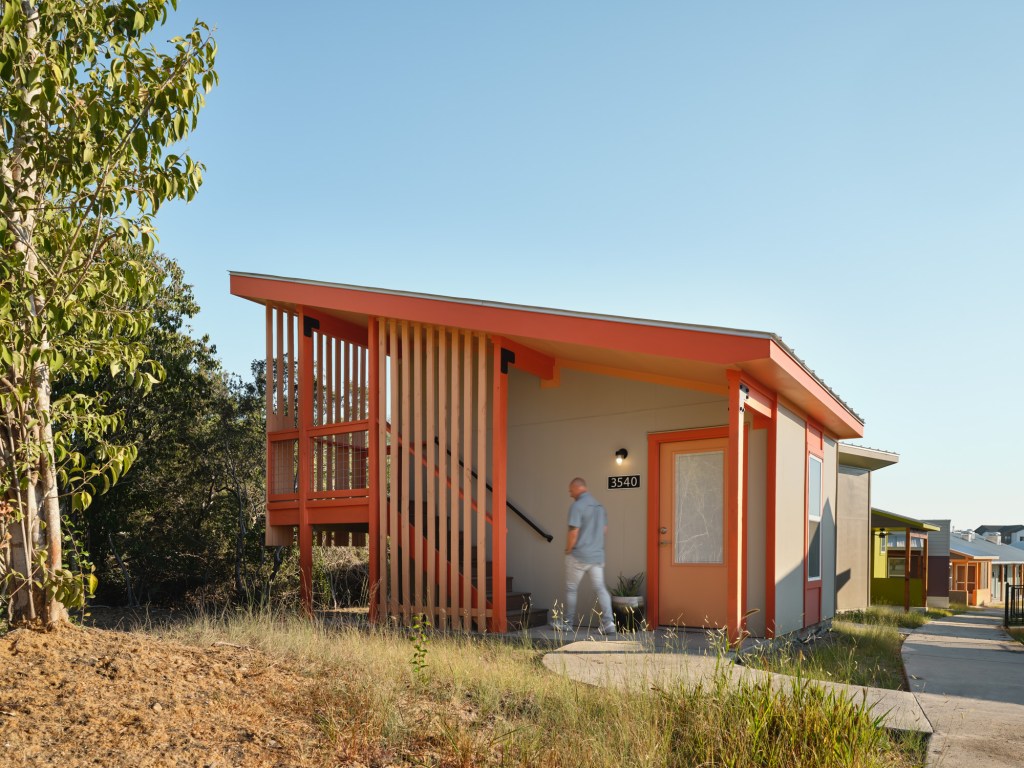
“It was an incredible experience and honor to develop the new microhomes for Community First! Village,” says Mark Odom, founding principal of the studio. “We drew inspiration from the creative and distinctive tiny home designs introduced in Phase I and II of the Village by several talented local firms. We wanted to capture the same diversity in form and function while designing homes that could be efficiently constructed, easily replicated, and delivered on time and within budget.”
A Nationally Noted Model for Scalable Housing Solutions
This last point cannot be overstated. As cities across the United States struggle to address homelessness through models that are either too expensive or too bureaucratically rigid to scale, CFV’s strategy—its combination of philanthropy, volunteer labor, and replicable construction—has drawn national attention. Dozens of organizations from other states have studied the project, hoping to adapt its lessons to their own regions.
Embedding Social Mission Into Built Form
The expansion arrives at a moment when architectural discourse is increasingly focused on equitable design, trauma-informed space planning, and the responsibility of architects to engage in public-interest work. Community First! Village embodies many of these conversations in a built environment that is legible, modest, and determinedly human.
A Case Study in Scalable, Compassionate Urbanism
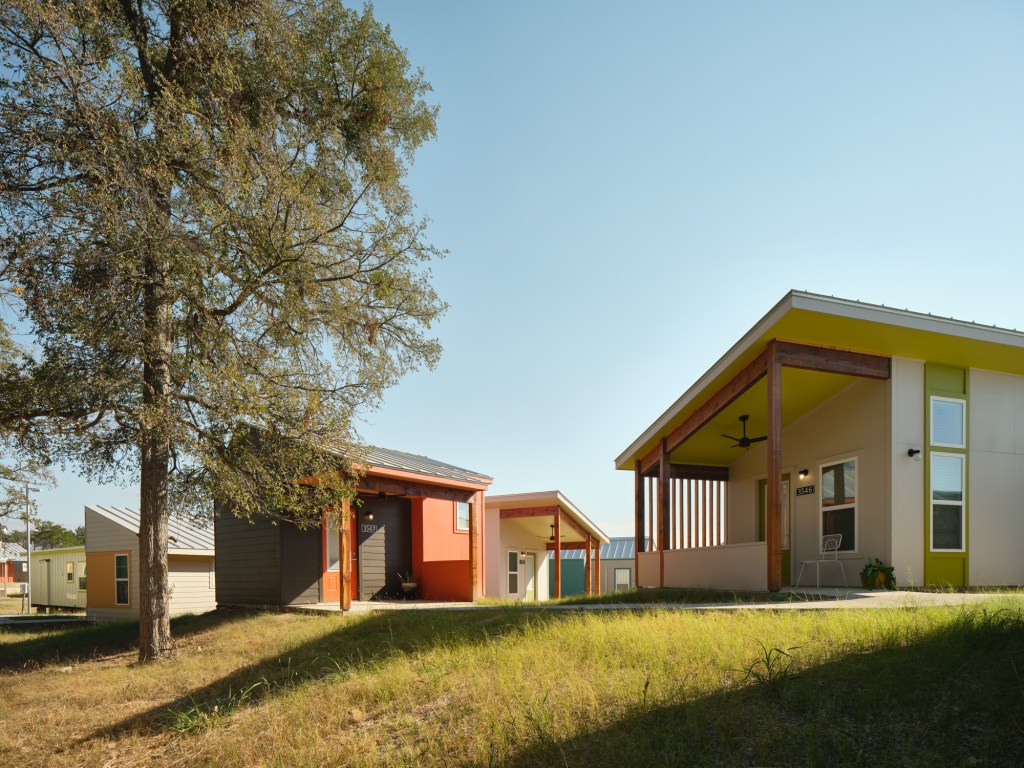
Across its 178 acres, the Village offers a small but compelling counter-narrative to the assumption that supportive housing must be either institutional or prohibitively expensive. Instead, it presents an alternative: small homes, tightly woven community networks, walkable clusters, shared amenities, and architecture that balances individuality with collective belonging.
Looking Ahead: A Blueprint for Transformational Housing
When the Hog Eye Road phase begins welcoming residents at the end of the year, Community First! Village will enter its second decade with renewed architectural ambition—and a clearer sense than ever that thoughtful design can play a transformative role in the lives of people leaving the trauma of the streets.
Design as Infrastructure for Change For architects who grapple with the limits of affordability, the constraints of housing policy, and the urgent need for scalable solutions, the Village stands as an evolving case study in what happens when design is not simply placed on top of a social mission but is embedded within it. Here, the smallest homes become the foundation for the biggest possible change.
CFV, Hog Eye Road Expansion, project team:
Developer: Mobile Loaves & Fishes
Builder: TBD Volume Home Builder, Volunteer Built, Sip homes and “In Kind” builds by custom home builders. Engineer: FORT Structures