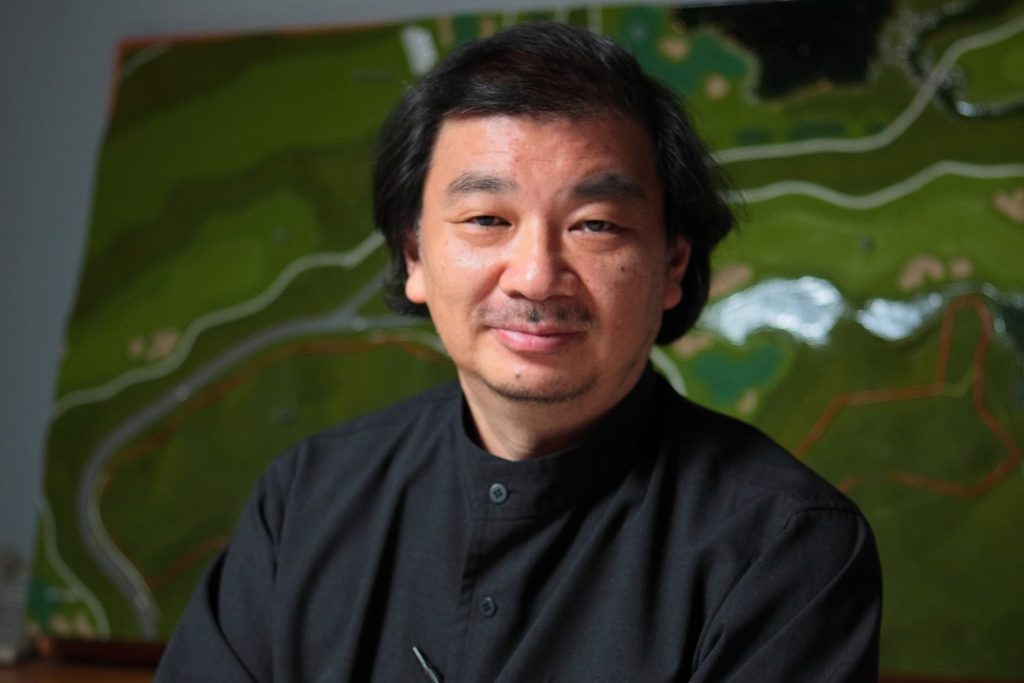
The American Institute of Architects has awarded its 2026 Gold Medal—the profession’s most prestigious honor—to Shigeru Ban, Hon. FAIA, a figure who has spent four decades proving that architecture’s most transformative power often lies in its simplest materials. Ban’s body of work, spanning disaster-relief shelters to acclaimed museums, has fundamentally shifted how architects think about ecological responsibility, structural innovation, and the moral obligations of design.
For an award traditionally associated with iconic buildings and lifetime achievement, Ban’s selection stands out. His influence stems not only from the elegance of his cultural and commercial projects but from a conviction that architecture should serve those most in need. His insistence that “architects must work for society, not just for the privileged” has shaped a generation of practitioners seeking a more ethical, sustainable, and open-ended discipline.
Ban’s journey began far from the global stages on which he now works. Born in Tokyo in 1957, he grew up in a household where renovation seemed constant and where the craft of carpentry left an indelible impression. He spent his childhood assembling furniture from leftover wood scraps, convinced he would one day become a carpenter. That early fascination with materials—especially humble ones—would become the philosophical core of his practice.
In 1977, Ban left Japan to study English and soon landed at the fledgling Southern California Institute of Architecture. SCI-Arc’s improvisational ethos matched his sensibilities, but after four years he transferred to Cooper Union, where he encountered the intellectual rigor of Ricardo Scofidio, Bernard Tschumi, and John Hejduk. Each shaped his understanding of architecture as a conceptual and cultural act, not merely technical construction. A formative stint at Arata Isozaki’s Tokyo office offered a contrasting apprenticeship—global, exacting, and deeply structural. Ban graduated with a Bachelor of Architecture in 1984.
By 1985, he had launched his own practice in Tokyo, despite never having worked full-time in another office. In parallel, he served as a curator at Axis Gallery, designing exhibitions for Emilio Ambasz, Alvar Aalto, and Judith Turner. It was during an Aalto show that Ban began experimenting with paper tubes, initially as an ecological alternative to conventional exhibition materials. That experiment would become one of contemporary architecture’s most surprising breakthroughs.
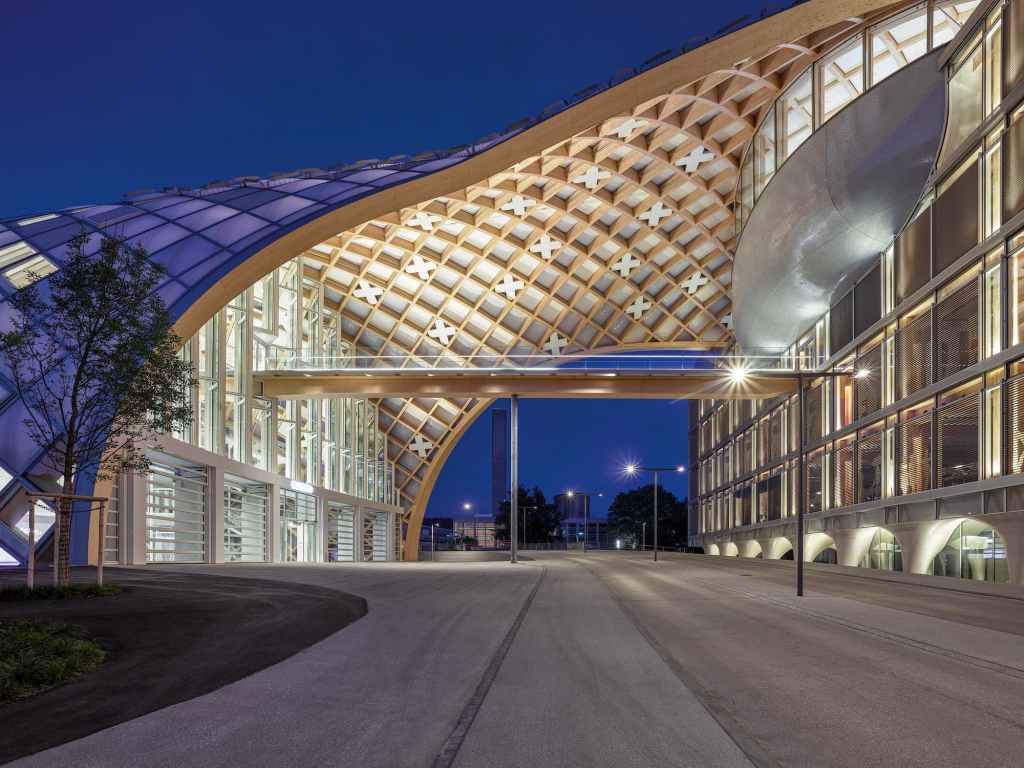
(left) and Cité du Temps (right), 2019.
His early case-study houses—the Curtain Wall House, the Wall-Less House, and the Naked House—revealed a designer willing to dismantle received notions of enclosure and structure. But it was the refinement of paper-tube construction that captured the world’s attention. Ban demonstrated that these inexpensive, recyclable cylinders could form viable columns, beams, and vaults, whether for temporary shelters or permanent public buildings. The Cardboard Cathedral in Christchurch, built after the 2011 earthquake, remains one of the boldest examples: a luminous, soaring structure assembled from paper, timber, and polycarbonate.
Yet Ban’s architectural fame has never overshadowed his humanitarian work—and perhaps it never could. After the 1995 Kobe earthquake, he founded the Voluntary Architects’ Network (VAN) to create dignified, fast-to-build shelters for displaced people. The scale of VAN’s work is staggering: more than 50 projects across 23 countries, from paper log houses for refugees in Rwanda and Maui to modular privacy partitions for Ukrainian families fleeing conflict. For Ban, these are not charitable side projects but an extension of architectural responsibility. His efforts earned him the Mother Teresa Award for Social Justice in 2017.
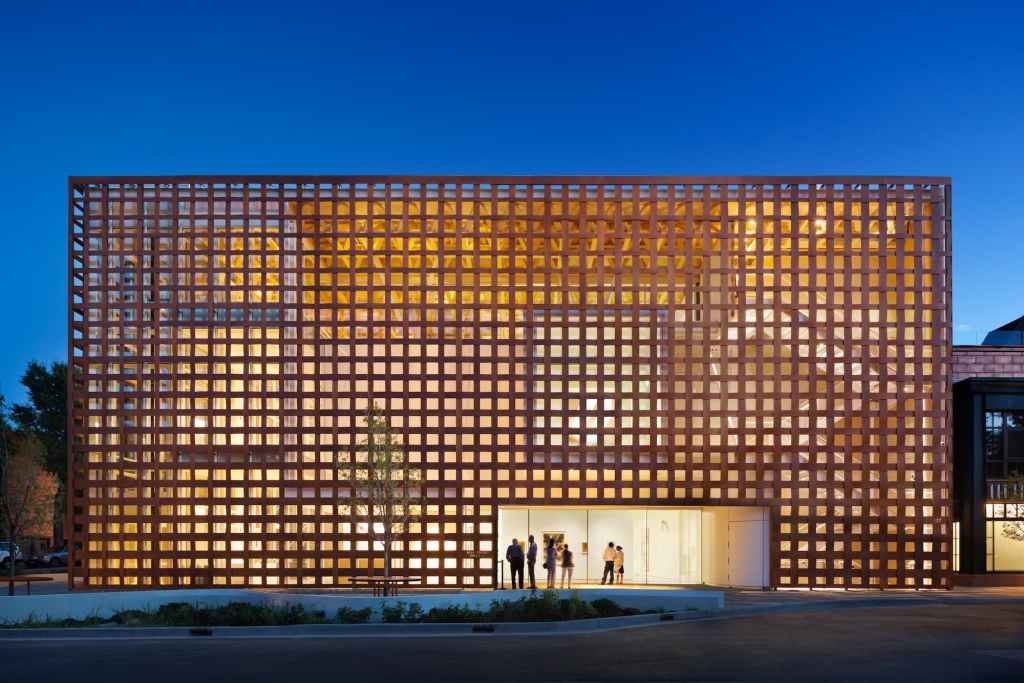
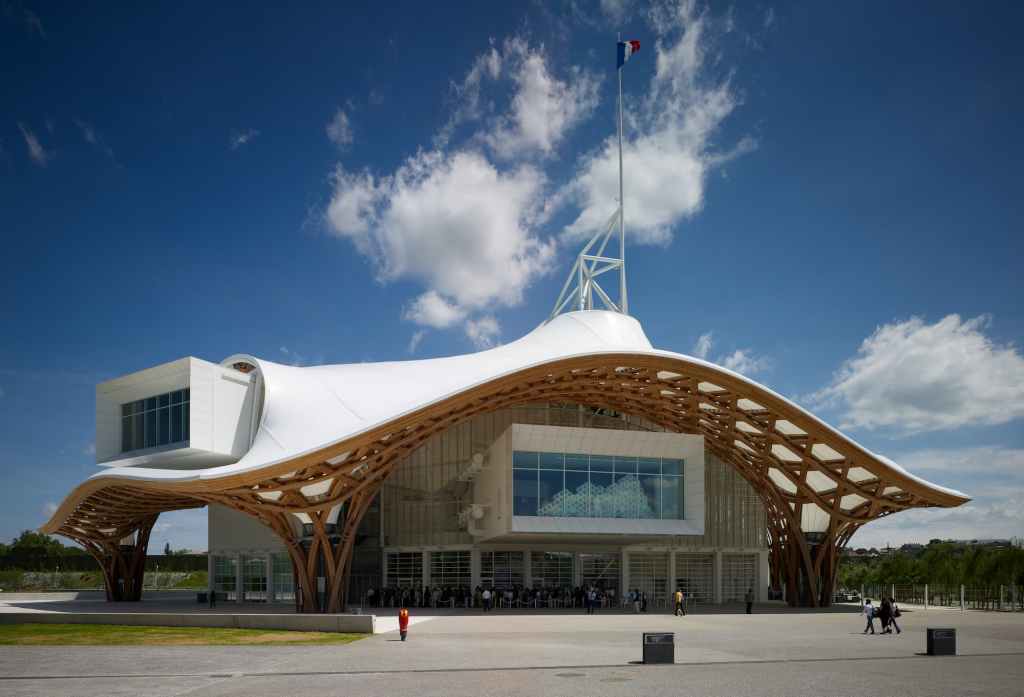
At the same time, his cultural commissions highlight a designer of exceptional technical finesse. The Centre Pompidou-Metz, with its sweeping timber gridshell roof inspired by a woven bamboo hat, is a landmark of contemporary wood engineering. In the United States, the Aspen Art Museum—a delicate lattice of timber and resin—demonstrates Ban’s ability to fuse material experimentation with contextual sensitivity. His renovation of New York’s Cast Iron House shows how a preservation-minded architect can intervene with both restraint and invention.
Ban has also been a powerful educator for more than 30 years, teaching at institutions including Harvard, Cornell, and Columbia. His pedagogy privileges building over drawing—inviting students to test materials with their own hands, sometimes even on VAN’s field projects. Through teaching, he has propagated not just techniques but values: that architecture’s “innovation” is hollow unless it addresses human need.
The AIA Gold Medal, then, honors far more than a collection of buildings. It acknowledges a career defined by the belief that sustainability requires both technological and ethical imagination; that beauty can emerge from recycled matter; and that an architect’s role extends well beyond the borders of the profession.
Shigeru Ban’s work offers a model for how architecture might meaningfully respond to a world facing climate stress, displacement, and inequity. His Gold Medal is not simply recognition—it is a reminder of what the discipline can still become.