
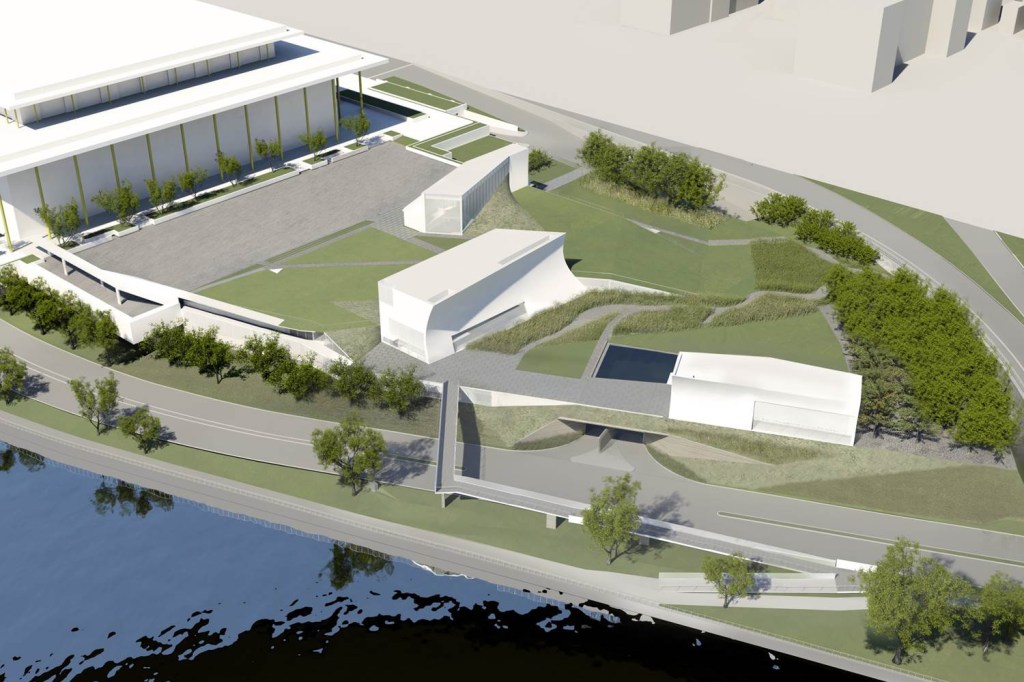
Steven Holl Architects has won approval for a pedestrian bridge to accompany its expansion to Washington, D.C.’s John F. Kennedy Center for the Performing Arts. Hired in 2013 for the expansion, Steven Holl Architects aims to improve public pedestrian access to and from the Kennedy Center via bridges connecting three new pavilions to walkways along the Potomac River.
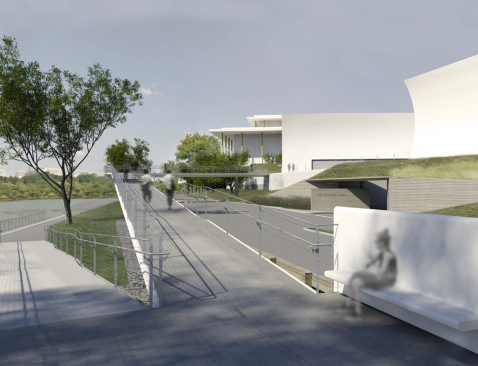
“The waterfront connection, first envisioned by Edward Durell Stone in his 1959 unbuilt design for the Center, will be finally realized, inviting the active riverfront public to engage in the Center’s programs and enjoy the new café and landscape,” Chris McVoy, AIA, senior partner at New York-based Steven Holl Architects said in the firm’s release.
Courtesy Steven Holl Architects
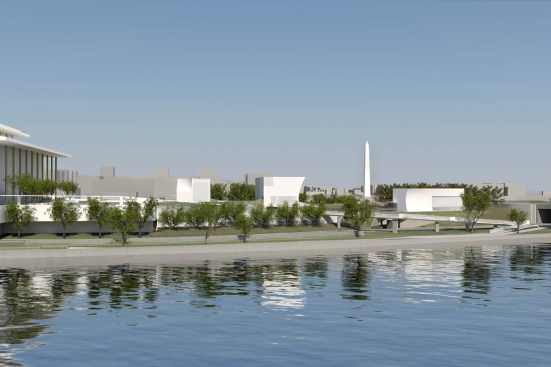
View of Kennedy Center from Potomac River
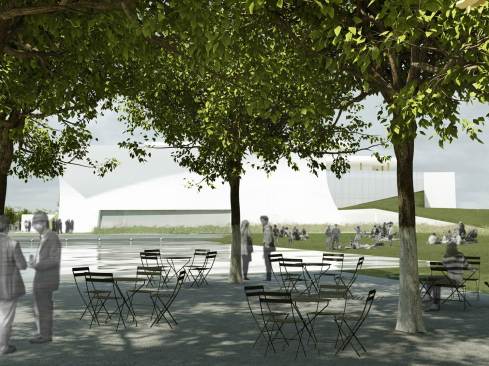
The Kennedy Center, which Ada Louise Huxtable criticized on the occasion of its opening as much for its scale and lack of imagination as for its isolated position between the Rock Creek and Potomac Parkway and the various on- and off-ramps for highways that link Washington, D.C. to Virginia, now attempts to rectify the latter issue by creating the Kennedy Center’s own pedestrian on-ramp from beside the river. Addressing the scale issue are three pavilions—each of which Steven Holl Architects envisions as a more human-scaled rectangular prism with high ceilings and abundant daylighting—working in concert with each other on the land south of Stone’s Kennedy Center.
Courtesy Steven Holl Architects
Pavilions with trees
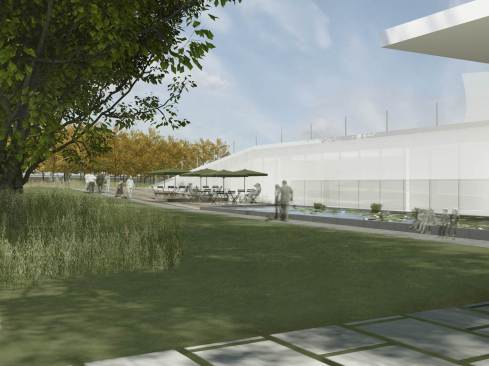
While Steven Holl Architects’ expansion plans originally included a proposal for a floating pier, the River Pavilion, that would have provided an intimate event space for smaller-scaled performances, that piece of the proposal was jettisoned following unfavorable review by the National Capital Planning Commission (NCPC). By re-siting the River Pavilion upon solid ground, Steven Holl Architects and the Kennedy Center were able to win approval from the NCPC and the U.S. Commission of Fine Arts for the pedestrian bridges linking the Center to the waterfront.
Courtesy Steven Holl Architects
Board room view from exterior
“With the review board’s valuable feedback and approval, these incredibly innovative designs can begin to become a reality over the next two years, and we could not be more pleased,” Kennedy Center president Deborah F. Rutter said in the release. “This design by Steven Holl Architects will transform and enhance the Center’s presence along the waterfront, creating a haven where visitors can casually and unexpectedly run into art as it is happening, and engage with our art and artists in a way that turns the creative process inside out, providing unparalleled access to arts in process.”
For more images and information on the Kennedy Center expansion, visit ARCHITECT‘s Project Gallery.
Courtesy Steven Holl Architects
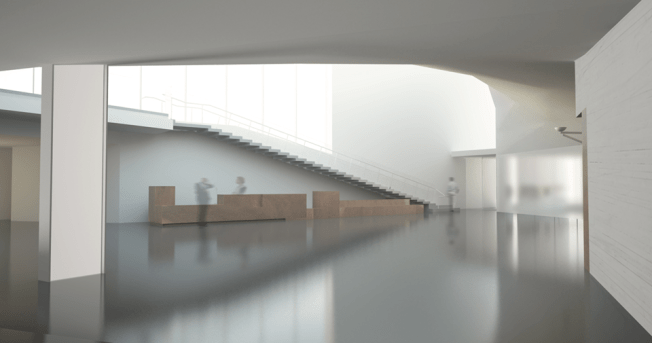
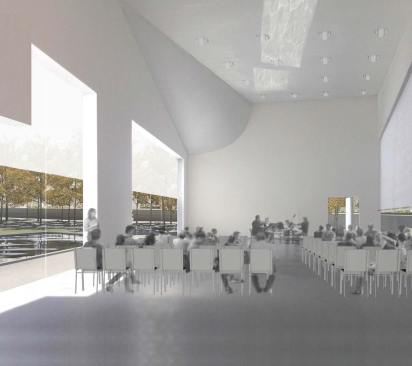
River pavilion
Courtesy Steven Holl Architects
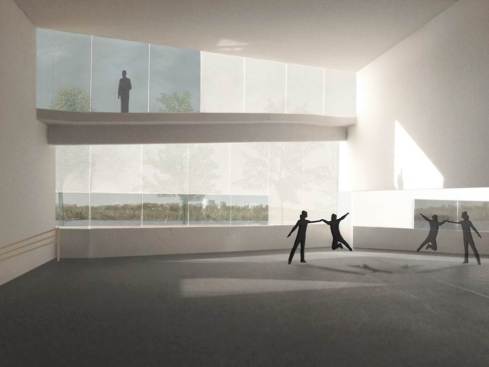
Primary rehearsal room
