Where some see a stagnant strip mall, the designers at Perkins&Will see a vibrant health center complete with trampolines that send jolts of electricity to pool pumps and kiosks with each jump.
The firm’s annual Phil Freelon Design Competition asked teams to “hack” overlooked spaces—parking lots, strip malls, playgrounds, or community centers—and reimagine them as catalysts for public health. The results are as imaginative as they are practical.
“We designed this challenge to look ahead—to imagine the kinds of spaces health will demand in the future,” says Casey Jones, chief design officer at Perkins&Will. “By removing conventional constraints—no assigned site, no fixed typology—we encouraged teams to prototype bold, adaptive interventions that anticipate where care can and should happen next.”
The Winners

First Place: Rx Strip Mall: 200mg
A team from Washington, D.C., transformed the familiar American strip mall into a community health hub. Their design introduced modular kiosks, outdoor gyms and elevated walking paths—each fitting within the footprint of a parking space—to encourage movement, connection, and care. Judges highlighted the project’s playful approach to serious issues like asthma and obesity, noting its scalability across more than 68,000 strip malls nationwide.
Second Place: Flourish
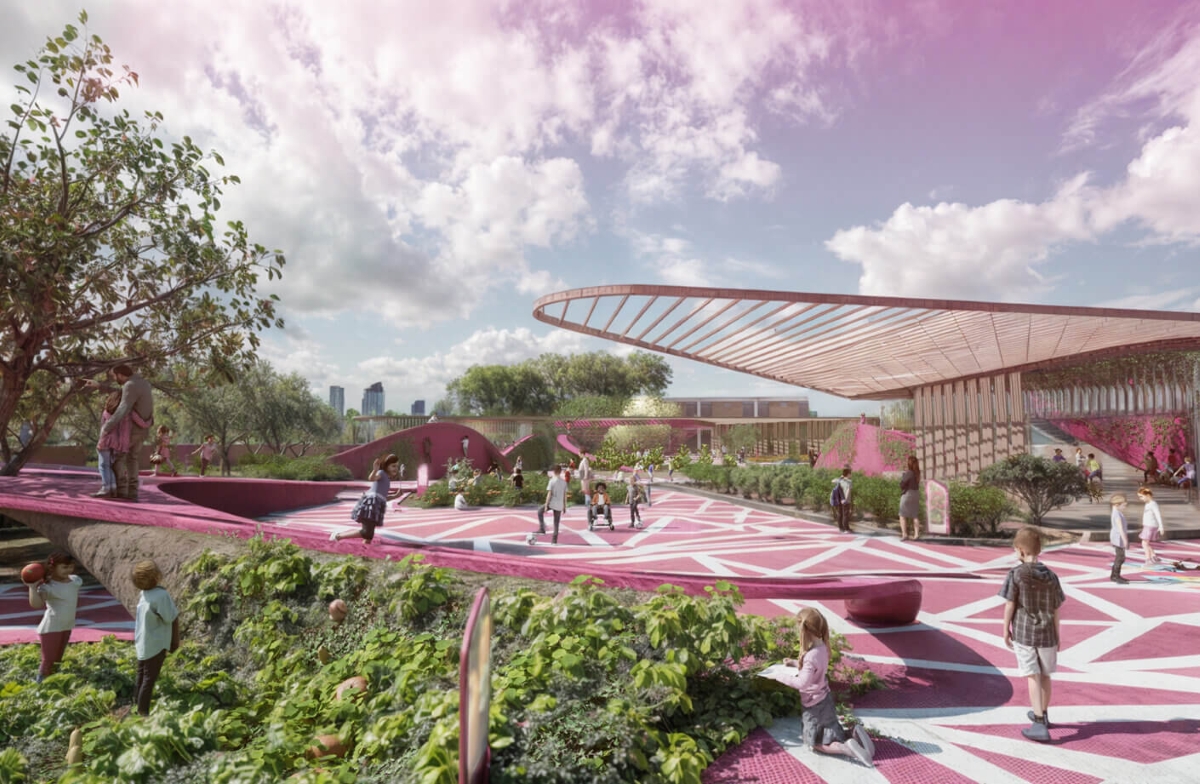
In Houston, designers reimagined a heat-exposed elementary school playground as a green and food-centered wellness hub. The project integrated gardening, play, and shared meals into daily life, blurring the line between education and health. Jurors praised its seasonal programming and community focus.
Third Place: Parkitecture
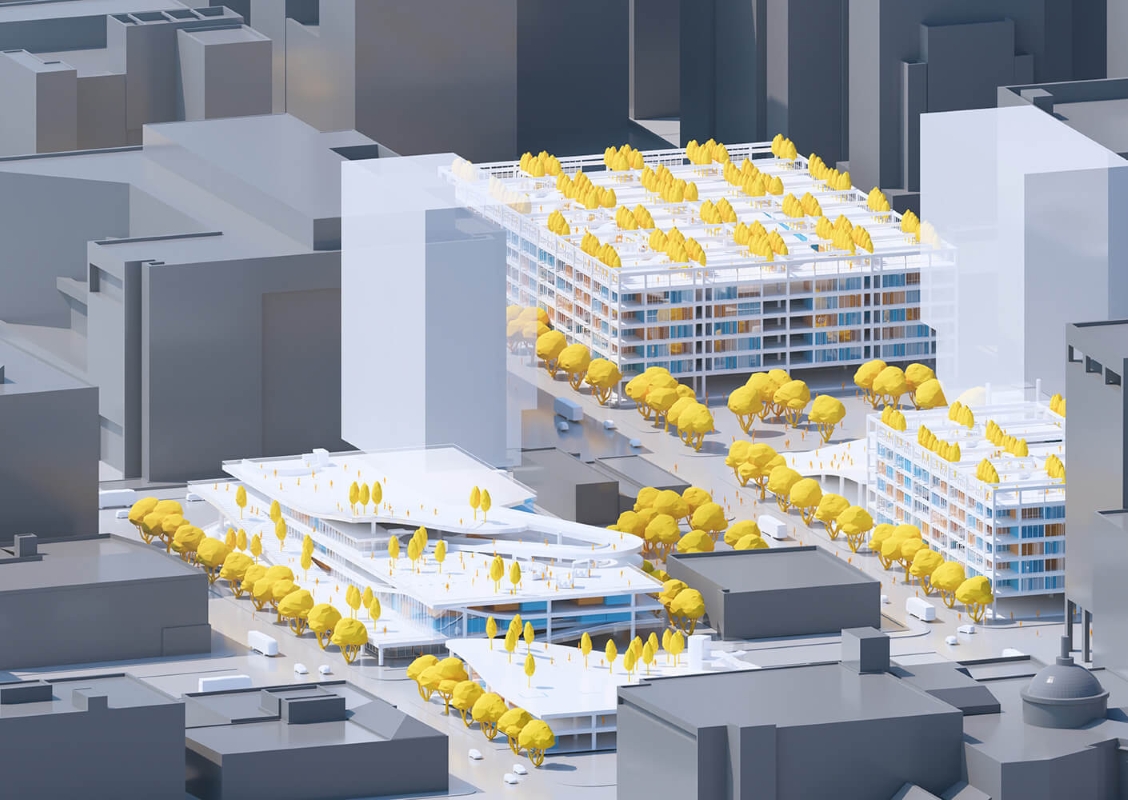
A Dallas-based proposal reinvented a parking garage through modular add-ons such as sports courts, health kiosks, and coworking areas. By targeting sunlit exterior zones and planning for long-term conversion, the project offers a pragmatic response to declining parking demand and rising urban health needs.
Expanding the Definition of Health
Across submissions, recurring ideas included reclaiming public infrastructure, weaving food and play into civic life, and adapting car-centric environments for wellness. Teams emphasized intergenerational programming, climate-responsive design, and preventive health strategies.
“Most of our health is shaped long before we walk into a doctor’s office,” says Marie Henson, global health practice leader. “This competition helps us push our thinking about where and how care can happen—and how design can play a more proactive role in shaping it.”
Juror Michael Murphy praised the overall caliber of submissions: “Perkins&Will’s work was creative, illuminating, and richly resolved. It was a privilege to peer into the inner workings of such innovative designers.”
From Concept to Practice
The competition doubles as a design laboratory for Perkins&Will’s healthcare practice, which spans hospitals, clinics, and public health initiatives worldwide. “These ideas don’t replace our healthcare work—they expand it,” adds Henson. “We’re using what we’ve learned to think more holistically, from hospitals to neighborhoods, and everywhere in between.”
Perkins&Will published a report showcasing the submissions with detailed analysis on their potential impact. Read it here.