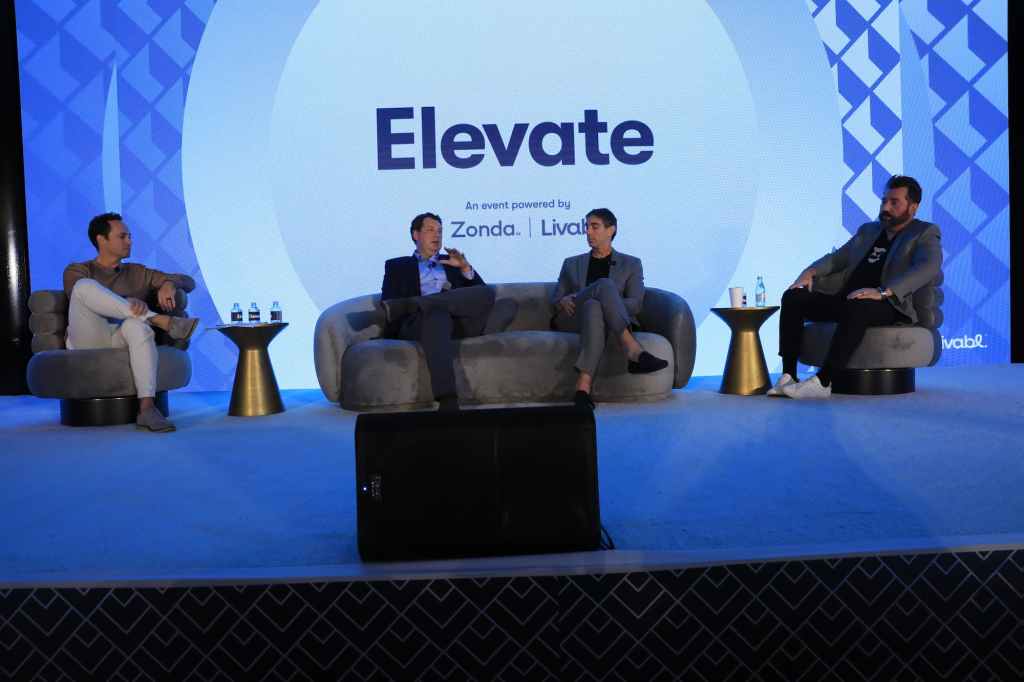
On a crisp Tuesday morning at the Kimpton EPIC Hotel, the third annual Elevate Conference—organized by Zonda in partnership with Livabl and ARCHITECT Magazine—picked up momentum for its second day, reaffirming Miami’s role as a nexus of luxury real estate discourse during Miami Design Week. The program unfolded as a carefully calibrated blend of data, ideas, and design thinking, offering attendees a panoramic view of where high-rise residential and mixed-use markets are heading in 2025 and beyond.
Towers, Trends, and the New Geography of High-Rise Living
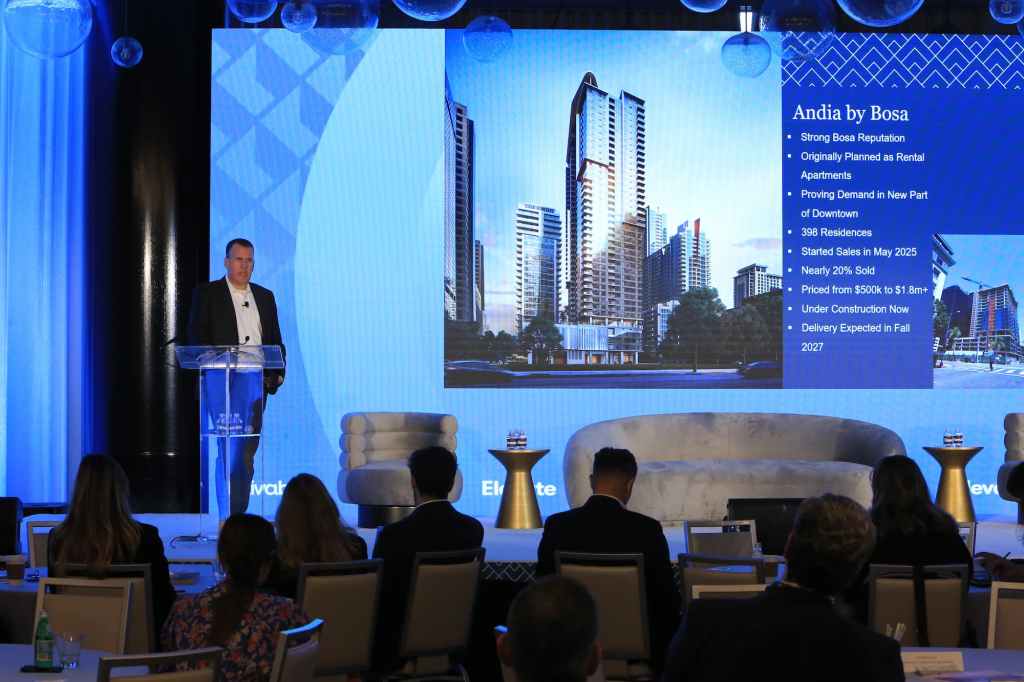
The day opened with a networking breakfast that brought together developers, brokers, architects, and designers from across the globe, followed by Top Towers to Watch in 2025. Guided by Zonda Advisory’s Adam McAbee, the session grounded the conversation in a rigorous, data-driven analysis of skyline-defining projects reshaping U.S. cities.
Drawing from Zonda’s database of roughly 16,000 new-home communities, McAbee traced the shifting geography and economics of high-rise housing. While New York still leads the nation in total high-rise inventory, Florida has nearly closed the gap in sales velocity—evidence, he suggested, that projects there are “simply bigger, bolder, and more concentrated.” The presentation spotlighted both established branded residences and ambitious architectural expressions redefining urban luxury, from Victoria Place in Honolulu to the Ritz-Carlton Residences in The Woodlands and the Four Seasons in Las Vegas. Together, these projects illustrated how success is no longer measured solely by height or prestige, but by adaptability—across for-sale condominiums, seniors and CCRC housing, student living, and conventional multifamily.
Branding, Value, and the Meaning of Trust
From there, the conversation turned toward the strategic value of branding in luxury residential development. In To Brand or Not to Brand? Defining Value in Global Luxury Residences, developers, hotel brand executives, and brokerage leaders unpacked how globally recognized names—from hospitality flags to lifestyle labels—are increasingly shaping buyer perception and project positioning.
Moderated by Mickey Alam Khan of Luxury Roundtable, the panel convened leaders from Hyatt, JDS Development, and Miami brokerage icon Veronica Cervera Goeseke to explore when branding genuinely earns its premium—and when it does not. The discussion moved well beyond logos. Tina Necrason of Hyatt emphasized that successful branded residences depend on alignment between service culture, community, and global mobility, while Marcy Clark of JDS detailed how deep collaboration with brands like Mercedes-Benz and Dolce & Gabbana can shape architecture itself, not just marketing. Goeseke grounded the conversation in sales reality, arguing that brands ultimately succeed because they create emotional recall and a sense of safety during high-stakes purchases, particularly in volatile markets.
As Khan framed it, Miami may be the global capital of branded residences, but the panel made clear that the future belongs to projects where branding is experiential, architectural, and operational—not cosmetic. As one panelist put it, “A brand only works in real estate if it shows up everywhere—how the building feels, how it’s run, and how people remember themselves inside it, long after the logo disappears.”
When Work Looks Like Home
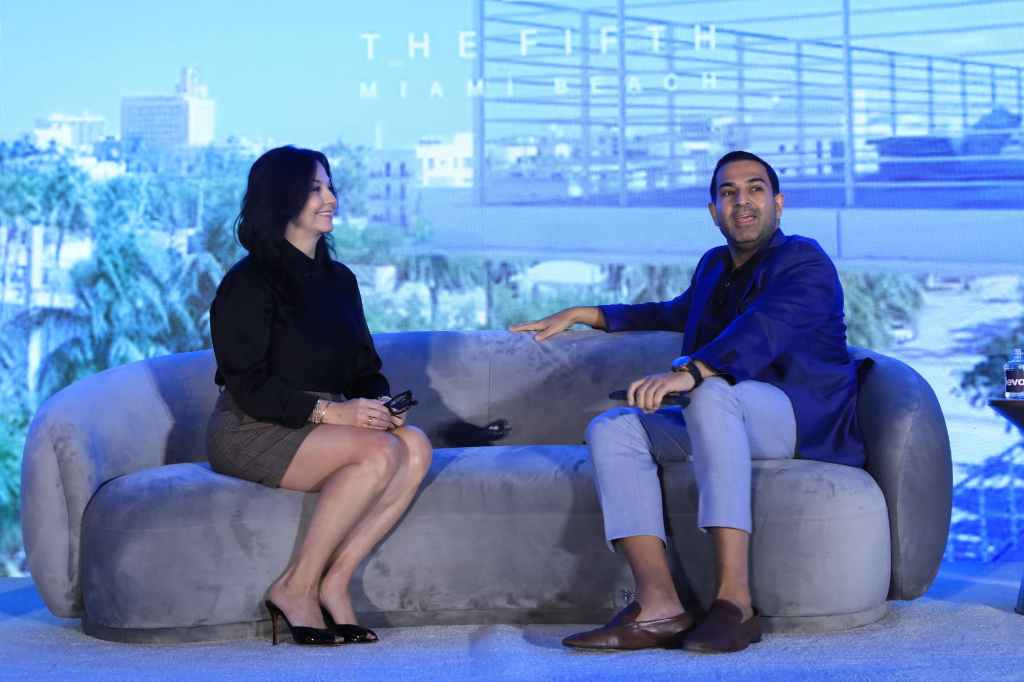
Mid-morning, Kimberly Byrum of Zonda moderated Work Meets Lifestyle, a session that illustrated how high-end office design is increasingly borrowing from residential luxury. Amit Khurana, the Founding Partner of Sumaida + Khurana presented Miami Beach case studies where office environments are designed less like corporate workplaces and more like bespoke homes.
The panel described how a New York–based developer known for ultra-high-end custom condominiums applied the same design rigor to create a new category of boutique office space—one driven by post-pandemic demand from ultra-high-net-worth clients seeking warmth, discretion, and experiential quality rather than conventional corporate environments. Treated as residential interiors at an urban scale, these offices feature bespoke materials, old-world craftsmanship, restaurant partnerships, wellness amenities, and highly tailored planning, including direct elevator access into executive suites.
Backed by family-office capital and underwritten conservatively, the projects have achieved record-setting rents and rapid lease-up. As one speaker summarized, “We’re not trying to win the office market—we’re trying to build something that didn’t exist before by bringing the soul of a custom home into the workplace.” The session underscored a broader trend: the erosion of rigid boundaries between living, working, and leisure.
Architecture, Culture, and Global Practice
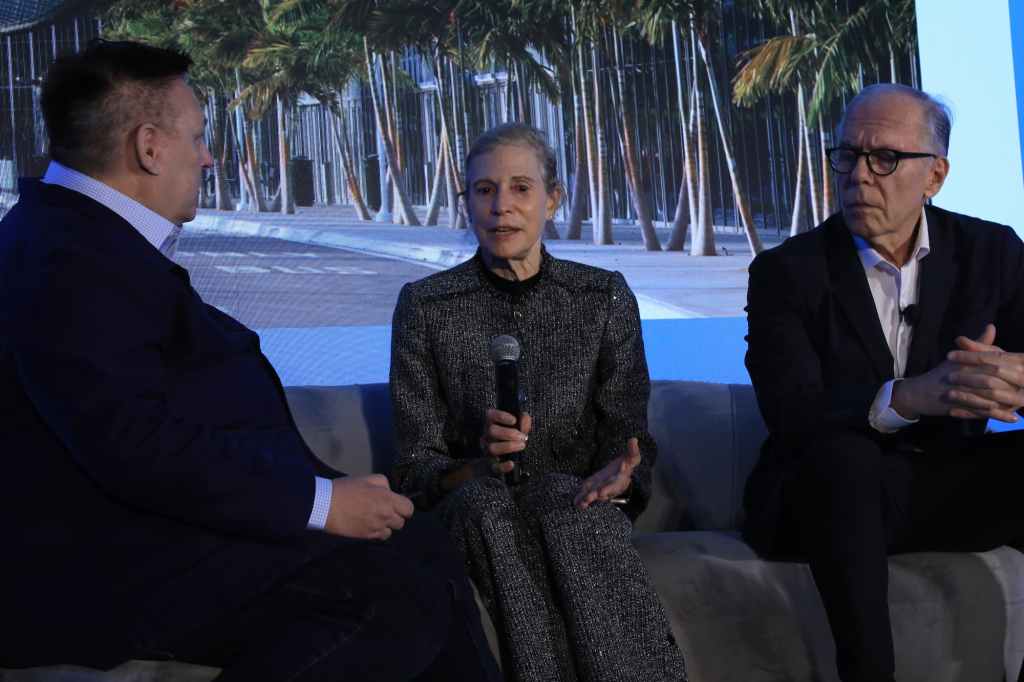
The Elevate Icon Award ceremony spotlighted architecture’s cultural impact, honoring Bernardo Fort-Brescia and Laurinda Hope Spear of Arquitectonica. In conversation with ARCHITECT Editor in Chief Paul Makovsky, the cofounders traced the firm’s rise from a Miami-based studio experimenting with fearless geometry into one of the world’s most globally active practices.
Fort-Brescia reflected on the firm’s early years and accidental naming, recalling how a small group of architects helped redefine Miami in the late 1970s and 1980s. Today, Arquitectonica operates in nearly 60 countries, organized as interconnected mid-sized studios that preserve the intimacy of a small firm. While widely associated with luxury high-rise living, both founders emphasized the firm’s sustained commitment to affordable housing, public buildings, education, transportation, and cultural work—projects they described as central to architecture’s civic responsibility.
A recurring theme was cultural sensitivity. Fort-Brescia stressed that international practice begins with immersion—traveling, listening, and observing how people live—before form takes shape. “Part of architecture is to understand the base and who you’re designing for,” he said, noting that climate, topography, and social patterns fundamentally shape design decisions. Arquitectonica’s integrated approach to architecture and landscape architecture reflects this philosophy, treating buildings and environments as continuous systems rather than isolated objects.
Power Brokers and Global Platforms
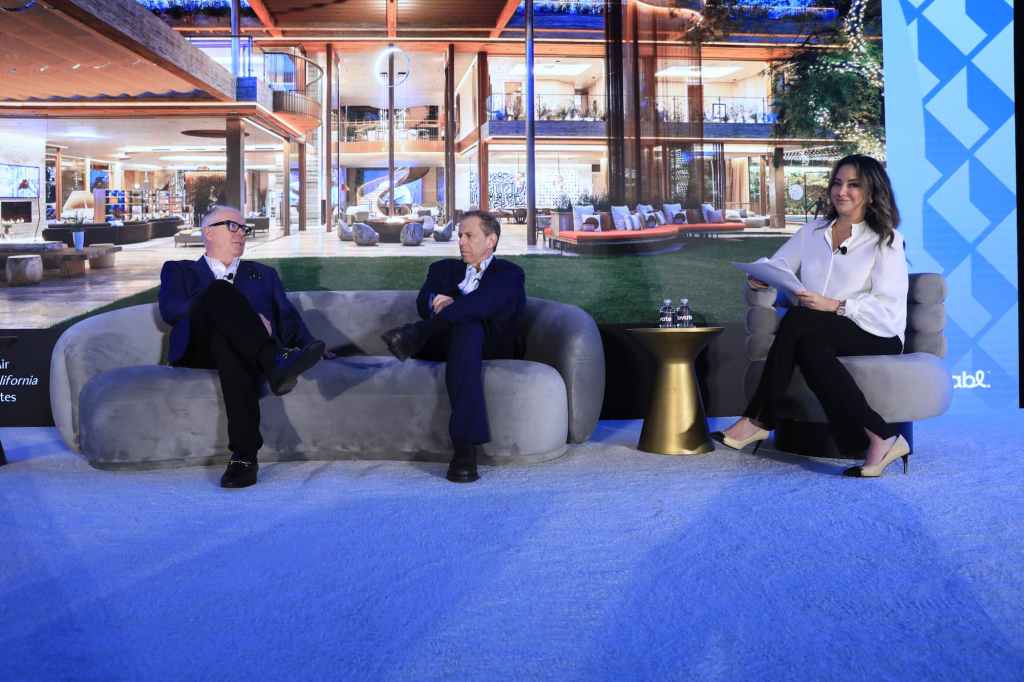
Later, Power Players: Global Brokerage Leadership in High-Rise Real Estate examined how elite brokerages are repositioning amid expanding global wealth and mobility. Industry leaders including Michael Jalbert of Forbes Global Properties and Michael S. Liebowitz of Douglas Elliman described global expansion not as branding theater, but as a strategic necessity driven by ultra-high-net-worth clients who maintain multiple homes across continents.
As one panelist noted, “The world is smaller than it’s ever been—our clients already live globally, so our platforms have to follow them.” Both firms emphasized disciplined growth over scale, arguing that true luxury brokerage depends on selective market entry, deep local expertise, and long-term trust rather than transaction volume.
The discussion also challenged assumptions about billionaire behavior. Speakers argued that self-made ultra-wealthy clients remain deal-oriented, relationship-driven, and highly sensitive to expertise. Markets like Miami and New York, they noted, continue to show resilience due to constrained supply and global demand, even amid broader housing volatility. Looking ahead, panelists highlighted technology, hospitality-level service, and the need to attract younger, digitally fluent agents as defining forces shaping the next generation of brokerage leadership.
Wellness, Longevity, and the Human Scale
A mid-day panel moderated by Robin Dolch turned attention toward longevity, wellness, and intimacy, reflecting a growing consensus that luxury is no longer defined by opulence alone. Panelists including Kenneth Ryan of The Estate and Veronica Schreibels Smith of Vera Iconica Architecture explored how the built environment is increasingly positioned as an active participant in human health.
The discussion traced the convergence of preventative medicine, self-care, and design—accelerated by COVID—into residential and mixed-use developments that integrate diagnostics, biometrics, air and water quality, sleep optimization, and daily habit formation. Wellness, speakers emphasized, is no longer about spas added at the end of projects, but about designing entire ecosystems that quietly support vitality.
As one panelist put it, “Luxury can become hollow if you’ve had access to everything—what people want now is something that improves their vitality and quality of life.” Another added, “The next era of luxury isn’t what you own—it’s how well you live, how clearly you think, and how long you can stay at your best.”
Inside the Deal: Redefining Luxury Sales
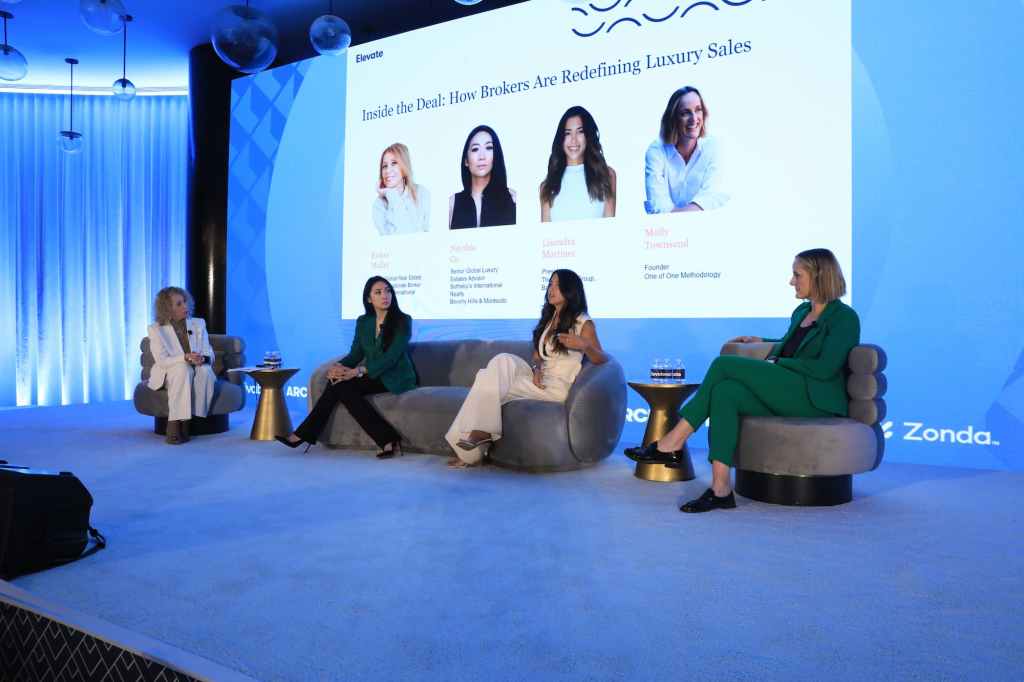
After lunch, Inside the Deal: How Brokers Are Redefining Luxury Sales reframed luxury real estate as an intensely human, knowledge-driven practice. Moderated by Esther Moeller, the panel emphasized that today’s top brokers function less as salespeople and more as educators, strategists, and lifestyle translators.
“I don’t care who my umbrella is,” Moeller said. “If I’m not trustworthy, and if I’m not a great knowledge power broker, then it doesn’t matter.” Panelists described an oversaturated market where success depends on mastering data, design, psychology, and experience simultaneously. Beverly Hills broker Neyshia Go put it bluntly: “You have to be multi-pronged with the arsenal of many different tools to be a dynamic real estate agent today—otherwise, you get left in the dust.”
The panel returned repeatedly to emotion as the new currency of luxury. Go noted, “I’ve had a lot of buyers tell me, ‘I bought this property because of the way you made me feel.’” South Florida broker Lisandra Martinez underscored the physical and mental rigor behind that experience: “It’s not as easy as it looks…your day is very unexpected, and if you don’t give it your 110 percent, that’s when the magic doesn’t happen.” Coach Molly Townsend challenged myths of balance and burnout, stating, “There is no such thing as work-life balance…there’s one life, one you—and luxury lives at the intersection of desire and need.”
Marketing, Technology, and Emotional Precision
Subsequent sessions explored how marketing, interiors, and technology are reshaping luxury real estate. Panels emphasized that expertise, empathy, and hyper-personalized service now matter more than surface-level prestige. As one speaker warned, “If you’re not sharp in every single aspect of what we do, there are 10,000 other people willing to replace you.”
Technology emerged as a double-edged tool. Speakers argued that AI, big data, and digital twins can accelerate personalization and insight—but only when used to support, not replace, human intuition. “Technology should be a steroid for talented people, not a replacement for them,” one panelist noted, while another cautioned, “When everything looks perfect, it stops feeling real.” The takeaway was clear: in luxury real estate, metrics matter—but emotion still decides.
Design, Floor Plans, and Emotional Infrastructure
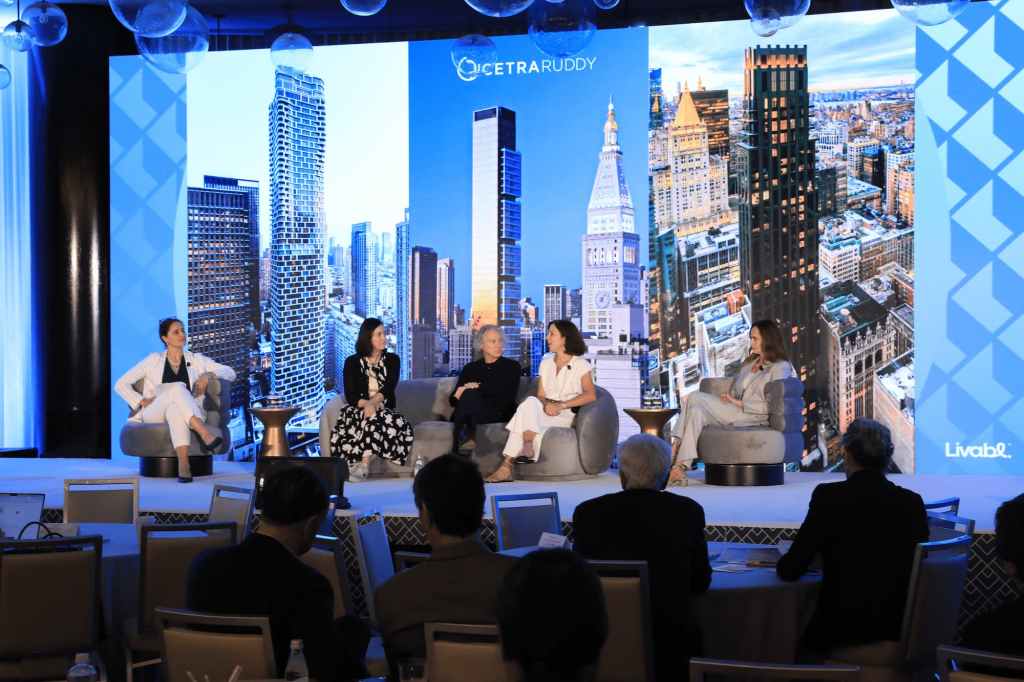
In Inside the Next Wave of Luxury, designers and developers emphasized early collaboration among architects, interior designers, and sales strategists. Residential design, they argued, now begins well before drawings—often at land acquisition—by modeling daily life and emotional expectations.
Floor plans emerged as the hidden driver of value. Flexibility, defined rooms, storage, and circulation increasingly matter more than visual spectacle alone. As one designer said, “We can hang beautiful lighting and art later—but without the right floor plan, there’s nothing to hang it on.”
Amenities were reframed as “emotional infrastructure” rather than checklists—spaces that support rituals, work, and community. “Amenities are no longer about luxury signaling—they’re about how people actually want to live together,” one panelist summarized.
Art, Hospitality, and Belonging
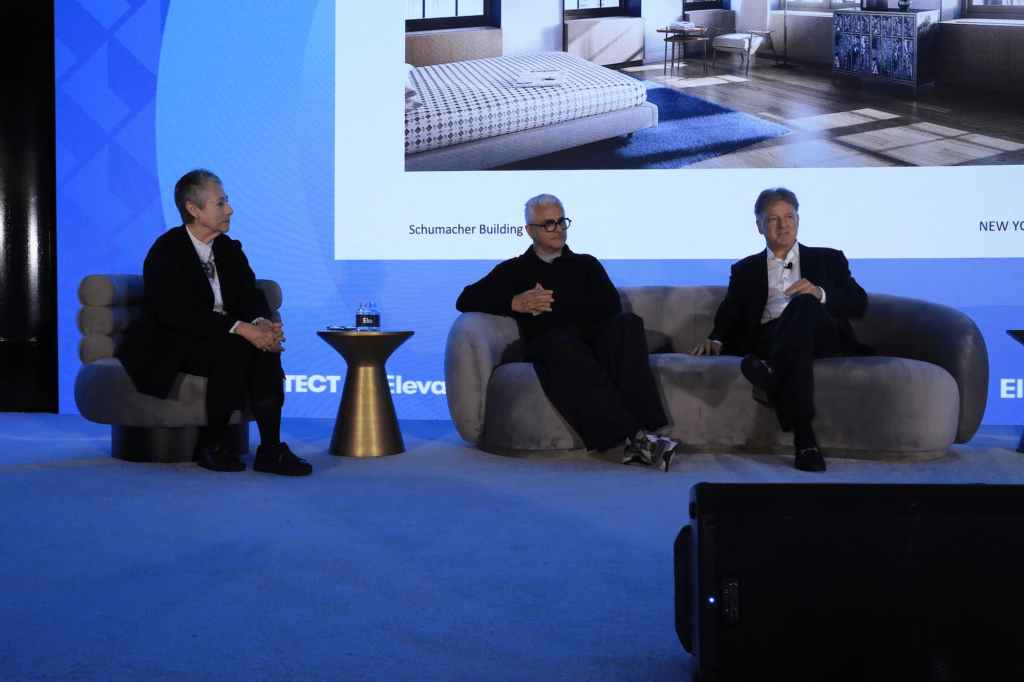
Late-afternoon panels explored art and hospitality as integral components of residential experience. Moderated by Cristina Grajales, Curating the Art in Real Estate argued for art as social infrastructure—an emotional and cultural force that humanizes buildings and fosters belonging. “We don’t build apartments—we build homes, and art is the intangible force that makes your pulse go down and tells you you’re in the right place,” one developer said.
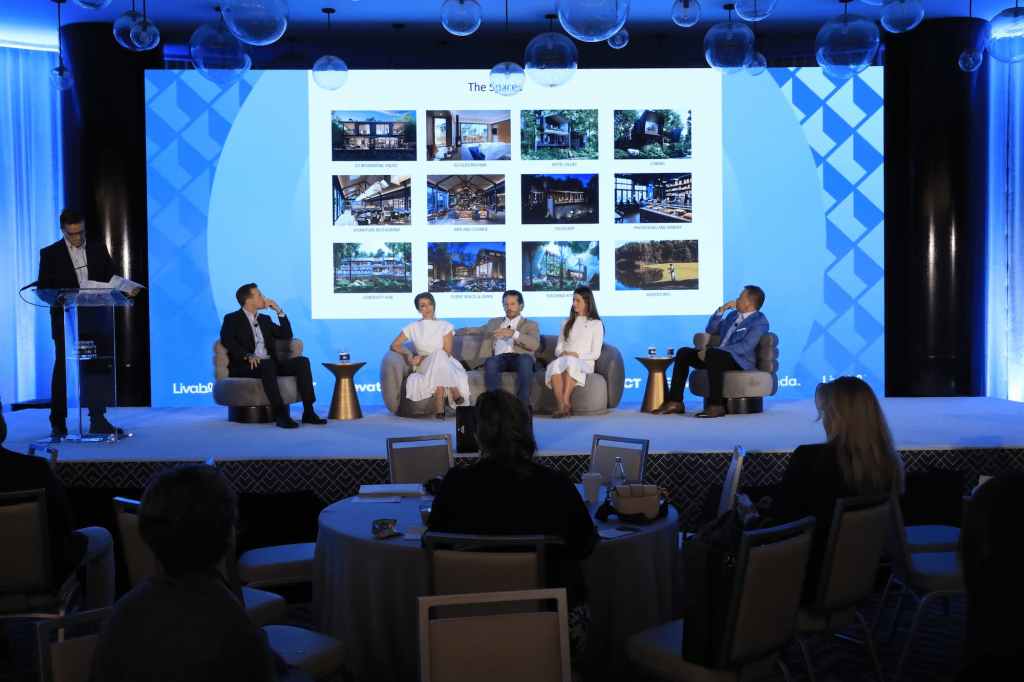
The final session, Crafting the Ultimate Residential Experience—Hospitality Meets Real Estate, examined an ambitious Hudson Valley project uniting the Culinary Institute of America, One&Only Resorts, Clinique La Prairie, Gensler, and Nolan Reynolds International. Rather than predictable luxury, the project aims to create a layered, long-stay experience blending culinary education, wellness science, and site-responsive design. As one developer summarized, “We didn’t want something predictable—we wanted to create a new benchmark where people leave with more than they came with, in knowledge, memory, and wellbeing.”
Looking Forward
As Day Two concluded with networking receptions, Elevate did more than showcase trends—it interrogated them. Across data, design, wellness, technology, and culture, the conference mapped how luxury real estate is being redefined around human experience, trust, and meaning. In doing so, it reinforced Miami’s role not merely as a backdrop for luxury development, but as a crucible shaping its future.