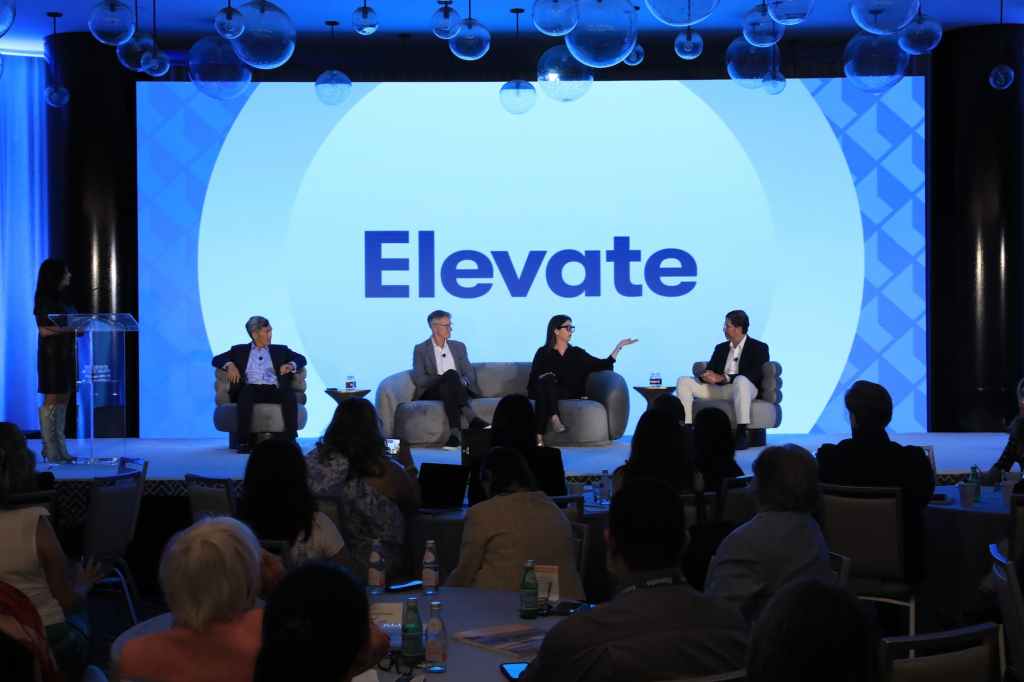
When the doors opened yesterday at the Kimpton EPIC Hotel in Miami, the tone was set. Developers, architects, brokers, and designers—many of them among the most influential in luxury real estate—converged to begin three days of conversations about the future of high-rise living. The conference it made clear that the industry sits at a crossroads: buoyed by demand yet pressured by economic volatility, shifting buyer psychology, and rapidly rising expectations for meaning-driven design.
A Market in Flux
The conference opened with “Welcome to Elevate: The Art of High-Rise Living” and moved quickly into one of the day’s anchor sessions: “State of Housing Market and Wider Economy,” led by Ali Wolf, Chief Economist at Zonda and NewHomeSource. In her keynote, Wolf laid out a crisp, data-driven explanation of what she described as the defining tension of today’s housing landscape: a slowing labor market colliding with persistent inflation.
“Each policy, whether we’re in the U.S. or Canada, should be done in an effort to work toward maximum employment and price stability,” she reminded the audience, “yet both sides of that mandate are now under stress.”
Job growth is cooling, unemployment is rising, and high-income roles in major markets are increasingly going unfilled. Inflation, meanwhile, remains above target in the U.S., creating a policy bind: “If you believe the labor market is a big challenge today, you need to cut rates more,” Wolf said. “But if you believe inflation is the bigger concern, you keep rates higher for longer.”
This uncertainty is reshaping buyer psychology, mobility, and pricing. Consumer confidence, Wolf noted, has plunged to historic lows—“as bad as it was during the trough of the Great Financial Crisis”—even among high-income households typically buffered from economic swings. In the luxury and high-rise segments, the buyers who remain active are wealthy married couples, single women with strong investment portfolios, and a growing share of cash buyers. Miami, she pointed out, now sees 43% of purchases in all-cash, nearly double that of many U.S. metros.
Still, hesitation is evident at the top of the market. “People want to buy an appreciating asset… and in some markets, that doesn’t feel like a guarantee in the near term,” she warned. Yet her outlook was steady rather than dire: “We don’t think the market snaps back overnight. Next year probably looks similar—maybe with more opportunities and some green shoots.”
Her briefing served as both a reality check and a frame: inflation, interest rates, and shifting consumer behavior form the backdrop against which luxury developers must now operate.
Reimagining Luxury in a Digital Age
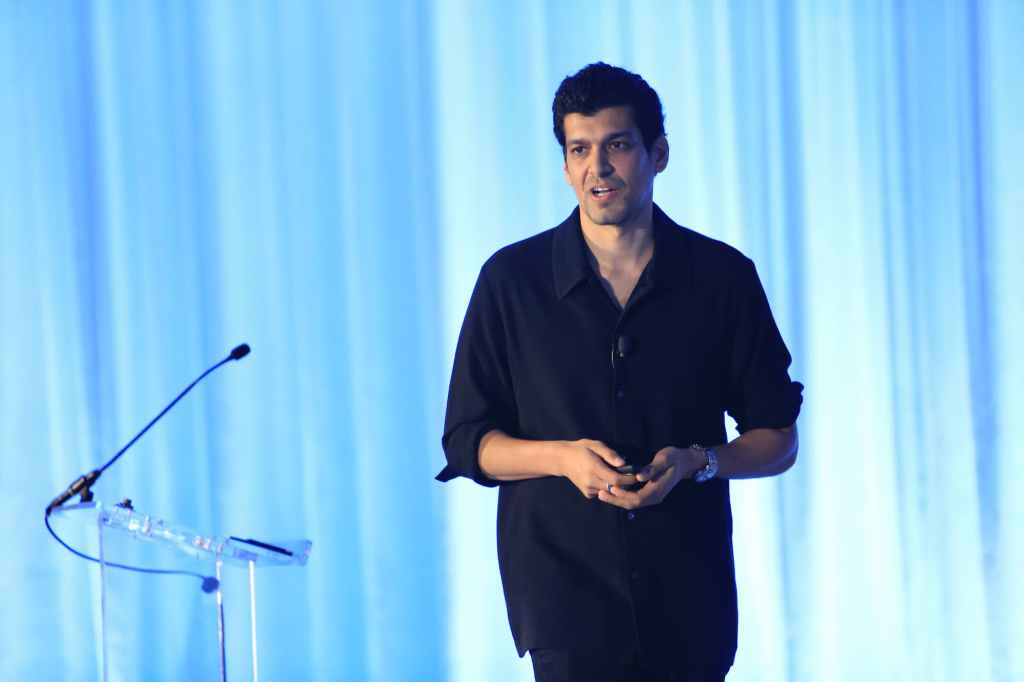
If Wolf articulated the economic pressures shaping today’s market, Matter of Form CEO Anant Sharma dug into its psychological dimensions. In one of the day’s most provocative keynotes, he reframed luxury as a fluid ecosystem shaped by status, storytelling, and shifting notions of value—and argued that “perceived value” has become the most powerful currency in the sector.
“Nothing in this world is good or bad. Thinking makes it so,” he said, quoting Shakespeare to show how luxury is “tiny, subjective,” and rooted in narrative as much as material reality. Through vivid anecdotes—17th-century nutmeg bubbles, crypto-era NFTs, and Maurizio Cattelan’s duct-taped banana, later eaten by a crypto entrepreneur who purchased it—he demonstrated how quickly cultural meaning, and therefore pricing power, can collapse or intensify. “The whole thing was really a commentary on conceptual value,” he noted.
Sharma paired this with the story of counterfeit luxury wine from the Netflix documentary Sour Grapes, where collectors “genuinely, objectively… enjoyed a heightened sense of pleasure” drinking what they believed were $20,000 bottles. Only later did they learn the truth. For Sharma, this reinforced a core insight: value is psychological, not objective.
Even in real estate, he argued, premiums now stem from identity construction, not square footage. “Within me, I have a hedonistic quality, a desire for spiritual solitude, a thirst for adventure,” he said. “We actualize ourselves through brands in many different ways.”
Broader societal shifts magnify these dynamics. Remote work, declining community rituals, and rising loneliness have created a crisis of meaning—one luxury developers can answer. “Rituals stabilize life. Community stabilizes life. Without them, we have a crisis of meaning,” he said, urging architects and developers to design environments that foster connection rather than isolation.
At the wealthiest end of the market, mobility is rewiring demand patterns. “People no longer see themselves as living in one place… there are a lot of billionaires, and many now see themselves as living outside sovereign states,” he observed. Experience, wellness, and brand trust increasingly outrank location. “The further you go to give people tribal association—the sense of what it means to live here—the more value there is.”
The Rise of Branded Residences and Identity-Driven Living
Sharma emphasized that the most explosive growth in luxury real estate is occurring where brand power substitutes for geographic context. In emerging markets such as the Middle East, where “they’re just inventing value from dust,” branded residences can command a 50% premium because the brand supplies trust and aspiration where history does not.
Consumers now inhabit multi-layered identities—“hedonistic… spiritual… adventurous”—and seek homes that mirror these narratives. This shift helps explain Miami’s 48 branded residential towers in the pipeline, second only to Dubai, and the rise of wellness-branded communities, algorithmic “orbit” homes, and experiential hospitality models.
The takeaway echoed throughout the day: developers can no longer rely solely on traditional markers of status. To compete, they must weave narrative, lifestyle, and lived experience into every project.
From Vision to Vertical: Strategy Under Pressure
The afternoon’s marquee panel, “From Vision to Vertical: How Leaders Are Approaching Today’s Market,” moderated by Kimberly Byrum (Zonda), gathered Whitney Arcaro (RXR Residential), Bryan Cho (Related), Greg Hartmann (Hilton), and David Martin (Terra Group). The group struck a balance of candor and optimism: capital is tight, construction costs remain high, and lenders are increasingly selective—but well-positioned projects continue to advance.
Arcaro summarized the capital environment bluntly: “Capital is expensive… and then there’s trepidation, hesitation, and finally procrastination—but eventually it has to get done.” Cho added that although financing structures have shifted, “availability of capital is not the problem—it just looks different,” with private debt funds stepping in as large banks pull back.
Martin noted that lenders evaluate narrative as aggressively as they do numbers: “Lenders are smart… they want to be part of projects that are scarce—because of the property, the entitlements, or the design.” Demand, meanwhile, remains strong and strikingly local. Cho said 75% of South Flagler House buyers already live in Palm Beach: “People know the area, and they’re buying big—often combining half-floor units into full floors.” Hartmann observed that branded residences continue to outperform: “The demand is huge… having a luxury brand elevates everything.”
Yet they cautioned against treating Miami as invincible. “I don’t agree that Miami is bulletproof,” Martin said. “Affordability is a big problem, and we can’t rely solely on the international market anymore.” Still, the mood was constructive: disciplined pipelines, rising rental demand, and sustained migration keep the region resilient—so long as developers remain selective, thoughtful, and attuned to local needs.
The New Development Playbook
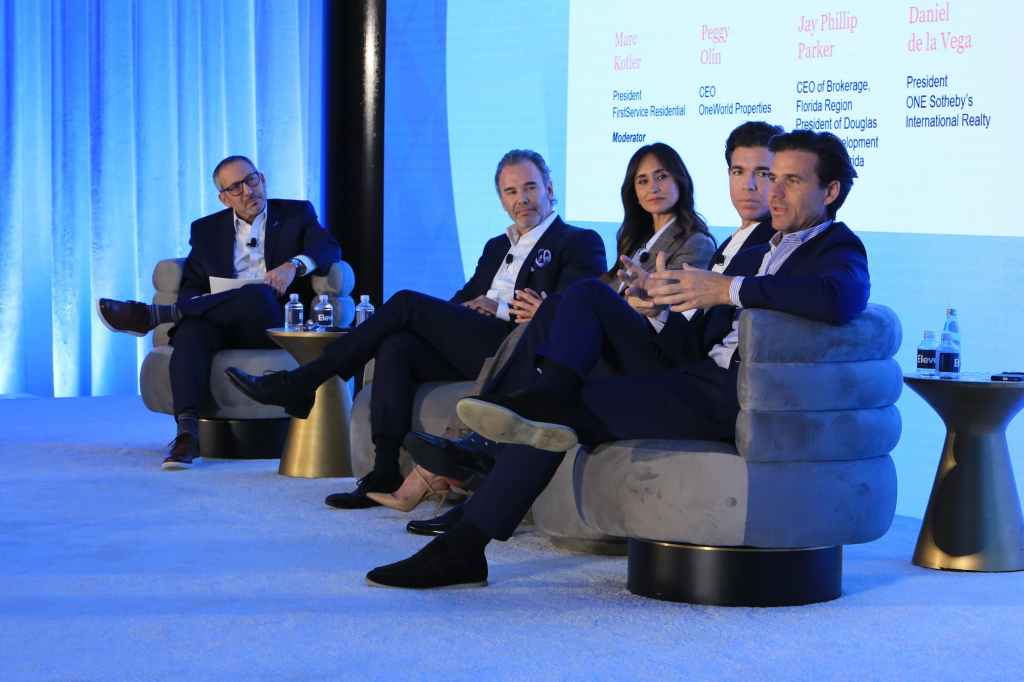
The “New Development’s New Playbook” panel delivered a frank and fast-moving examination of how sales and marketing teams are adapting to a dramatically changed luxury-residential landscape. Moderated by FirstService Residential’s Marc Kotler—whose team has “opened over 200 new high-rise buildings”—the conversation traced how buyer psychology, global migration, and escalating expectations for craftsmanship are reshaping what it now takes to sell.
Jay Parker of Douglas Elliman noted that ultra-high-net-worth buyers are driving demand in search of stability and lifestyle: “There’s no doubt we’re seeing a tremendous amount of super-prime product moving—people want a piece of South Florida.” Andrew Wachtfogel of Redeavor added that mobility is redefining market behavior: “People aren’t leaving New York—they’re adding Florida.” Peggy Olin of OneWorld highlighted Miami’s global magnetism: “Everybody wants to participate in this energy—people all over the planet want a piece of South Florida.”
To win these buyers, panelists stressed, teams must understand product more deeply than ever—from macro programming down to door swings and custom-level detailing. As Wachtfogel put it, “You’re asking people who custom-build their homes to buy off paper—you must design perfectly from day one.” Parker agreed, noting that expectations for finish quality have skyrocketed: “Buyers now expect the level of finish they see in London or New York—developers can’t cut corners anymore.”
Branding remains essential but must be wielded strategically. Hospitality partners like Ritz-Carlton or Four Seasons provide instant trust, but, as Olin cautioned, “A brand adds 25% to cost—you must know when the market will actually pay for it.”
Together, the panelists argued that the new playbook is part research, part design rigor, and part cultural translation. Narrative, finish, and lived experience—not simply marketing—now determine whether a project resonates in a fast-moving, expectation-heavy market.
Recognizing Achievement — and Thinking Ahead
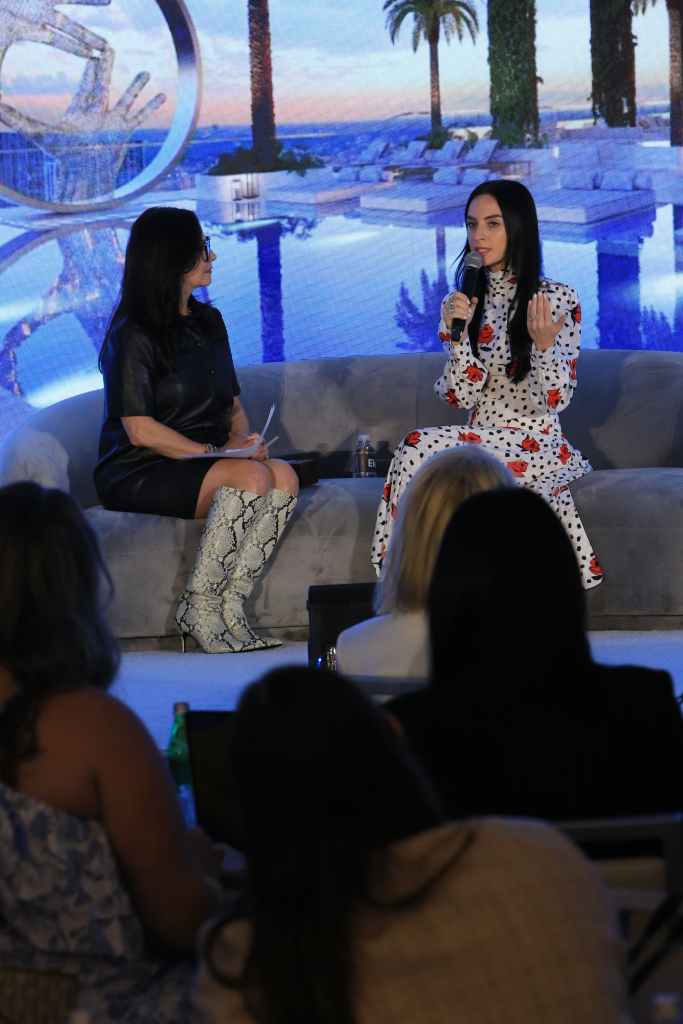
The conference paused briefly to present the Elevate Icon Award to Danielle Naftali (Naftali Group), honoring excellence and innovation in luxury high-rise development. In conversation, Naftali outlined a philosophy rooted in uncompromising quality, disciplined site selection, and a brand identity anchored in trust rather than trend.
She insisted that true luxury begins “behind the walls”—in floor plans, construction integrity, and timeless detailing—not in renderings. Her method begins with identifying demand before design, seeking undervalued sites in prime or emerging corridors, and delivering what buyers actually need rather than what developers hope will sell. Reflecting on her rise from receptionist in the family business, she said her key lessons were resilience, problem-solving, and “finding another way when you hit a roadblock.”
Branding, she noted, should be sensory and experiential: “When you walk into a Naftali building, you feel the quality.” She emphasized the importance of delivering exactly what is promised—and ideally more. Many of her projects, she said proudly, look “better than the rendering,” a rarity she sees as essential to long-term reputation.
Her comments also touched on the firm’s expansion into South Florida, collaborations with Fendi Casa and Viceroy, and even New York’s first private residential ice-skating rink—examples of her belief that luxury today is defined not by spectacle but by thoughtful design and execution.
A Broker’s Perspective on the Future
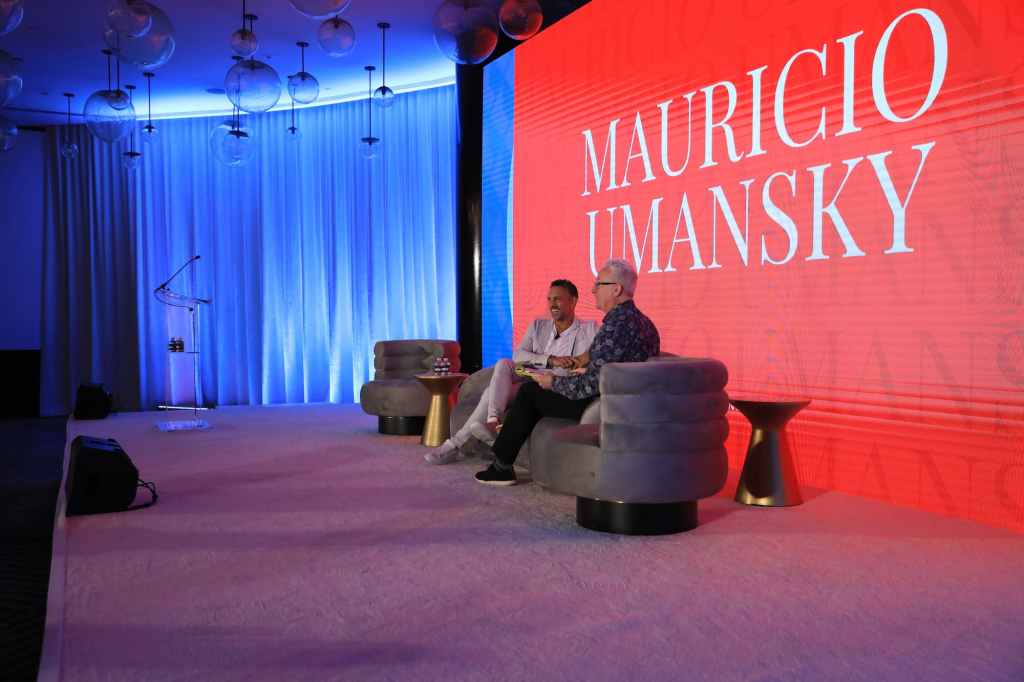
In a candid and high-energy keynote, Mauricio Umansky—founder and CEO of The Agency—traced his path from dropping out of school to becoming one of the nation’s top brokers. Discipline, listening, and relentless preparation, he said, were the defining tools of his success. Early lessons selling fabric for his father taught him to “fight for the penny,” and mastering the art of listening—“We perceive we understand clients; we need to actually understand them”—became his greatest advantage.
Umansky described how reality television amplified rather than built his career, distinguishing between shows that are “natural” and those that are “scripted reality.” On the state of the luxury market, he argued that true luxury is lifestyle-driven, not label-driven. “In order to be great, you have to dare to be bad,” he said—meaning developers must resist designing for everyone and instead commit to a sharp, coherent point of view.
He outlined the amenities dominating today’s high-end market: full-spectrum wellness sanctuaries, oversized primary closets (“you literally cannot make it big enough”), and uncompromising design and materials. Despite high-profile sales, he warned that the U.S. remains in a “housing recession,” with pent-up demand awaiting relief on interest rates.
Ultimately, he said, the future of real estate hinges on communication and storytelling. “Communication is everything,” he emphasized, urging brokers to innovate, stay curious, and embrace emerging tools—especially AI—without losing the human skill at the center of the profession.
Early Impressions: A Market Reset, Not a Retreat
Day One of Elevate did not sugarcoat the challenges: rising rates, shifting buyer behavior, and macroeconomic uncertainty are reshaping luxury real estate. But the dominant sentiment among attendees was not panic—it was recalibration.
This is not a crash, panelists stressed; it is a reset. Developers and brokers are refining their ambitions, not shrinking them. They are asking tougher questions about who their residents will be, how meaning and value can be embedded into design, and what it will take to deliver future-proofed buildings in a world where expectations and identities evolve faster than ever.
If Day One revealed anything, it was that today’s luxury high-rise market is no longer about selling condos. It is about designing lifestyles, crafting narratives, and engineering communities equipped for an era defined by mobility, psychology, and profound cultural change.