When ARCHITECT Magazine featured Tonika Johnson in its annual Gamechangers series, it wasn’t simply celebrating a creative voice—it was spotlighting a force redefining how the built environment can be understood. Johnson wasn’t drafting blueprints; she was drawing social maps. Through her now-renowned Folded Map Project, she used photography and dialogue to reveal how Chicago’s physical geography mirrors its racial divides, pairing residents from the North and South Sides who share corresponding addresses but vastly different realities.
Years later, that same work has earned her one of the world’s most prestigious honors: the MacArthur Fellowship, often called the “genius grant.”
A Genius of the Built Story
Awarded annually by the John D. and Catherine T. MacArthur Foundation, the MacArthur Fellowship recognizes extraordinary originality and dedication in creative pursuits. Recipients—who include artists, scientists, writers, and social innovators—receive a no-strings-attached grant of $800,000, distributed over five years, to pursue their vision with complete freedom.
For Johnson, that freedom means deepening her commitment to spatial justice and community-driven design. Her work challenges architecture to see neighborhoods not as development opportunities but as stories—interconnected, layered, and worth preserving.
In Folded Map, Johnson asks: what would happen if people from opposite sides of the city met each other, shared a meal, and listened? The project has since evolved into public exhibitions, school curricula, and policy conversations about housing and redlining.
Her follow-up initiative, UnBlocked Englewood, reclaims vacant lots and transforms them into community spaces and art installations—tangible acts of design-as-repair.
From Recognition to Resonance
When ARCHITECT profiled Johnson as a Gamechanger, it wasn’t because she was working within the architectural mainstream—it was because she was expanding its perimeter. The editors saw that her practice touched on everything architecture should care about: equity, narrative, and the human impact of place.
That early recognition helped bring Johnson’s work to the attention of planners, architects, and educators across the country. Today, her methods are held as models of case studies in participatory urbanism and community storytelling—fields now central to a more inclusive practice of architecture.

Her MacArthur Fellowship confirms what ARCHITECT recognized early: that the most transformative ideas about the built environment often come from those who start outside of it.
Building the Future, Block by Block
Johnson’s impact reaches far beyond her own projects. She serves as a mentor and collaborator to architects, planners, and design students seeking to understand how space can perpetuate—or dismantle—inequality. Through workshops and public lectures, she demonstrates how the tools of architecture can be used to visualize injustice and to design for empathy.
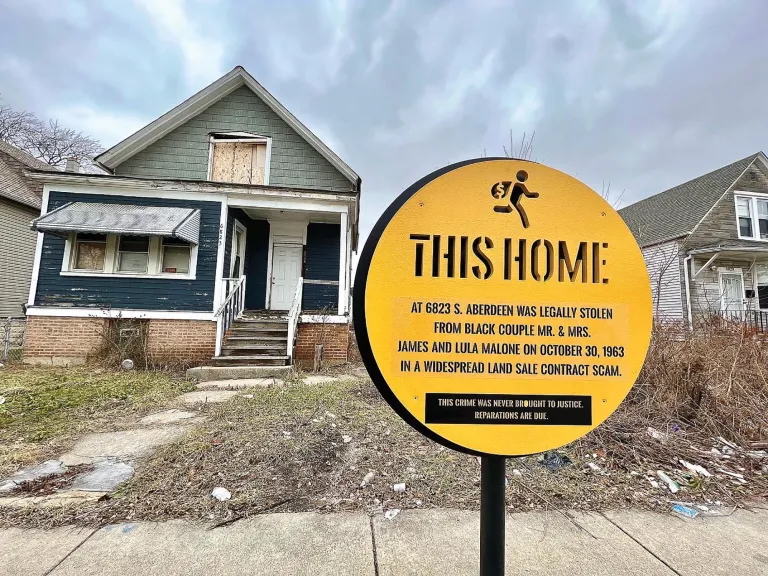
Her work reframes what it means to “build.” For Johnson, architecture is as much about repairing relationships as it is about constructing walls. “I’m interested in how we can rebuild trust through the design of everyday life,” she has said in interviews—a statement that now reads as both mission and movement.
Why Tonika Johnson Matters Now
Tonika Johnson’s rise—from an ARCHITECT Magazine Gamechanger to a MacArthur Fellow—is more than a personal milestone. It signals a shift in how we define design leadership. She reminds the profession that architecture’s power lies not only in structures but in stories, not only in skylines but in streets.
The $800,000 MacArthur award ensures she’ll have the time and resources to keep building those stories—literally and metaphorically. And for ARCHITECT, her success underscores what the magazine’s Gamechanger series has long championed: that the future of design depends on recognizing visionary voices early and amplifying them widely.
In Johnson’s hands, the blueprint for change is already underway.