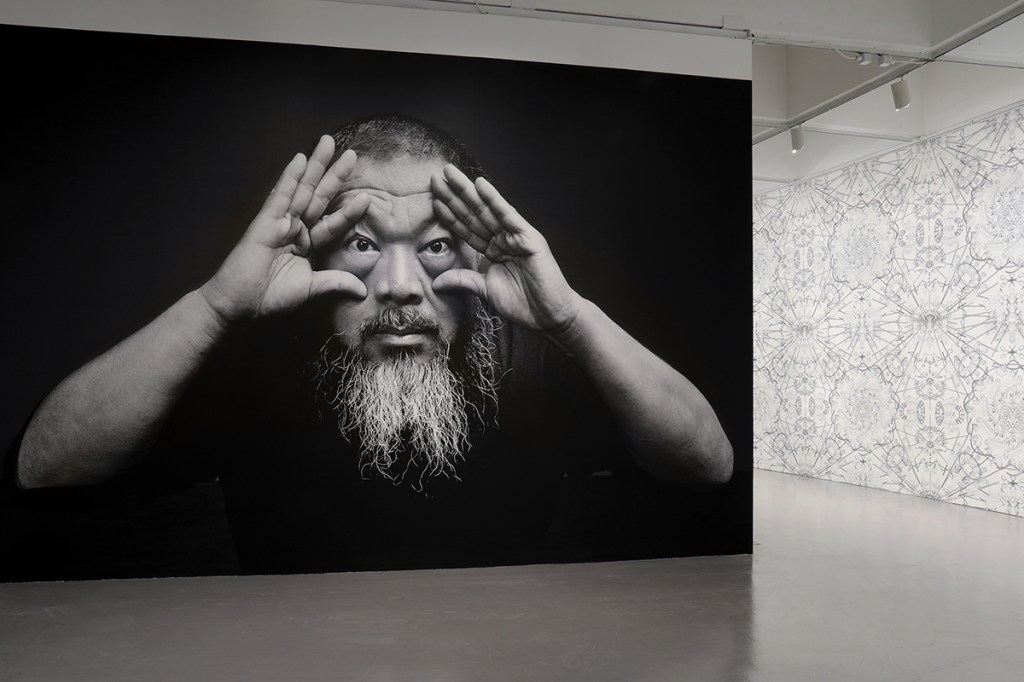
Political activist, artist, and architecture-collaborator Ai Weiwei opened a new solo show in the United States capital this week—and was there to see it. In his first public appearance in Washington, D.C., Ai spoke at the Hirshhorn Museum and Sculpture Garden’s annual James T. Demetrion Lecture on the eve of the exhibition opening. “Ai Weiwei: Trace at Hirshhorn” contains three parts: Trace, originally installed on Alcatraz Island; a new work, The Plain Version of the Animal That Looks Like a Llama but Is Really an Alpaca, and an older piece, The Animal that Looks Like a Llama but is Really an Alpaca.
Cathy Carver
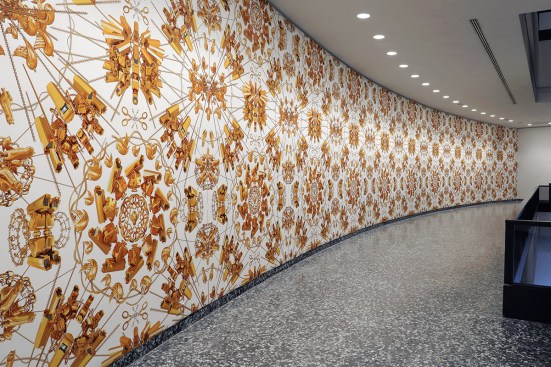
The Animal that Looks Like a Llama but is Really an Alpaca at the Hirshhorn
Courtesy Ai Weiwei Studio
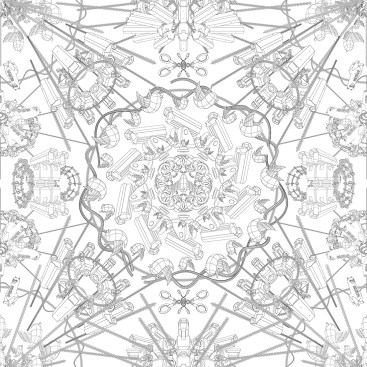
Detail of The Plain Version of the Animal That Looks Like a Llama but Is Really an Alpaca
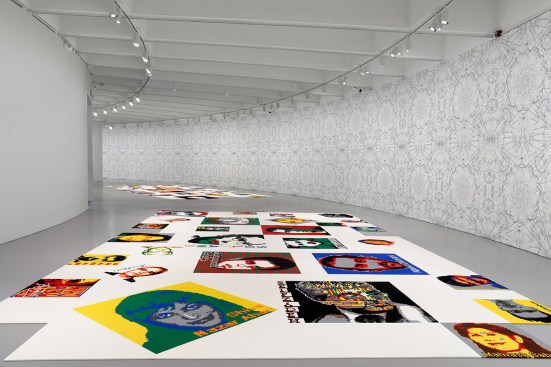
The Plain Version of the Animal That Looks Like a Llama but Is Really an Alpaca and its original color counterpart are kaleidoscopic wallpaper pieces formed with images of surveillance cameras, chains, handcuffs, alpacas, and renditions of Twitter’s bird-shaped logo. Perpendicular to the wallpaper work, the six flat planes of Trace contain 176 portraits of people, illustrated with Legos, that Ai “believes to have been detained, exiled or have sought political asylum as a result of their actions, beliefs, or affiliations.” In its original site, the 176 figures were displayed in Alcatraz’s 1941 New Industries Building; in D.C., they are displayed in architect Gordon Bunshaft’s donut-shaped museum, which opened in 1974.
Cathy Carver
Trace and The Plain Version of the Animal That Looks Like a Llama but Is Really an Alpaca at the Hirshhorn
This second installation of Trace is the first version that Ai has seen with his own eyes. When the original installation was on display in San Francisco, he was not allowed to leave China. In 2011, he was detained by the Chinese government for 81 days, and then his passport was not returned until after the exhibition closed in 2015. Despite being unable to leave the country for years, Ai worked remotely on the first installation of Trace, as well as Herzog & de Meuron’s 2012 Serpentine Gallery Pavilion in London. The Hirshhorn also hosted the nation’s first survey of Ai’s work in 2012 and 2013. More recently, Ai collaborated with Herzog & de Meuron on an exhibition at Park Avenue Armory in New York, which runs through Aug. 6.
“Ai Weiwei: Trace at Hirshhorn” runs June 28, 2017 through Jan. 1, 2018.
-
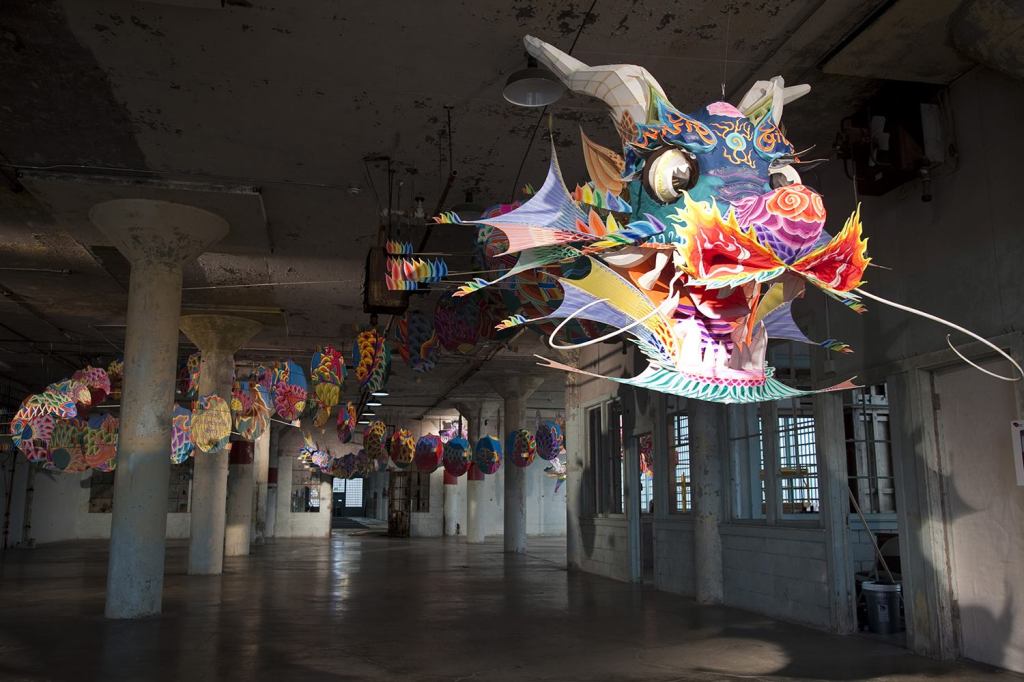
Ai Weiwei Designs Exhibition for Alcatraz Island
The installations in the former Bay Area prison open to the public on Saturday.
-
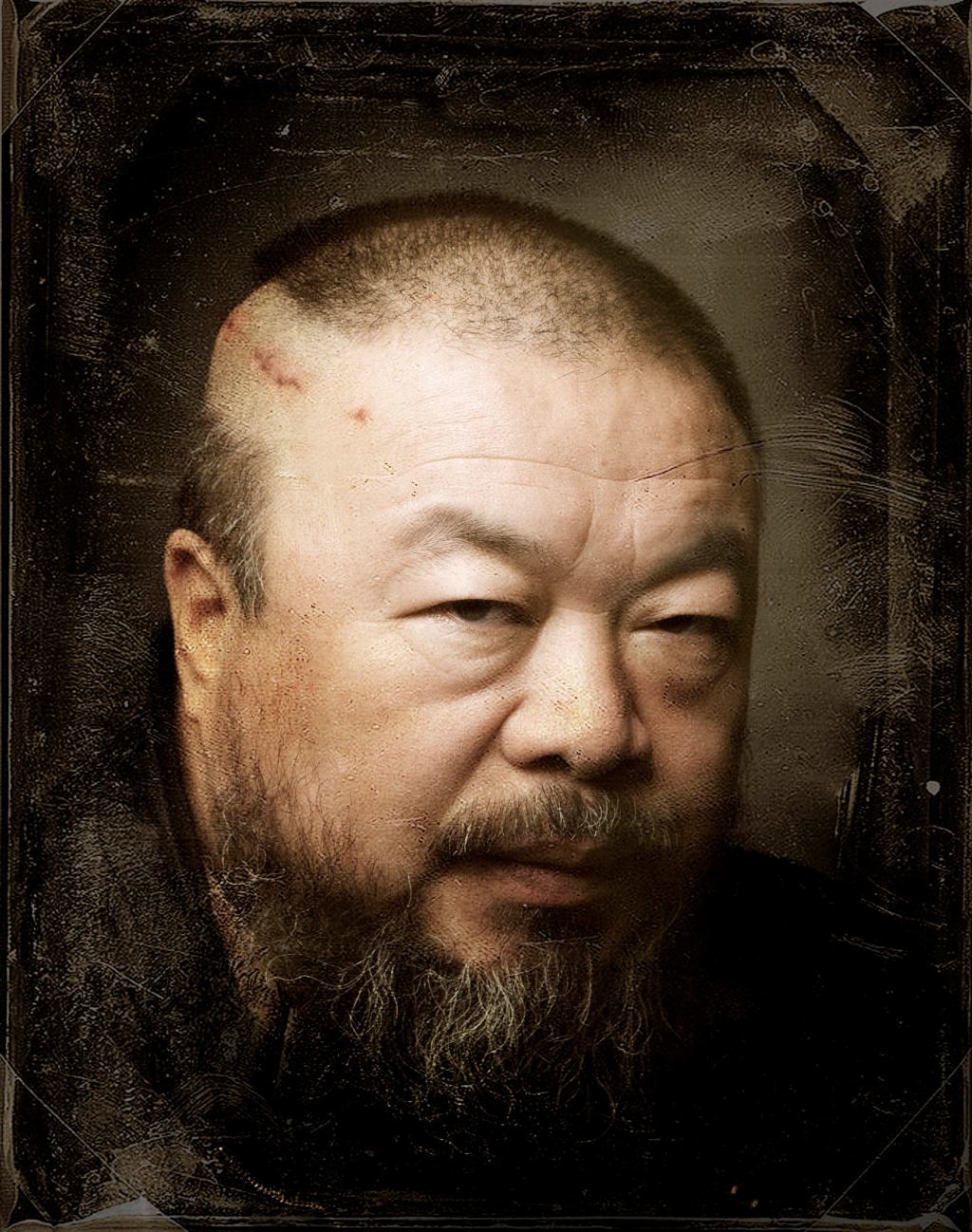
Architect and Activist Ai Weiwei Co-Designed the Latest Installment of the Serpentine Pavilion
Chinese artist and architect Ai Weiwei, still unable to leave his country due to house arrest, wasn’t allowed to attend the launch of his latest work, the 12th Serpentine Pavilion.
-
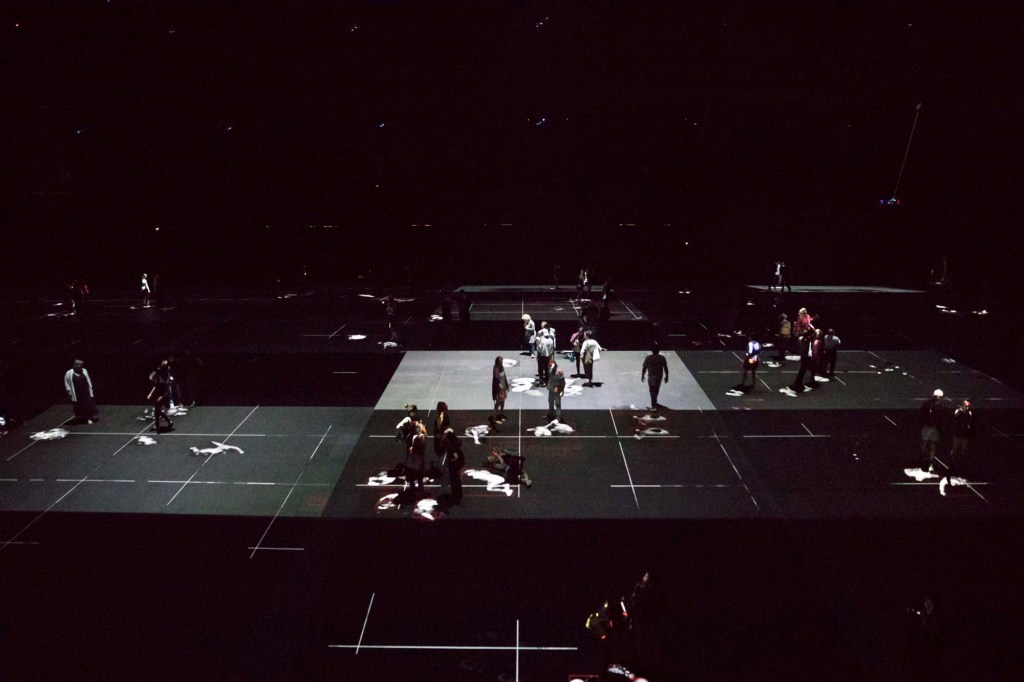
Hansel & Gretel at the Park Avenue Armory
The interactive installation by Ai Weiwei and Herzog & de Meuron serves as a commentary on surveillance and privacy rights.