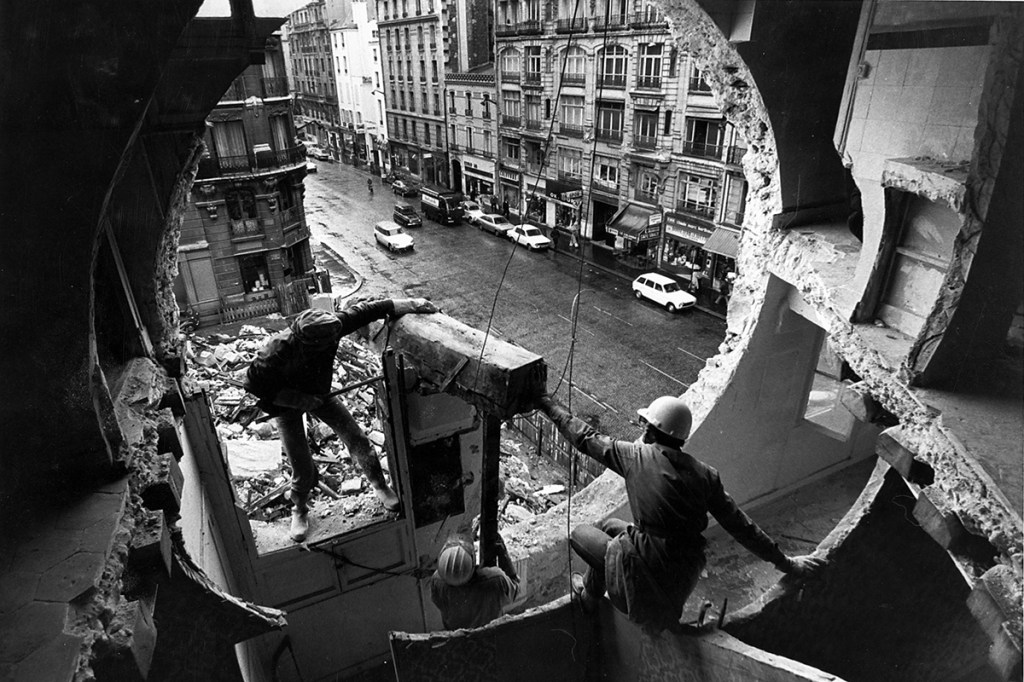
Trained as an architect, the late American artist Gordon Matta-Clark is best known for his unique cuts, holes, and excisions made into body and façade of run-down buildings during the 1970s in the Bronx, using power saws and carving tools. While much of his work no longer exists, Matta-Clark documented his work in photographs, films, and videos that reflect his vision about architecture, society, and politics.
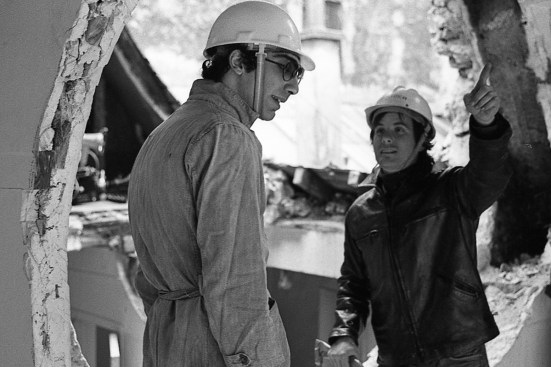
Harry Gruyaert / Courtesy 2017 Estate of Gordon Matta-Clark / Artists Rights Society (ARS), New York and David Zwirner, New York.
Gordon Matta-Clark and Gerry Hovagimyan working on Conical Intersect, 1975
On Nov. 8, “Gordon Matta-Clark: Anarchitect“ will open at the Bronx Museum of the Arts in New York, featuring more than 100 artworks, including archival material. “The exhibition highlights the political dialogue inherent in the artist’s artistic interventions—from his concern for the extreme plight of the homeless, his interest in direct community engagement, his belief that we should expand our lived experience of a city into its underground and other inaccessible spaces, and his commentary on development and socioeconomic stratification,” noted the museum’s press release.
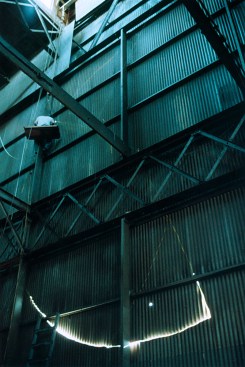
By manipulating existing spaces and transforming them into sculptural works of art, Matta-Clark sought to encourage rethinking of the built environment and aimed to offer a new perspective towards everyday urban scenes. In “Splitting” (1974), he cut through a two-story single-family house using his saw. He excavated the foundation, tilted back the sides of the house, and created a groove that lit up the interior. In 1975, he worked on an abandoned warehouse at New York’s Pier 25, where he made a series of cuts in the walls, ceiling, and floor of the warehouse to create “Day’s End.”
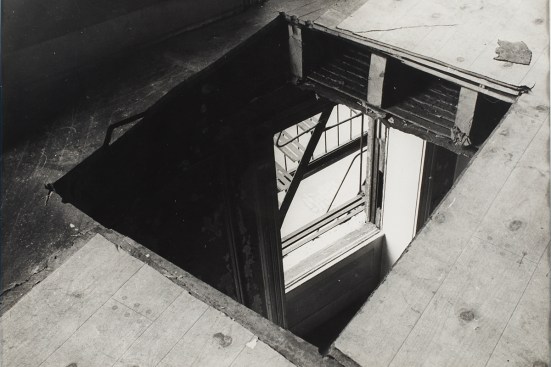
Courtesy The Bronx Museum of the Arts
Gordon Matta-ClarkBronx Floors, 1973
In 1973, Matta-Clark and some fellow artists formed the Anarchitecture Group, a collaboration shaped to protest against “social conditions,” wrote Robert Holloway in his post-graduate thesis “Matta-Clarking.”
“Architecture did not start out being the main point for any of us, even for Gordon,” wrote American sculptor Richard Nonas in a letter to the Institut Valencià d’Art Modern, included in a 1992 exhibition catalog about Matta-Clark’s work. “But we soon realized, however, that architecture could be used to symbolize all the hard-shelled cultural reality we meant to push against, and not just building of ‘architecture’ itself. That was the context in which Gordon came up with the term ‘anarchitecture.’ And that, perhaps suggests the meaning we all gave it.”
Following the conclusion of the Bronx Museum of the Arts exhibition next year, the show will travel to Paris’ Jeu de Paume; the Kumu Art Museum in Tallinn, Estonia; and the Rose Art Museum in Waltham, Mass.
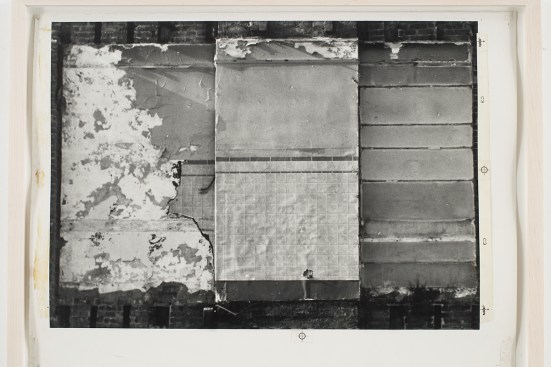
Courtesy The Bronx Museum of the Arts
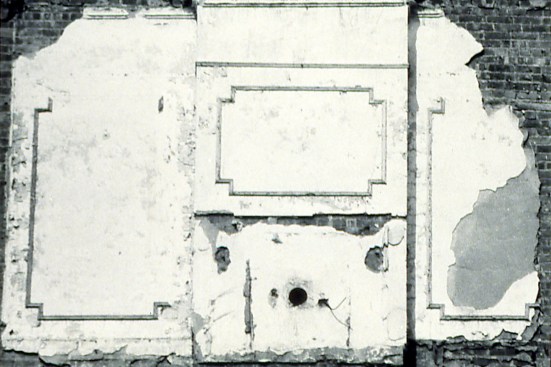
Gordon Matta-ClarkWalls, 1972
Courtesy The Bronx Museum of the Arts
Gordon Matta-ClarkWalls, 1972
Courtesy 2017 Estate of Gordon Matta-Clark / Artists Rights Society (ARS), New York and David Zwirner, New York.
Gordon Matta-Clark making Day’s End (Pier 52), 1975