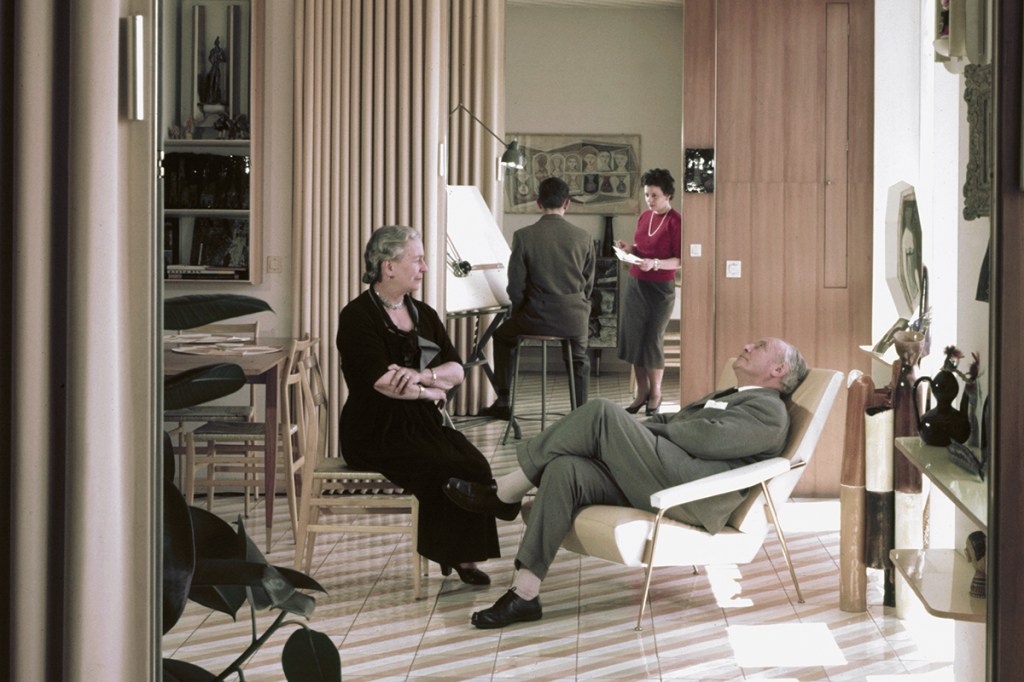
This fall, the Musée des Arts Décoratifs (MAD) in Paris will welcome visitors to a comprehensive retrospective of late Italian architect Gio Ponti‘s prolific contributions to architecture and design. Titled “Tutto Ponti: Gio Ponti, Archi-Designer,” the exhibition will be on view from Oct. 19, 2018 to Feb. 10, 2019.
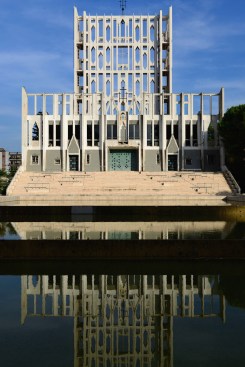
Luca Massari
Taranto Cathedral, Italy
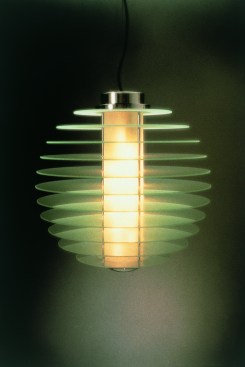
Designed by Paris-based architecture and urban planning firm Wilmotte & Associés and Milan-based graphic designer Italo Lupi, the exhibition intends to introduce Ponti’s work to France, where it remains widely unrecognized, according to a MAD press release. Featuring more than 500 items, most of which have never been displayed outside Italy, the exhibition will begin with a scenographical reconstruction of the Taranto Cathedral’s façade in Italy, one of Ponti’s final masterpieces. The visitors will then move on to view a chronological selection of Ponti’s designs, including architectural drawings, photographs, furniture, ceramics, and lamps.
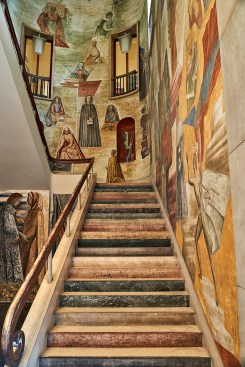
Tom Mannion
Palazzo del Bo, Padua, Italy
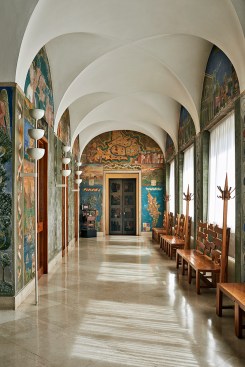
Tom Mannion
Palazzo del Bo, Padua, Italy
According to a 2011 New York Times article, Ponti, whose buildings have been constructed in 13 countries, is considered one of the most influential Italian architects and designers of the past century. Though he was initially influenced by Neoclassicism and Andrea Palladio’s villas, Ponti’s style evolved over time to become modern, simple, flexible, light, and luminous. “Not only was he extraordinarily prolific, his work was unusually eclectic, reflecting the diverse, often conflicting, styles and ideologies with which he experimented over the years,” according to the Times article.
Courtesy Gio Ponti Archives
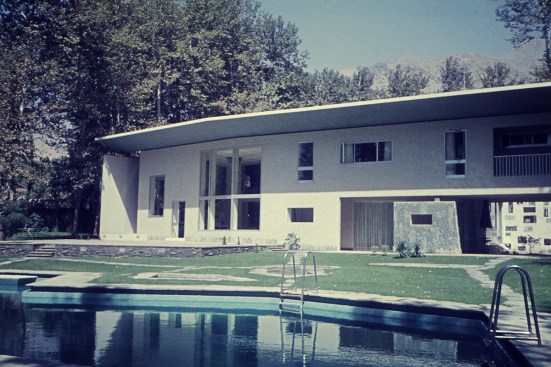
Villa Nemazee, Tehran
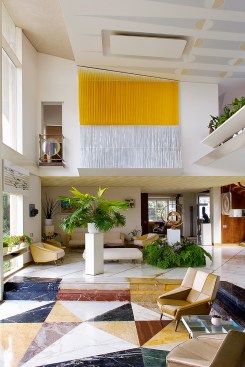
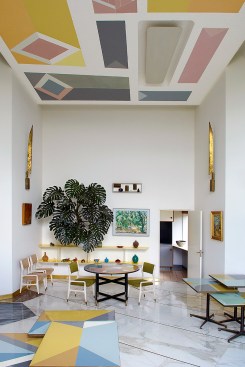
The Denver Art Museum in Colorado (Ponti’s only building in the U.S.), Villa Planchart in Caracas, Venezuela, Villa Nemazee in Tehran, and the iconic 32-story Pirelli Tower in his hometown of Milan are among his best known architecture works. But he also had a hand in industrial design. At the peak of his career, in a period between 1950 and 1960, he designed a collection of furniture, ceramics, tiles, and lamps. According to the same release, “Ponti’s style reached a wider international audience” during this period. In 1953, he designed the iconic Distex armchair for Cassina, an Italian manufacturing company. In 1957, Cassina commissioned him to design the Superleggera chair, which became the “icon of his furniture design,” according to the release.
Antoine Baralhé
Villa Planchart, Caracas, Venezuela
Antoine Baralhé
Villa Planchart, Caracas, Venezuela
“Tutto Ponti: Gio Ponti, Archi-Designer,” was curated by MAD director Olivier Gabet; contemporary and modern department curator Dominique Forest; Sophie Bouilhet-Dumas from Paris-based Bouilhet-Dumas Studio; and Gio Ponti Archives director Salvatore Licitra.
Courtesy Gio Ponti Archives
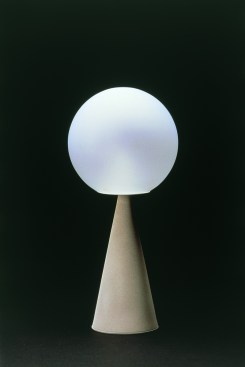
Bilia Lamp (1931)
Courtesy Gio Ponti Archives
0024 Lamp, 1933

Courtesy Gio Ponti Archives
Superleggera Chair (1957)