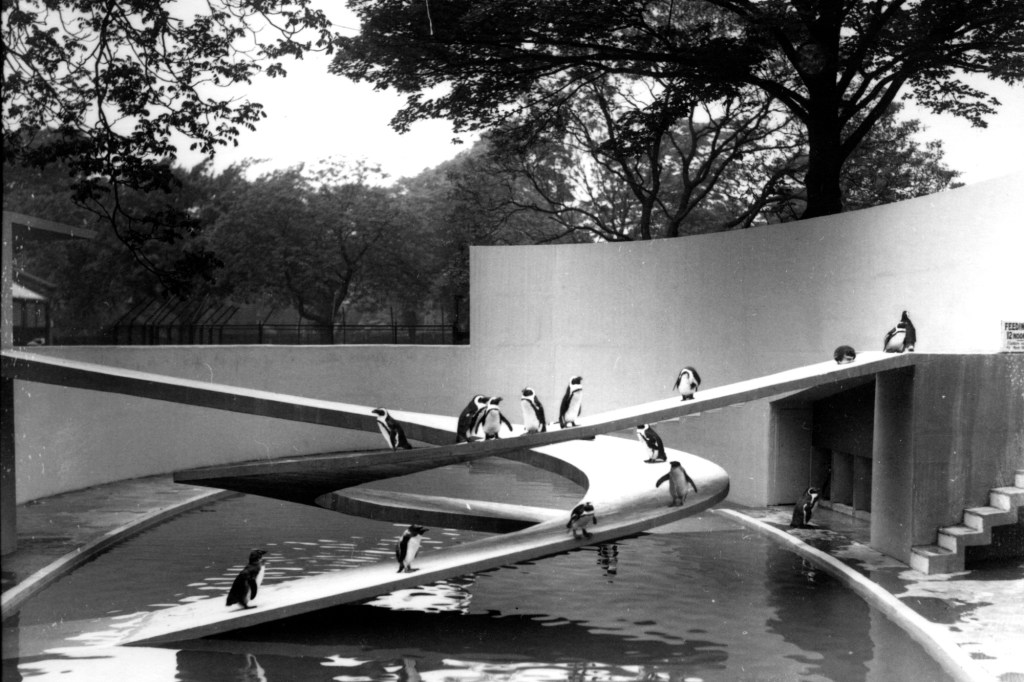
Known for its gravity-defying projects and risk-taking reputation, the multinational Arup Engineering evolved from surprisingly humble roots. That shift is outlined in a forthcoming exhibition at the Victoria and Albert Museum, in London. “Engineering the World: Ove Arup and the Philosophy of Total Design” explores the life, work, and legacy of the firm’s founder, the Anglo-Danish engineer Ove Arup. As the first major exhibition by the museum’s new design, architecture, and digital department, which formed last March, it will cover a period of roughly 100 years and feature more than 150 of the firm’s prototypes, archival materials, interactive digital displays, and engineering simulations—including the original Ferranti Pegasus computer used by Arup engineers to conduct the structural analysis for the Sydney Opera House’s massive, pre-cast concrete shells.
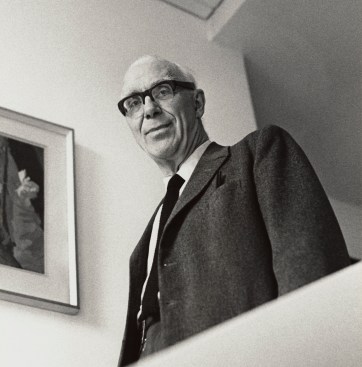
National Portrait Gallery, London
Ove Arup, photographed by Godfrey Argent, April 1969
“Ove Arup was the greatest engineer of the 20th century,” said exhibition co-curator Zofia Trafas White in a press release. “Unconventional and playful in his approach, his collaborative working style revolutionized building design during his lifetime and influenced how buildings are made today.”
The exhibition begins with Ove’s early work, including technical studies and models for projects like the Penguin Pool (1935) at the London Zoo and, later, his design of the temporary harbors used during the D-Day landings in France in 1944, optimized to rapidly offload soldiers and cargo. The exhibition moves into his writings on “Total Design”—what he called his philosophy of involving all stakeholders in a project from the start. Outlined in a 1970 speech, the document remains something of a manifesto for the firm, serving as the basis for the multidisciplinary approach for which it’s become known. The exhibition highlights this philosophy in showcasing a litany of collaborations, some carried out by Ove himself and others completed after his death in 1988, including: Ove’s concrete-reinforced Kingsgate bridge (1963), in Durham, England; the Centre Pompidou (1978), in Paris, whose design required Arup engineers to accommodate an exposed steel frame that famously locates building services and utilities on its exterior; Arup’s and Foster+Partners’ work with pre-fabrication for the Hong Kong and Shanghai Bank headquarters (1986), in Hong Kong; and the combination of structural and environmental engineering in the Kansai International Airport Terminal Building (1994), in Osaka, Japan, by Renzo Piano Building Workshop.
The continuation of Ove’s legacy into the 21st century is shown through digital installations highlighting the firm’s recent and ongoing work, including its Crossrail underground rail project, in London, acoustic and environmental sound studies from the Arup SoundLab, the development of a bio-reactive façade, and its work in open-source housing design.
From June 18 through Nov. 6, 2016.
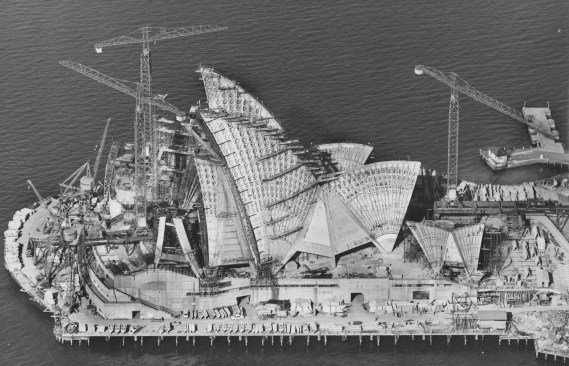
Robert Baudin for Hornibrook Ltd. Courtesy Australian Air Photos
Sydney Opera House under construction, April 1966
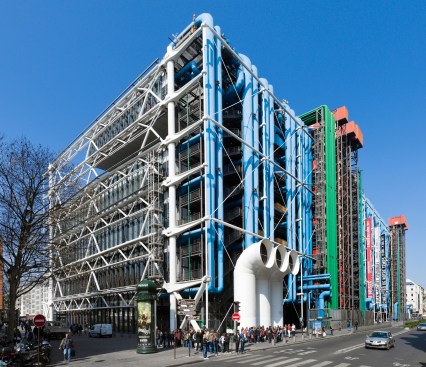
Exterior view of Centre Pompidou, Paris