Aaron Betsky
Cardiff
We are now so used to navigating through a world that is both digital and physical that it takes artists to make us aware of the difference between the two. At Documenta 13, in Kassel, Germany, Canadian artist Janet Cardiff does that with her usual finesse.
Cardiff, here collaborating, as often, with George Bures Miller, works at the edge between sound and installation art, creating crazed accumulations of both aural and visual items. She first made her reputation by giving viewers (hearers) audio and then video tapes to use as they walked around a space. As you moved through the museum, she would tell you where to go, point out landmarks, and then suddenly you would hear something that was not there, or, as you were holding a video camera set to playback, pointed at a gallery, naked people would come running through the space.
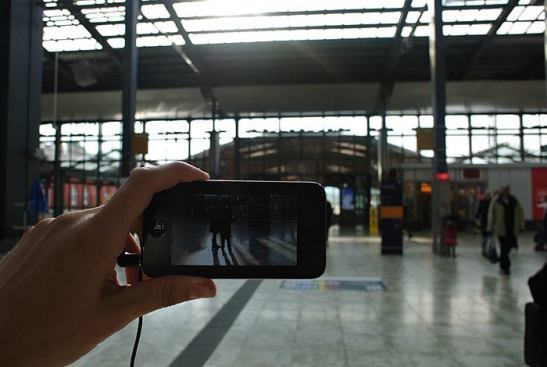
The current work is more subtle and evocative. That is partially because of how we, and not just the artist, have evolved. Here, you check out an iPod, and wander through the Kassel train station holding it up in front of the real structures—as many do already when we are looking for something, or chatting with somebody on a video call.
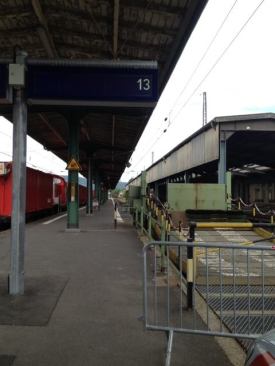
There is a marching band that comes walking through the space, and that swirls around your ears somewhere behind you. There are people on your screen who are not there in the space behind the device. Mainly, however, it is the past that Cardiff evokes with words. She takes you the farthest track at the small provincial station, where freight trains now sit idle, and points out that it was the place from where local victims began their journey to the concentration camps.
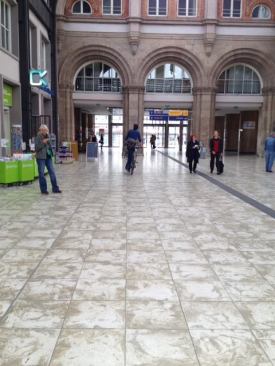
Cardiff also makes you look, pointing out where the old building has been renovated, and taking you up and down back staircases you might not notice. Instead of showing you an alternate reality or jazzing up a boring environment, she lets you see both what is there and what was there, and maybe what could be there, as she speculates on the lives of people wandering through the space, by using technology as a form of focus, rather than a distraction. In the piece’s most elegiac moment, two virtual dancers perform a passionate pas-de-deux in front of you in the nearly empty ticket hall, bringing human life into view, but only in the ephemeral realm of art.
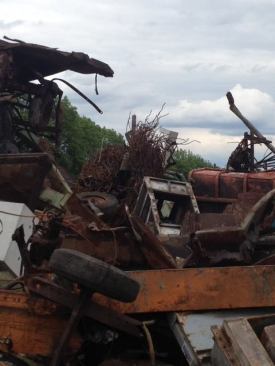
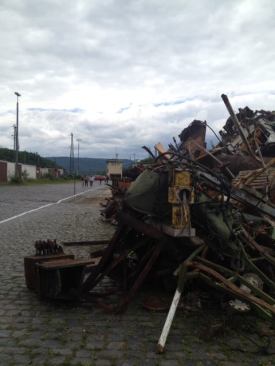
Many of the other artists exhibiting in the train station’s various other sheds and former storage spaces do exactly the opposite: They force you to look at what is real. Lara Favaretto does so in an almost monumental manner, piling scrap metal and concrete she found around Kassel into a mountain landscape that appears completely random, but develops rhythms as you follow the composition of these pieces of disuse. It is a world of deconstructed Richard Serras, existing halfway between the evocation of ruins and the beauty of human craft denuded of use or structure.
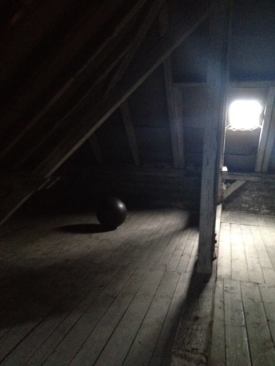
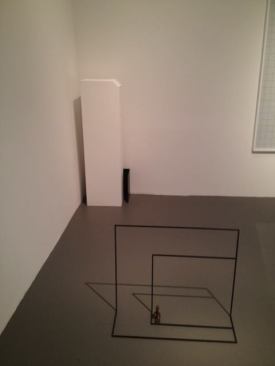
Michael Portnoy is more fetishistic, leading you through room after room where only a few objects stand, each spot lit. A single beaker, a ball, a fragment of hardware: each becomes worthy of your contemplation, while also making you wonder whether the whole experience is a journey through the irony of art, which turns the everyday into the precious.
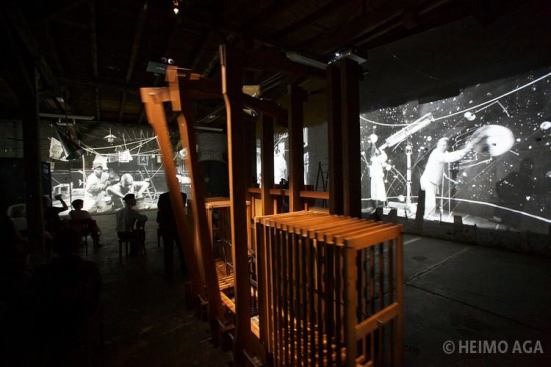
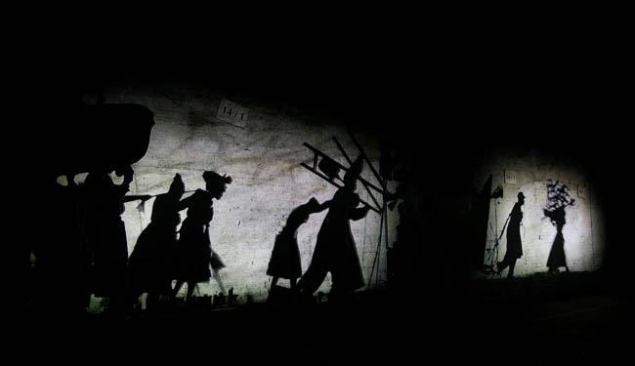
The real revelation comes in the room that the South African artist William Kentridge has taken over for a piece called “The Refusal of Time.” A wooden construction, its pieces rotating and seesawing to an indecipherable purpose, stands in the middle of the space. On the worn brick walls, metronomes appear, ticking away seconds. Then a carnival of figures begins to march around you, some of them drawn, some of them actors (including the artist himself). They march around you in a procession, engage in scientific research, fight, and dress up in harlequin outfits. Kentridge evokes his country’s past and its violence, but mainly he seems to show us all as fools, moving through our daily lives as time moves on in a different rhythm. In the empty depot, he has deposited images of life defying the decay and the disuse, the static remains and the emptiness of space.