
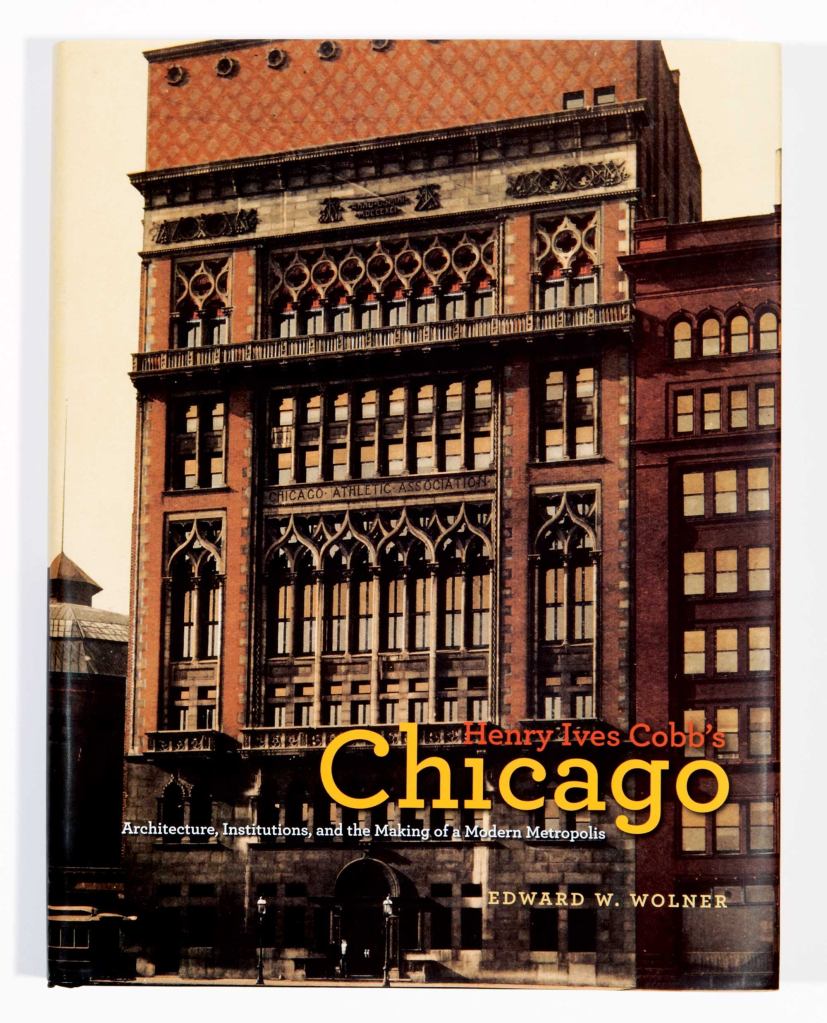
In the shadow of Louis Sullivan’s skyscrapers and Frank Lloyd Wright’s affordable housing schemes is the civic architecture of another, less-remembered master of the Chicago cityscape, Henry Ives Cobb. Though many of his structures—such as the Chicago Opera House and the Fisheries Building he designed for the 1893 Chicago World Fair—have been demolished, his reputation is on its way to being restored with Edward N. Wolner’s new critical study, Henry Ives Cobb’s Chicago. A Harvard-educated Boston Brahmin, Cobb won a competition to design the Union Club of Chicago as a 22-year-old, first-year architect. The club’s patrons, including railroad barons, steel magnates, and other self-made men, would define his clientele, and his work for them would define the face of a city being remade after the Great Chicago Fire of 1871. The eclectic collection consists of his turreted “English battlements style” Palmer residence on Lake Shore Drive, the White City Romanesque Fisheries Building, and several Gothic halls for the University of Chicago’s campus, among many others. • $45; The University of Chicago Press, November 2011.
‘Henry Ives Cobb’s Chicago’
1 MIN READ
Mike Morgan