
Remember the explosive debate in 2010–2011 over the so-called “Ground Zero Mosque”? That was nothing compared to what’s been brewing in Europe. Islam is the continent’s fastest-growing religion, and apparently there aren’t enough mosques to accommodate the faithful. This summer, Dalil Boubakeur, president of the French Council of the Muslim Faith, declared that the number of mosques in France needs to double (to roughly 5,000). While such tremendous demand may look like a bonanza for architects, the design brief is politically charged, because neighborliness and the humanitarian needs of Middle Eastern and North African refugees seem to be irreconcilable with security concerns about jihadist extremism and anxiety, exacerbated by demagogues, about cultural change.
Imagine Le Pen’s consternation when Boubakeur, asked by a reporter whether unused churches should be turned into mosques, replied, “Why not? It’s the same God. The rites are similar, fraternal. I think Muslims and Christians can coexist.” In a subsequent poll, more than two-thirds of respondents opposed the idea, though just 6 percent of the majority Roman Catholic population regularly attends Mass, and thousands of churches have been shuttered. The idea went over just as poorly when artist Christoph Büchel put it into practice at the Venice Biennale this summer, by temporarily repurposing a deconsecrated 10th-century church as a mosque. Local police hastily shut the place down, using flimsy bureaucratic pretexts.
Such conversions are nothing new. Hagia Sophia in Istanbul is the most famous example: built by Justinian I in the sixth century, adapted into a mosque in 1453, then secularized as a museum in 1935. Now, Turkey’s interim minister of culture and tourism, Yalçın Topçu, is proposing a referendum to decide whether Muslims should be allowed to publicly worship there again. “Opening the Hagia Sophia to prayers is my personal dream,” he told reporters last month.
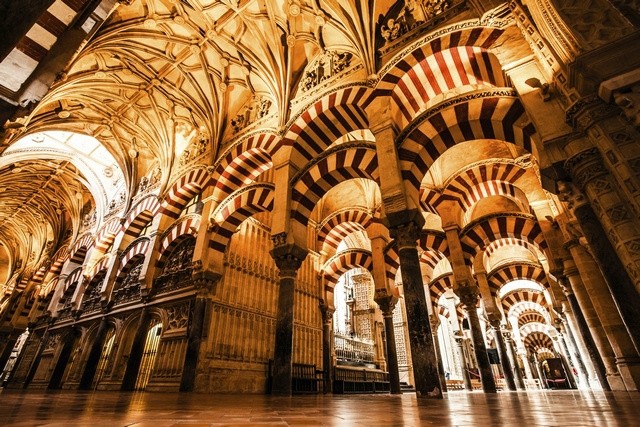
Another celebrated example, the cathedral in Córdoba, Spain, began as a church in the sixth century, was used jointly by Muslims and Christians for a period in the eighth century, then served exclusively as a mosque until the Reconquista in the 13th century. Now Spanish Muslims are calling for the right to pray there once more, and nearly 400,000 people, including Norman Foster, Hon. FAIA, have signed a petition to recognize the building as a mosque–cathedral.
