
On the surface, the President-elect’s $1 trillion infrastructure plan has all the makings of a glorious, bridge-building, unemployment-busting, bipartisan win-win. Senators and representatives on both sides of the aisle have been making positive noises of support. After all, who doesn’t think the United States needs well-paved roads and well-paid jobs? Well, the devil is in the details.
Before shovel hits dirt, Congress has to agree on how to pay. Several financing schemes are in circulation, including straight-up government borrowing (at historically low interest rates); dedicated revenue from a per-barrel tax on oil or from a one-time deal for corporations to repatriate overseas cash at a reduced, 10 percent rate; and an “infrastructure bank” of federal dollars meant to attract private investment.
The Trump team’s plan would promote private investment in exchange for tax credits and revenue from tolls and other fees. An op-ed in The Washington Post calls it “a tax-cut plan for utility-industry and construction-sector investors, and a massive corporate welfare plan for contractors.”
If an infrastructure bill does get passed, the profession will have to mobilize and push for every project to be implemented smartly and equitably. There are signs that they won’t, given the track records of some candidates for senior appointments in the new administration. The pick for Secretary of Housing and Urban Development, retired surgeon Ben Carson, has no relevant policy experience and opposes desegregation. The choice for Environmental Protection Agency, Scott Pruitt, is a climate-change denier who as Oklahoma Attorney General has had a cosy relationship with oil-and-gas lobbyists.
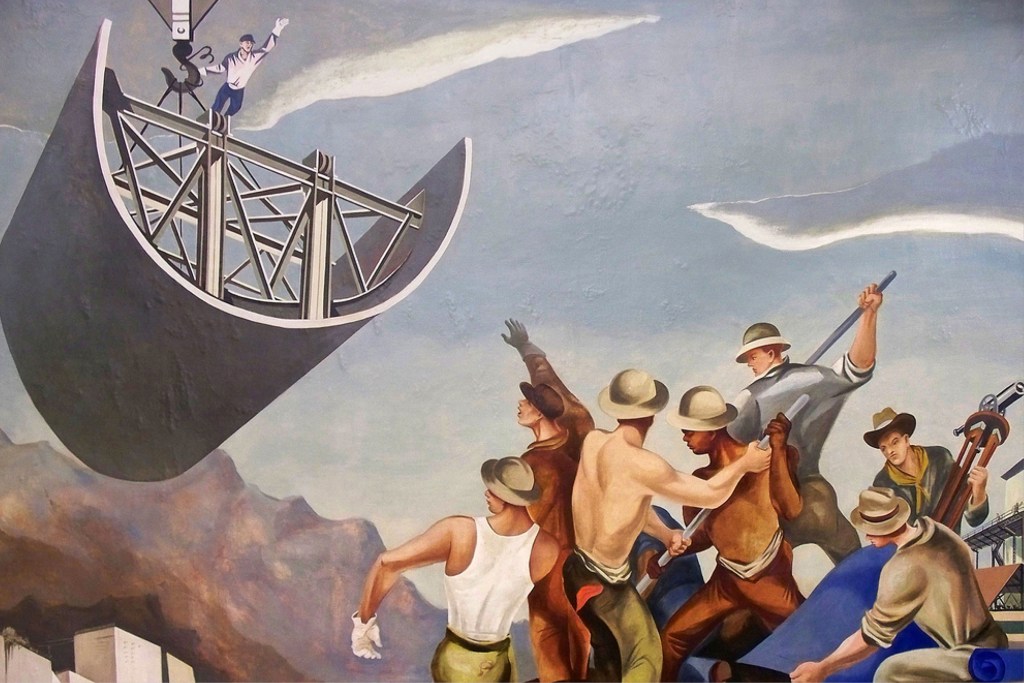
To grasp how much this matters, think back to the New Deal, and Franklin Roosevelt’s publicly funded alphabet soup agencies. The Work Projects Administration alone employed millions and built, expanded, or renovated 39,370 schools, 12,800 playgrounds, 2,550 hospitals, 1,050 airports, 2,700 firehouses, 6,383 office buildings, 15,100 gyms and auditoriums, and 8,000 parks, among other projects.
In addition to creating jobs and buildings, the New Deal demonstrated the government’s potential for good at a time when Americans had reason to be doubtful and fostered community at a time when society was deeply fragmented. It wasn’t just the power of architecture as finished object in landscape, considerable though that is. A shared enterprise, the primordial act of building, brought people together around a common goal. The optimist in me hopes infrastructure legislation in 2017 could achieve something similar.
To do right by the opportunity, architects may need to subvert the system from within—craft narratives that are honest but avoid ideological flash points, identify loopholes in policies, get creative with budgets, and forge unlikely partnerships. Because if the citizens of the United States are going to spend $1 trillion on infrastructure, it is the profession’s responsibility to ensure that they get their money’s worth: amenities that are not only beautiful, but sustainable, resilient, inclusive, and truly their own.
A version of this article appeared in the January 2016 print issue of ARCHITECT. This digital version has been updated to reflect more recent announcements about cabinet posts.
