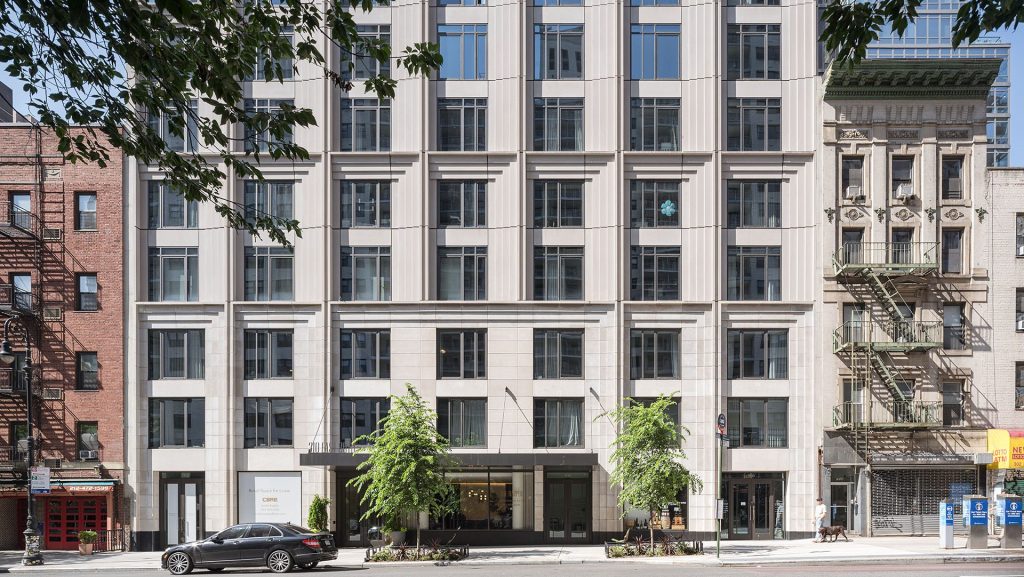
In Manhattan’s Upper East Side, a 21-story condominium pairs chamfered limestone with floor-to-ceiling glass, nodding to the neighborhood’s early-20th-century masonry towers with punched windows and carved stone detailing.
Designed by ODA, The Harper’s façade draws inspiration from Art Deco and Bauhaus traditions while looking forward. The project is “less about nostalgia and more about creating a building that responds to the way people live today,” says ODA founder, Eran Chen.
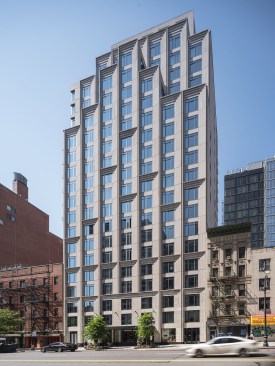
Credit: Miguel de Guzmán
For Chen, the facade is civic as much as architectural: “We see every project as part of an ecosystem—street, neighborhood, city—and our role is to strengthen that system.”
The Harper pushes the scale and precision of a carved stone envelope in a residential high-rise. “The innovation lies in the scale of the limestone,” Chen notes. “Chamfering and stepped stone planes isn’t new but combining that level of craft with expansive glazing in a residential tower is unusual. It had to feel sculptural without losing openness.” Limestone aligns the building with neighborhood history; glass opens the perimeter and amplifies daylight and views.
Those moves register from the sidewalk to the living room. The limestone base grounds the tower in the streetscape; large windows pull light deep into the plan and frame cross-street and skyline views. Setbacks shape private balconies and terraces that extend daily living outdoors and encourage ventilation. “Form follows experience,” Chen says. “Buildings aren’t isolated objects, but extensions of the streetscape. When a building contributes to that system, it generates value beyond the walls.”
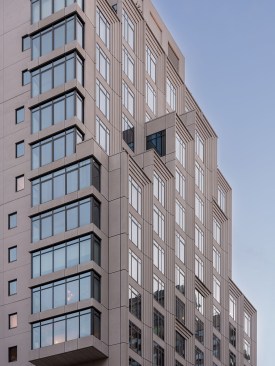
Credit: Miguel de Guzmán
Material detailing is restrained and precise: antique-brass accents, sharp stone chamfers, and window reveals that play with light and shadow. Profiles stay lean yet dimensional, so the façade reads as carved rather than applied. Inside, clear glazing supports simple, flexible layouts without competing with the envelope.
Shared amenities underscore an indoor–outdoor logic. Two landscaped rooftop terraces are outfitted with outdoor kitchens, fireplaces, televisions, and panoramic city views, expanding the building’s social spaces above the street. Many homes include private outdoor rooms shaped by the massing, offering a more continuous relationship to the city than a sealed curtain wall typically allows.
The Harper reflects ODA’s people-first approach to vertical living: treat the facade as a system that improves light, access to fresh air, and connection to the public realm.
“We see every project as part of an ecosystem, whether that’s a street, a neighborhood, or the city itself, and our role is to strengthen that system,” Chen says.