It
is a sad statement about our expectations of architecture that spaces that are
perfectly fine receive accolades as if they are works of genius. The galleries
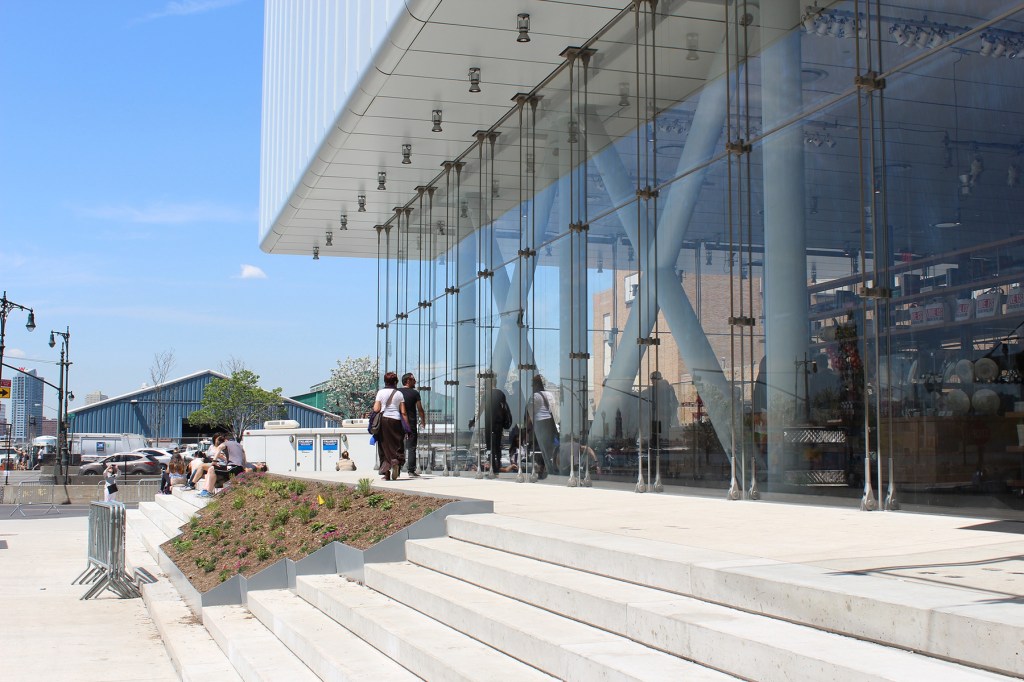
of the new Whitney Museum in New York,
designed by Renzo Piano Building Workshop have been treated with hosannas and panegyrics that made me expect places of pure poetry, but when I finally made it there last
week, I found they are just OK. The galleries are big, tall, and have nice pine
floors. They are of the same quality as the commercial art spaces that surround
the building in Chelsea, making you wonder a bit about the difference between
our non-profit repositories of cultural treasures and our showplaces for
high-end paintings.
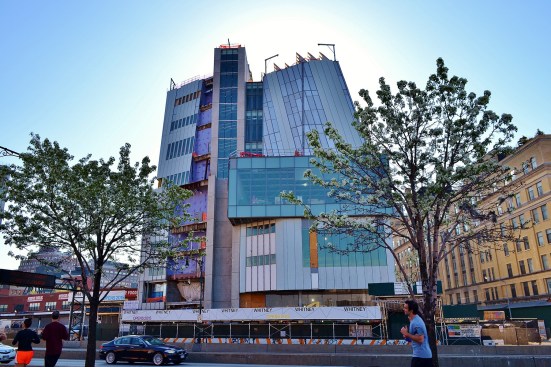
New Whitney Museum, New York, by Renzo Piano Building Workshop.
As usual, Renzo Piano, Hon. FAIA, has futzed the Whitney’s galleries up with unnecessarily busy ceilings, but the lighting is excellent. Also as usual for the this maven of museum design, the circulation is a complete mess, starting with a ride up an elevator, then descending from fire stairs that connect the upper floors in one corner for a few times before switching—unannounced except by some busy guards/traffic cops—to a glassed-in connector in the galleries’ middle. Finally, you can question the Whitney’s whole organization, which stacks the galleries on the south side, where they have to be protected from direct light, thus presenting a blank wall to downtown, and creating narrow spaces rather than using the site’s full potential. But, in the end, the galleries are perfectly reasonable places to hang art big and small and I am sure the idiosyncrasies of movement and placement will come to be seen by visitors as charming quirks.
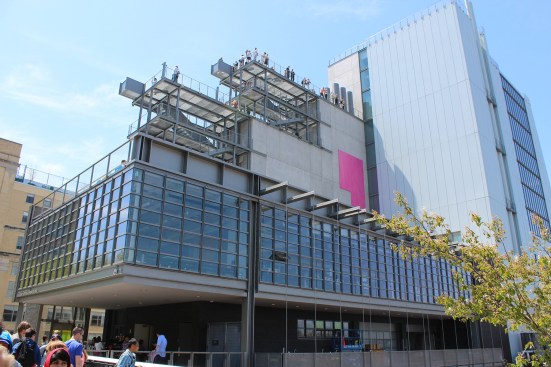
New Whitney Museum, New York, by Renzo Piano Building Workshop.
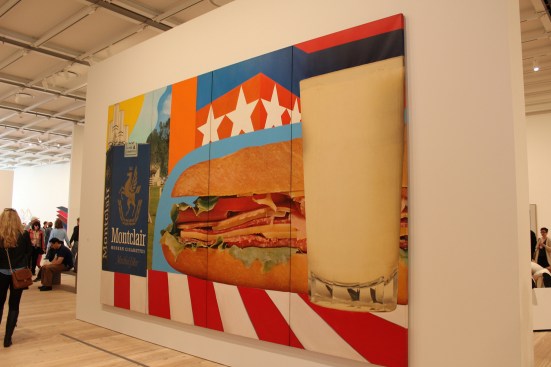
What is most remarkable about both the building and its inaugural exhibition, “America Is Hard to See,” (which is indeed, as my husband pointed out, difficult to see, given the crowds) is the way it is a monument not just to this country’s visual art, but to the transformation of Manhattan into art: an object to be desired, adored, and consumed. The new Whitney celebrates the factories, office towers, railroad lines, and everything else that made this a great hunk of human-made aspiration rising out of some serious rock, and that have now turned into places we can enjoy and inhabit as dead artifacts full of character.
New Whitney Museum, New York, by Renzo Piano Building Workshop.
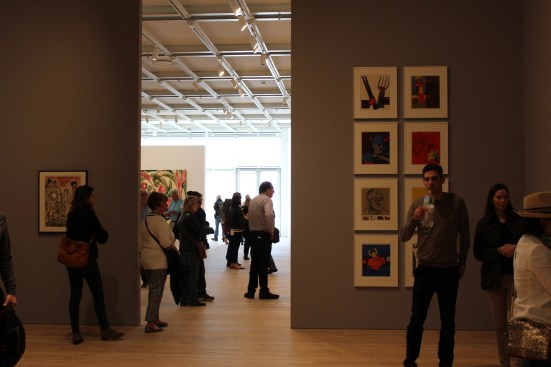
New Whitney Museum, New York, by Renzo Piano Building Workshop.
The exhibition does this by confronting you, the moment you start your visit on the seventh floor, with George Bellow’s 1910 vision of the waterfront just out the window when it was still a place of grit and work, “Floating Ice,” as well as with John Stud’s 1924 “Forms in Space,” a paean to the towers that rise up all around you. But the real engine of the aestheticization of Manhattan are the building’s strongest features, namely its multiple terraces and viewing lounges that buffer the inward-turned galleries to the east and west. From there, you look down on the High Line, a freight line turned into New York’s own place for promenading, and across to all those spires, warehouses and new neo-loft buildings that make you feel as if you are in a place of energy, aspiration, and culture. You can almost sense Woody Allen swooning over the views. Even another Piano-ism, a staircase so encased in unnecessary steel as to make you wonder whether there was a fire sale on I-beams when they bid out the structure, can’t distract from Manhattan displaying itself.
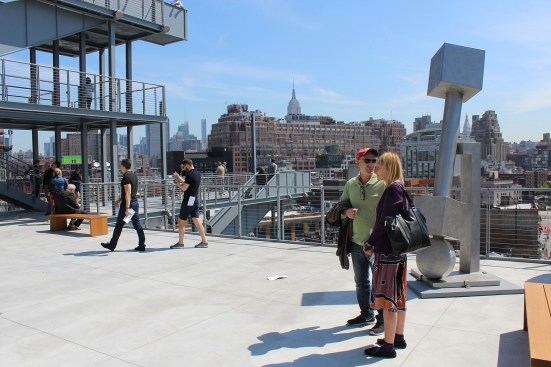
New Whitney Museum, New York, by Renzo Piano Building Workshop.
New York became big and tall on shipping, commerce, and finance. Then it became our cultural center, home to our newspapers, most important media outlets, and biggest museums. That culture looked around itself, and saw its home as beautiful. It then proceeded to sell it to the world in music, movies, books, and paintings. It was so successful that almost nobody makes anything in Manhattan anymore, and less and less work goes on there. It has become a place for most of us to visit, and for the fortunate few to bask in being there. Now the Whitney has shown us Manhattan’s solipsism and its artful self-regard—and it is indeed a thing of beauty, even if the container of these urban revelations is decidedly not.
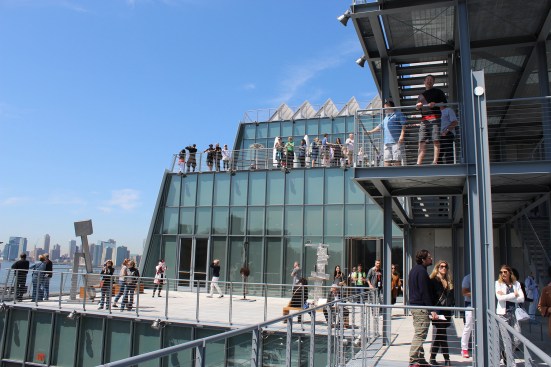
New Whitney Museum, New York, by Renzo Piano Building Workshop.