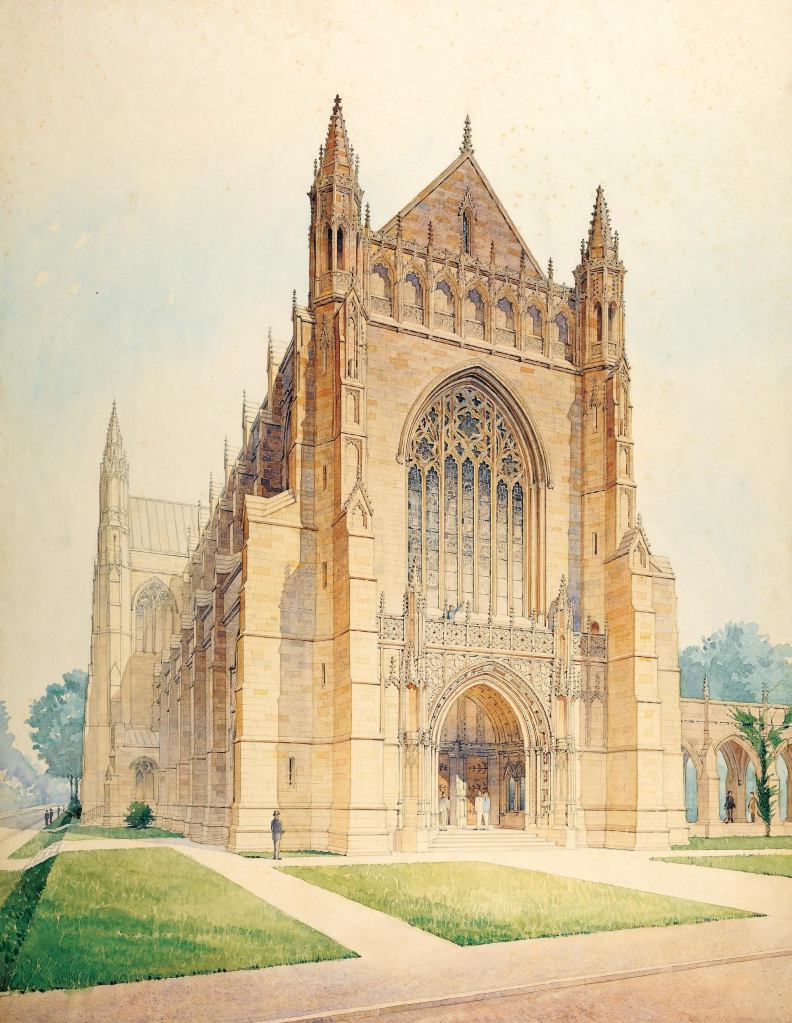
Of all the architectural revival styles of the 19th century that experienced popularity in this country—Romanesque, Queen Anne, Neo-Byzantine, Beaux-Arts—the Gothic Revival has had the most staying power. Princeton University, hinting that its own architecture helped spur the movement, is putting on Princeton and the Gothic Revival: 1870–1930. At its founding in 1746, the university was known as the College of New Jersey, but a century later, the newly named Princeton decided to become an international institution, starting with its architecture. Cram and Ferguson modeled new buildings in the Gothic style after Oxford and Cambridge, including the firm’s chapel (shown), finished in 1928—and cemented forever the ideal collegiate typology in American minds. From Feb. 25 to June 24. • artmuseum.princeton.edu
Exhibit: ‘Princeton and the Gothic Revival: 1870-1930’
1 MIN READ
Courtesy Princeton University Art Museum