For decades, Martha Stewart shaped how Americans cooked, decorated, gardened, and entertained—often by elevating domestic labor into a form of aspirational design culture. Now, that influence is moving beyond countertops and place settings and into the architecture of the house itself.
Recently, Marquee Brands and Hapi Homes announced the Martha Stewart Iconic Estate Housing Collection, a series of four prefab homes modeled on some of Stewart’s most recognizable properties.
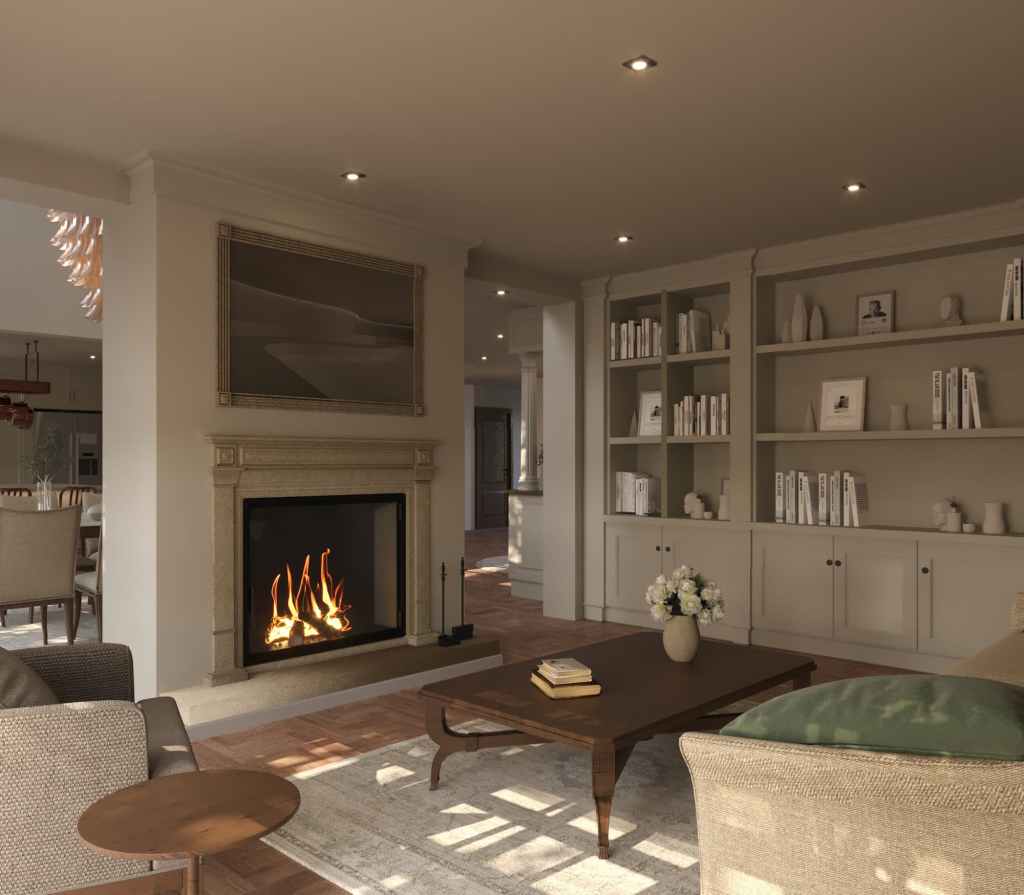
The project translates her Bedford farmhouse, Perry Street apartment, Skylands estate, and Lily Pond retreat into precision-engineered residences designed for faster construction, lower carbon impact, and wider affordability.
It’s a notable escalation in the ongoing collision between lifestyle branding and industrialized housing. Where celebrity architecture collaborations once skewed toward bespoke trophy homes, this collection positions Stewart’s domestic ideals as a repeatable, scalable system—one that can arrive on a site in weeks, not years.
According to Kevin Sharkey, executive director of design for the Martha Stewart brand, the goal was not replication but distillation. “Martha’s homes have always embodied the idea that design should enhance the way people live,” he said. Working with Hapi Homes, the team sought to extract that sensibility into adaptable models that balance aesthetics with performance. In other words: the Stewart look, without the Stewart construction timeline.
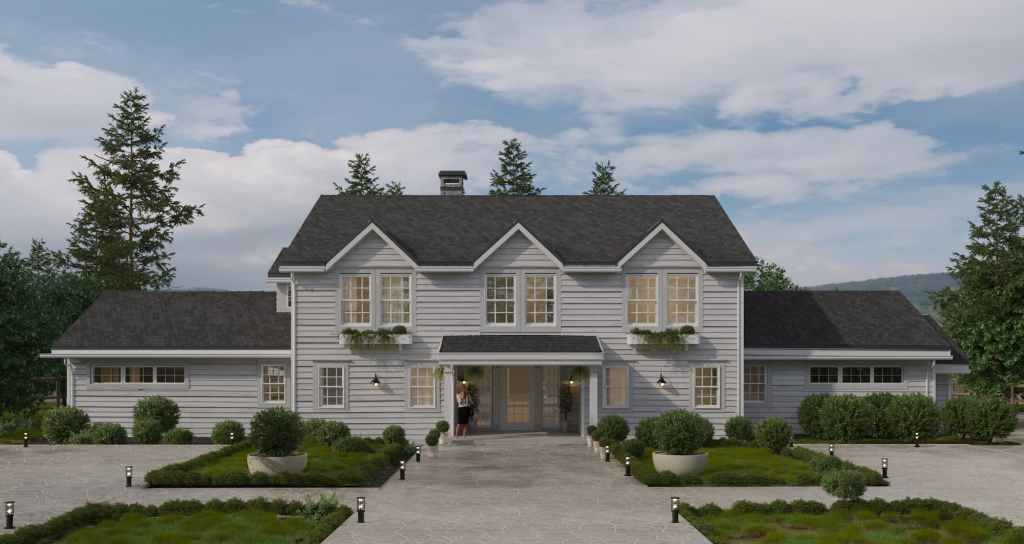
Each of the four models draws from a different chapter of Stewart’s architectural life. The Bedford reinterprets her 1925 Katonah farmhouse with clapboard siding, stone accents, and metal roofing, pairing traditional materials with contemporary efficiency.
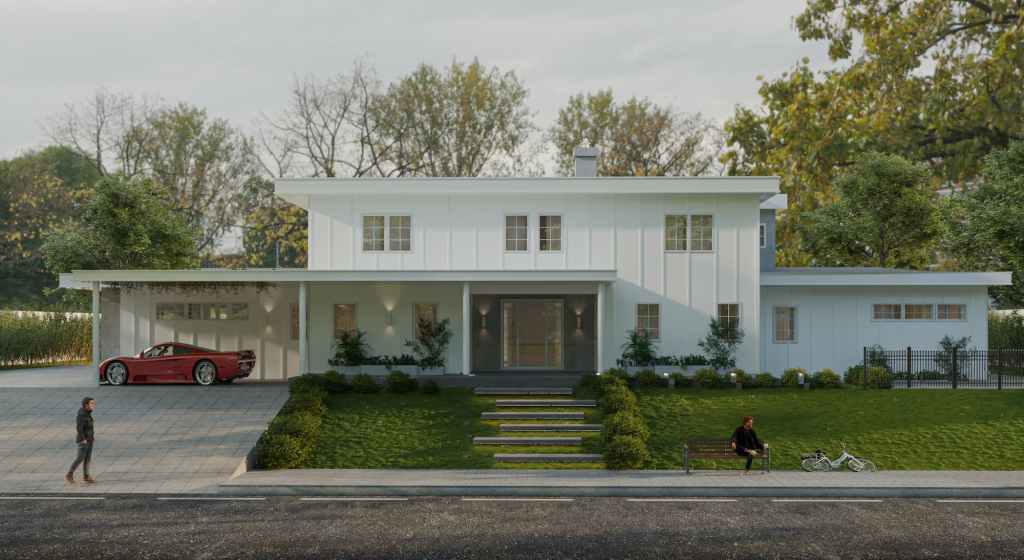
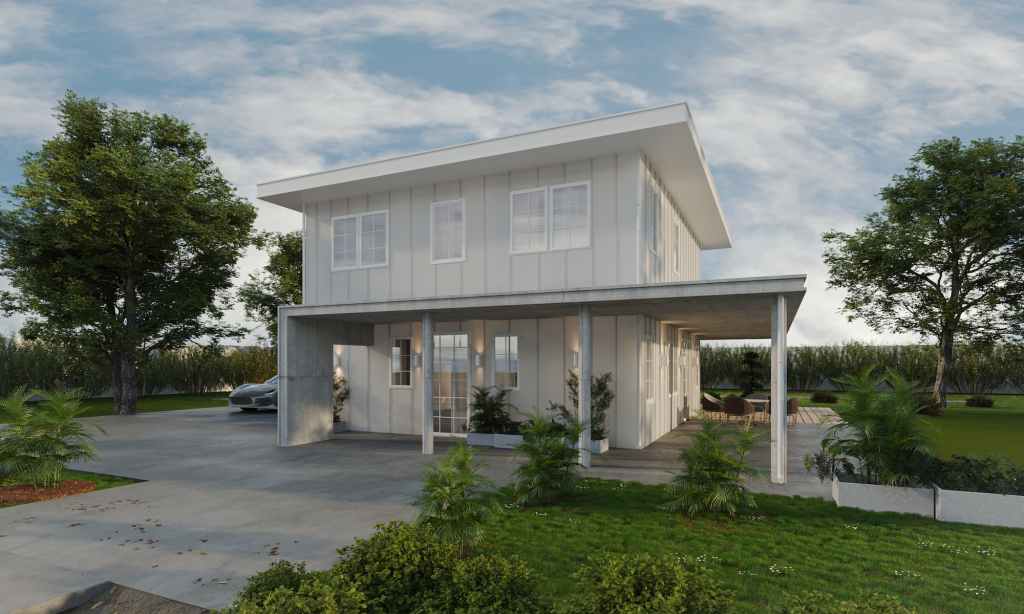
Perry Street, inspired by her former Manhattan residence, leans modern—white stucco, expansive glazing, and flexible indoor-outdoor connections suited as much to suburban lots as dense urban contexts.
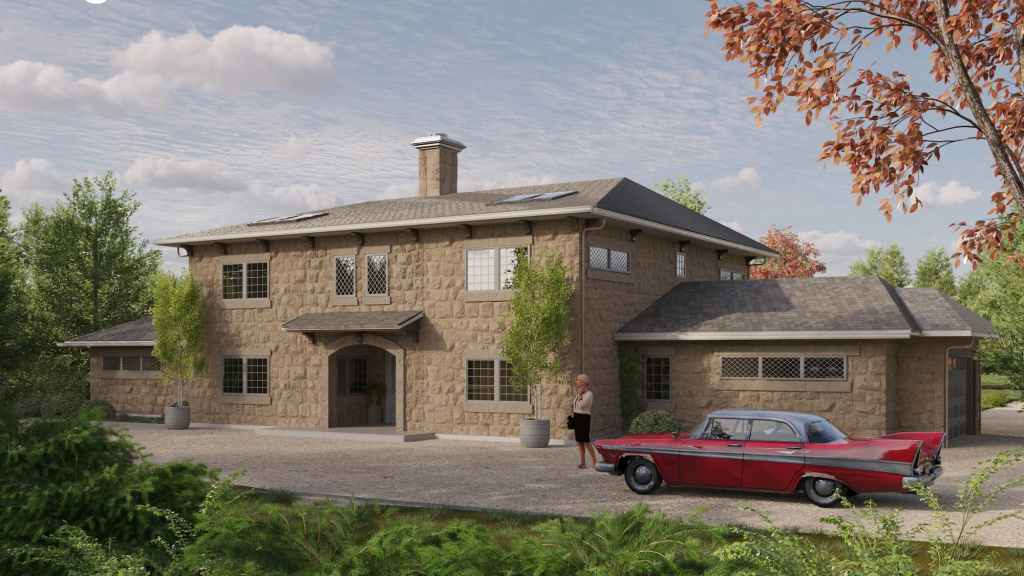
Skylands channels the gravitas of her Maine estate, with masonry façades, pergolas, and French doors opening toward the landscape.
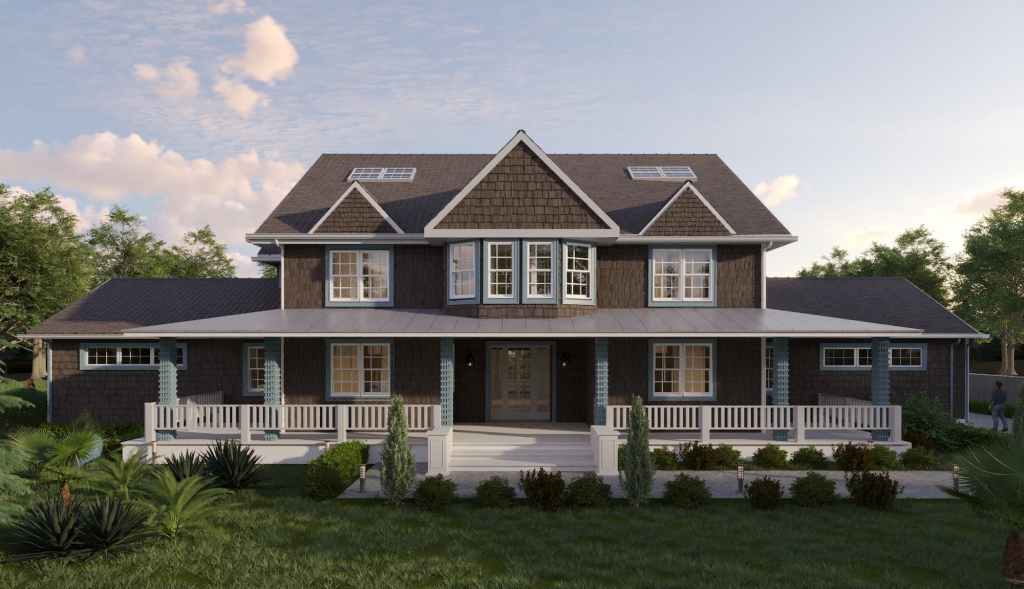
Lily Pond, referencing East Hampton, adopts a shingle-style vocabulary with cedar siding and gabled roofs, emphasizing light and coastal openness.
Behind the aesthetics is a tightly engineered construction system. Hapi Homes builds using a panelized, light-gauge steel frame that, according to the company, cuts build times by up to 40 percent, reduces embodied carbon by roughly half, and delivers about 10 percent more usable space within the same footprint. Homes are designed to meet Passive House standards, offering high thermal performance while still qualifying as site-built for conventional U.S. financing—an important distinction in a market where prefab often struggles for institutional acceptance.
Mary O’Brien, Hapi Homes’ CEO, framed the collaboration as a shift in Stewart’s influence from product to infrastructure. “This takes that influence beyond interiors and products, into the architecture of the home,” she said. “Our role was to honor each lifestyle and aesthetic while applying advanced building technology to make these homes faster to build, more efficient to own, and enduring in quality.”
Pricing reflects the company’s ambition to bridge aspiration and access.
Build kits start around $150,000 for accessory dwelling units and $450,000 for full-size homes, with timelines ranging from four to twelve weeks from permit to delivery. Buyers customize layouts and finishes through Hapi Homes’ digital platform, which offers real-time pricing and transparent scheduling—an experience closer to configuring a car than commissioning a house.
The larger question, however, is cultural. Stewart’s homes have long symbolized a particular version of American domestic success: cultivated but practical, refined yet deeply managerial. By converting those ideals into modular products, the collection tests whether architectural identity—like cookware or linens—can be mass-produced without losing its authority.
If it succeeds, the project may mark a turning point not just for prefab housing, but for how architectural taste itself is packaged, licensed, and delivered. In that sense, the Martha Stewart house is no longer just a place to live—it’s a system, optimized for a housing market increasingly defined by speed, efficiency, and brand trust.