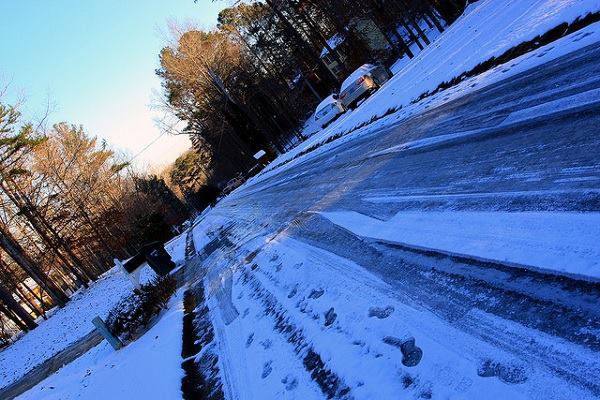
If you ever wanted proof that our current version of sprawl doesn’t work, Atlanta’s “snowmageddon” has provided it. Less than three inches of snow and the ice that formed after that was enough to bring the metropolis to a standstill on Tuesday, stranding passengers for six hours or longer as they tried to flee to their safe suburban home. In good sprawl fashion, it was the Home Depots and Targets that gave refuge, with some people sleeping in the aisles while others brought food and coffee to motorists from roadside McDonald’s. It would be poignant if it were not such a sad and painful episode for so many.
The Atlanta snowfall and ice storm is a microcosmic version of what nature did to New Orleans—or really, what people did—nine years ago. Both storms exacerbated our misuse of the environment. In New Orleans, it was our decision to live where we perhaps no longer should and then neglect the infrastructure we need to live out that hubris that came back to haunt us. If New Orleans is any indication, Atlanta will not learn that much either from its own mini-disaster. New Orleans has seen some—though not nearly enough—improvement in its infrastructure. The city has hosted a few small experiments in housing and has made remarkable changes to its schools, but the specter of another disaster still lingers over the City That Care Forgot.
In Atlanta, it was the official decision to dismiss workers in the city to their homes in the suburbs after the storm had begun that set off a chain of dominoes. Long commuting distances and an utter lack of public transportation conspired to create accident-provoking and line-engendering mayhem. The storm—or really, the way leaders addressed the storm—bared and even weaponized the daily bane of suburbanite commuters’ existence. (Atlanta enjoys some of the longest commute times in the country.) I am pretty sure, however, that the result will be the usual: calls to widen the roads and more salt trucks servicing wealthy communities, not a comprehensive plan to figure out how to make the current con-urbanization really work.
I am in no position to gloat. Last time we had a few inches of snow here in Cincinnati, it took me almost two hours to drive the five miles from work to my home in an inner-ring community. The University of Cincinnati had to shut down because the administration was worried about people hurting themselves getting to and around the campus. (In perfect hindsight, this was the decision that Atlanta leaders should have made before the storm arrived.) It is just that we are a bit more used to such events, which occur, if not every winter, nearly every one. Atlanta still thinks is it part of the promised land of the Sun Belt, where nothing beyond kudzu threatens air-conditioned progress. Yet Texas, the far western fringe of that belt, now faces its most severe water shortage in decades. Catastrophic climate change will frustrate and endanger even the most comfortable communities in the South, especially if leaders continue to respond as they always do and and develop their cities as they always have.
We need to understand and work with our natural environment; build with the land, not on it; plan true communities, not isolated developments; and connect ourselves in more logical and sensible ways. Only then will we be able to meet what a changing climate will be throwing at us in the next few decades.
Aaron Betsky is a regularly featured columnist whose stories appear on this website each week. His views and conclusions are not necessarily those of ARCHITECT magazine nor of the American Institute of Architects.