The newly expanded SCAD Museum of Art is sited on a series of pl…
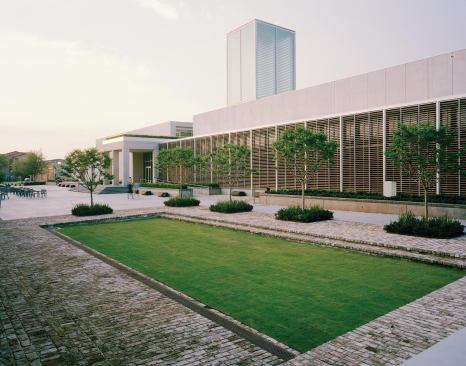
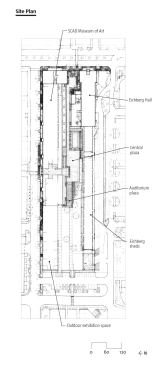
The newly expanded SCAD Museum of Art is sited on a series of plazas that run between the building and the neighboring School of Architecture.
Alex Fradkin
On top of the southern, plaza-facing entrance is a terrace that …
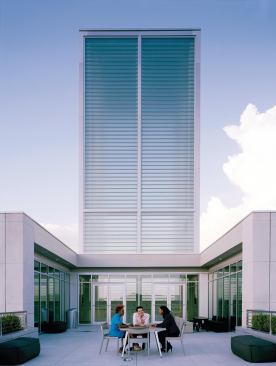
On top of the southern, plaza-facing entrance is a terrace that is adjacent to the building’s signature glass tower.
Courtesy Sottile & Sottile
Alex Fradkin
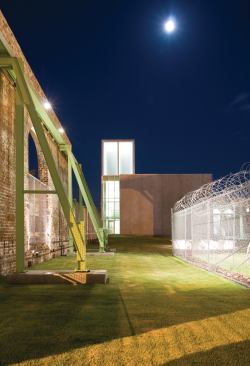
At the western edge of the site stand the reinforced brick walls…
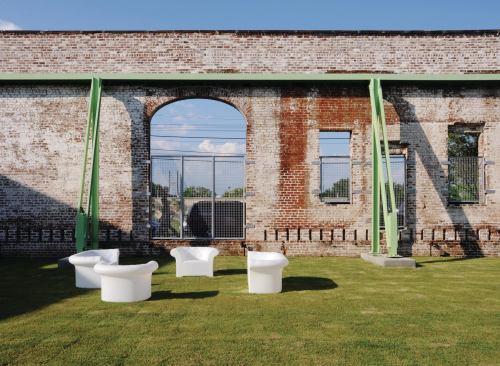
At the western edge of the site stand the reinforced brick walls of one of the site’s historic structures. No longer enclosed, the planted area serves as outdoor gallery and gathering space.
Alex Fradkin
View back toward the SCAD Museum expansion (including the lit to…
View back toward the SCAD Museum expansion (including the lit tower) from the outdoor event space at night.
Alex Fradkin
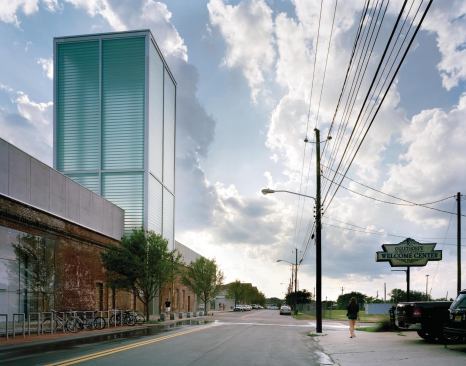
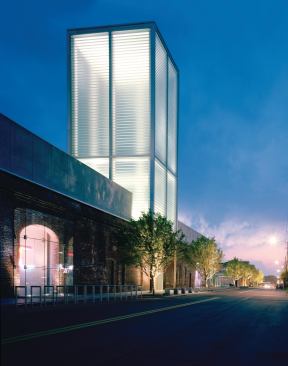
The tower rises from grade on the building’s north side and is…
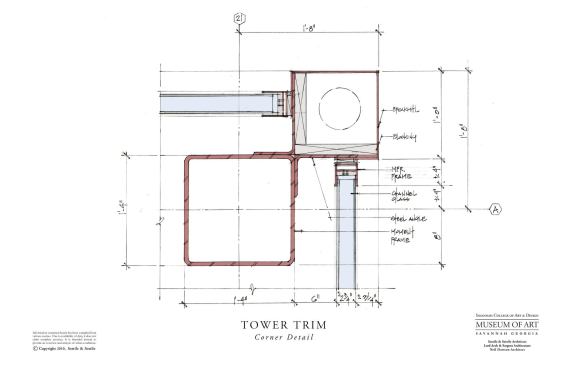
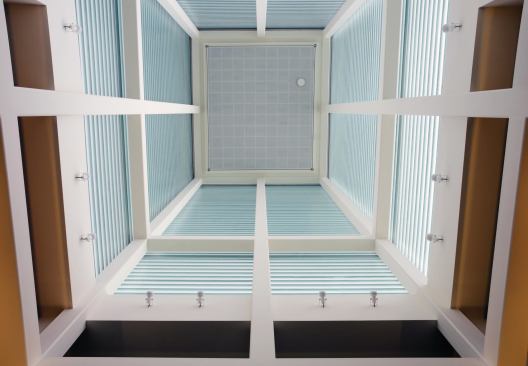
The tower rises from grade on the building’s north side and is composed of individual interlocking structural glass channels. Each glass channel is held in place with mechanical clips and then sealed with clear silicone.
Alex Fradkin
To preserve the existing historic structure that is incorporated…
To preserve the existing historic structure that is incorporated into the SCAD Museum addition, glass panels are affixed over archways to enclose the space without blocking the exhibitions from view.
Courtesy Sottile & Sottile
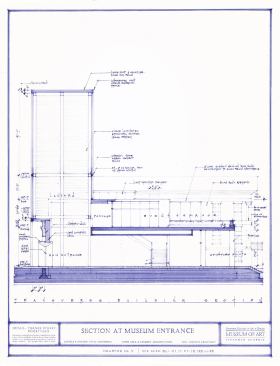
Tower section
Courtesy Sottile & Sottile
Tower corner detail
Alex Fradkin
View into the channel-glass-enclosed tower from the museum lobby…
View into the channel-glass-enclosed tower from the museum lobby.
Alex Fradkin
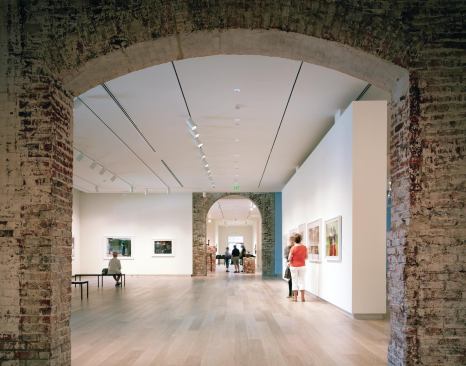
Inside the museum, the louver-covered southern façade encloses …
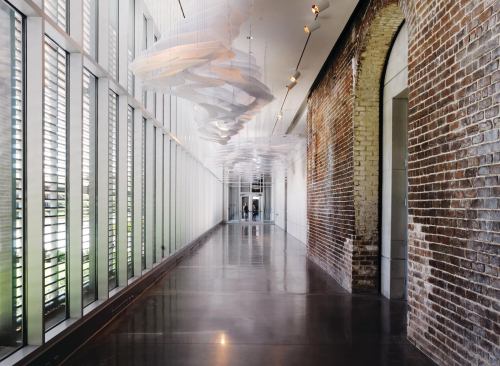
Inside the museum, the louver-covered southern façade encloses a hallway and runs the length of the 65,000-square-foot addition. This passage admits daylight and offers access to many of the new galleries, which are demarcated by arches preserved from the walls of the 1853 rail depot. The depot and existing museum building are National Historic Landmarks.
Courtesy Sottile & Sottile
Courtesy Sottile & Sottile
Alex Fradkin
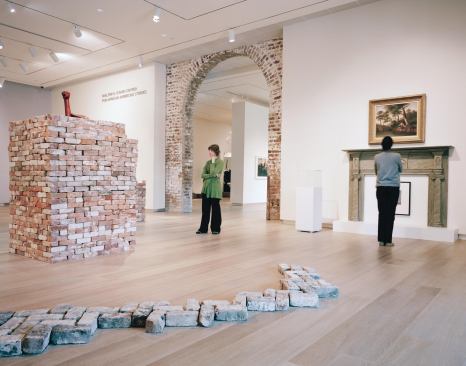
The museum’s new galleries combine pristine spaces for display…
The museum’s new galleries combine pristine spaces for displaying art with remnants of the original structure, including historic masonry walls, hand-formed period Savannah Gray Brick, and original European oak flooring from the site’s 1853 rail depot.
Alex Fradkin
Designed to house permanent and temporary exhibitions, the galle…
Designed to house permanent and temporary exhibitions, the galleries can be configured for painting, sculpture, or installations.
Alex Fradkin
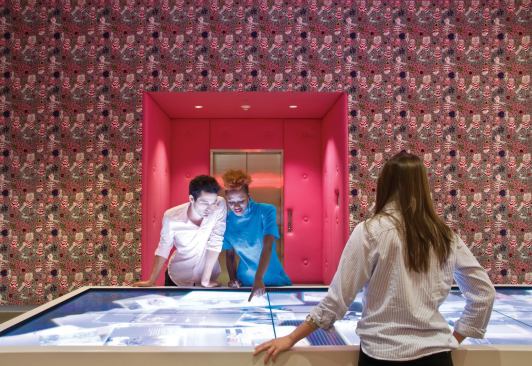
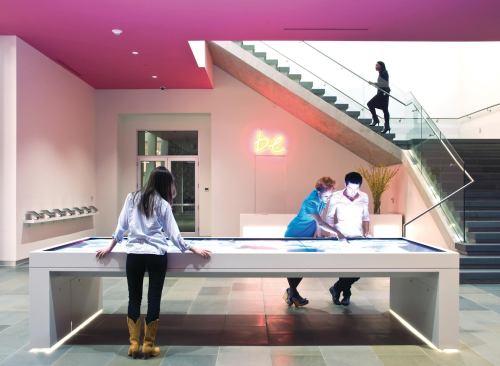
The lobby features an interactive table that visitors can use to…
The lobby features an interactive table that visitors can use to explore the museum's exhibitions and permanent collection.
Alex Fradkin
Individual card on the table's LCD surface can be moved, resized…
Individual card on the table's LCD surface can be moved, resized, and flipped over to reveal slideshows and more detailed exhibition information.
Alex Fradkin
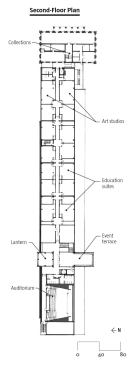
Behind the table, stairs lead to the second floor studio spaces,…
Behind the table, stairs lead to the second floor studio spaces, which accomodate both art and education programs.
Alex Fradkin
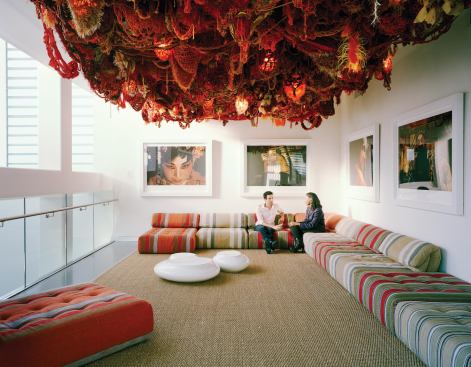
A second-floor studio accomodates gathering space under a ceilin…
A second-floor studio accomodates gathering space under a ceiling-mounted installation.
Savannah, Ga., known as one of America’s oldest and best-designed cities, finds itself straddling technological innovation and old-world elegance with the thoughtful redesign of the Savannah College of Art and Design (SCAD) Museum of Art. The fluid space includes a new 65,000-square-foot expansion off of the original 1856 Greek Revival museum building, and the resulting institution exalts both historicity and new technology.
Christian Sottile, AIA, of local firm Sottile & Sottile, the lead designer of the expanded museum, worked with a core team—including SCAD co-founder and president Paula Wallace—and used charrettes to help guide the early design process. From the outset, the redesign, which won a CNU Charter Award this year, envisioned increasing Savannah’s architectural significance as America’s largest registered urban Historic Landmark District, with a mélange of historical preservation and contemporary innovation. “The site was previously considered a hazard for passersby before the project began,” Wallace says. “As we sifted through piles of 19th-century Savannah Gray Bricks to lay the foundation of our new museum, we unearthed Civil War–era épaulettes and ammunition shells buried there among the rubble.”
The existing museum building once served as the headquarters for the Central of Georgia Railway. The new addition incorporates the remnants of the rail depot next door, which was built circa 1853, and features that building’s original European oak flooring as well as 70,000 repurposed bricks originally handmade by slaves hundreds of years ago. An insulated-concrete-form system was employed where walls were constructed behind the historic masonry; stainless steel helical ties were driven through the Savannah Gray Brick and into the forms; and concrete was poured to secure the ties and support the historic structure. “In terms of construction, the fragile state of the ruins presented a significant challenge: staging a major construction project within the remaining perimeter of historic brick walls that would rely upon the new structure to provide permanent stabilization,” Sottile says. “The result is a continuous oscillation between new construction and historic preservation. Ecologically, the reuse and reinterpretation of the existing historic fabric was our most compelling strategy. We believe it will have global relevance in the decades ahead.”
To further offset history, the lobby boasts a 12-foot-long, virtual orientation-center touchscreen, designed by Pentagram and mounted as a table, that is the largest of its kind. “It reflects the dialogue of the real and the humane with the virtual, to forge a post-digital-era hybrid of craft and technology,” Sottile says.
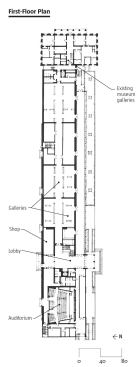
The main entrance, which lies at the intersection of two city streets, bisects the building, creating two wings. The east wing consists of galleries, art studios, and classrooms, as well as the Walter O. Evans Center for African American Studies, designed to house one of the most prominent collections of African-American art in the world. The west wing houses a 250-seat theater used for lectures and cultural programming. The structure is punctuated by a single vertical element marking the main entrance of the museum—a semitransparent channel-glass-encased tower. It is the first time that channel glass has been used this way. “It was … [designed] in horizontal confluences not requiring additional support and is able to withstand the impact of hurricane winds,” Sottile says. It also forms an identifying landmark for the museum, since it is the first addition to a civic landmark on the Savannah skyline in nearly 100 years.
On opening night, the gargantuan touchscreen table doubled as an interactive point of entry and a repository for empty champagne glasses—and reminded onlookers that, while firmly rooted in the dramatic history of its ancestors, the city is also gliding into the contemporary. As the party went into full swing, Paula Wallace announced to the crowd: “Alice Walker once said, … if art doesn’t make us better, then what is it for?” And the cheering drifted gently through the tree-lined streets.
Project Credits
Project The SCAD Museum of Art, Savannah, Ga. Client Savannah College of Art and Design (SCAD) Architect Sottile & Sottile and Lord Aeck & Sargent, in association with Dawson Architects—Christian Sottile, AIA, Joe Greco, AIA, Neil Dawson, AIA (principals) Interior Designer SCAD Design Group—Paula Wallace, Glenn Wallace Mechanical Engineer Newcomb & Boyd Structural Engineer W. Hunter Saussy III Electrical Engineer Newcomb & Boyd Civil Engineer Wolverton & Associates Geotechnical Engineer Terracon General Contractor Carson Skanska Landscape Architect Sottile & Sottile, SCAD Design Group, Wolverton & Associates, The Nelson Group Lighting Designer SCAD Design Group, Lord Aeck & Sargent, Sottile & Sottile Museum Consultant Quenroe & Associates Audio Acoustics & Production Technology Consultant James S. Brawley & Associates Interactive Media Table Design Pentagram Size 82,118 square feet Cost $26 million