






Element Hotels
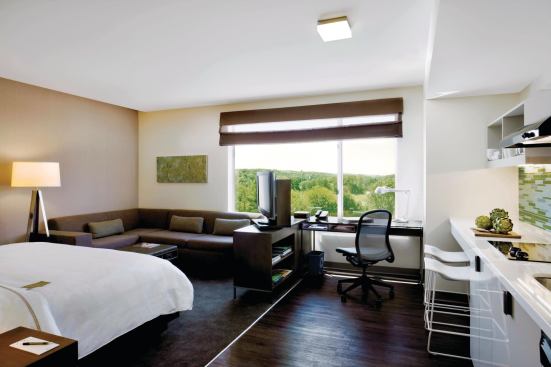
Starwood’s Element brand serves as an eco-innovation lab for t…
Energy-management systems and occupancy sensors are powerful in hotels, says Nellie Reid, AIA, a senior associate in the Los Angeles office of Gensler and one of the company’s sustainability experts. “Predominantly, guest rooms are empty during the day or people are sleeping at night with the lights off,” she says. “It may seem like a small thing, but just having the occupancy sensor saves so much energy. In other building types, you don’t have that opportunity to save as much energy from one small piece of technology.”
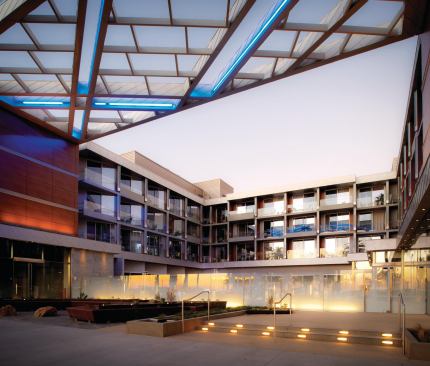
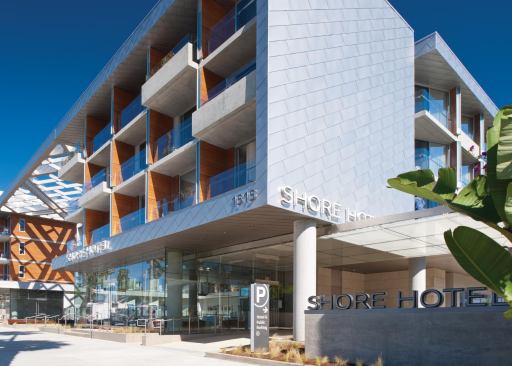
At the Gensler-designed Shore Hotel in Santa Monica, Calif., for which Reid served as director of sustainable design, the Inncom control system cuts back heating and cooling not only when the room is unoccupied, but also when the balcony door is open, allowing the hotel to maximize natural ventilation.
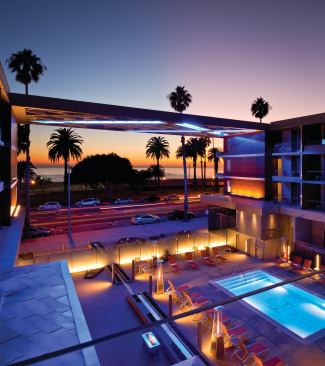
Optimizing the use of the location’s cool Pacific breezes was vital for the 160-room, eight-story hotel, where the guest experience focuses on the relationship to the ocean. “The main criteria the client had was that every room must have a view to the ocean, and every room must have natural ventilation,” says Kap Malik, AIA, Gensler’s principal in charge of design on the project, who is also based in the firm’s Los Angeles office.
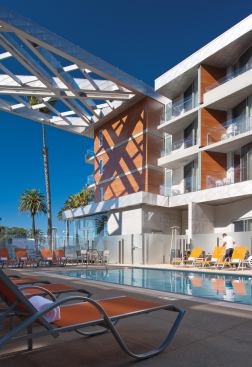
Gensler designed the LEED Gold–certified hotel, built to replace a Travelodge motel on two neighboring parcels along Santa Monica’s waterfront Ocean Avenue, with balconies for every room oriented to maximize daylight, natural ventilation, and ocean views. The firm also provided advice on developing a green housekeeping program and developed a five-minute video presentation about the hotel’s sustainable attributes that runs when guests turn on their televisions.
The presentation has plenty to cover. Wood beams from the Travelodge’s floor structure were reused and recycled to form the new hotel’s foundation. Solar hot-water panels offset the energy used to heat the hotel pool, and the hotel’s building-management system will lower lighting levels to reduce energy use during peak demand hours as part of the hotel’s participation in Southern California Edison’s demand-response program. High-performance glazing, energy-efficient elevators, and reflective roofing also help to reduce energy usage.
The hotel is accessible by public transit, with bus lines and a planned light-rail station nearby that allow for car-free access to downtown Los Angeles. The hotel also provides bicycles for guest use, as well as bike storage and access to showers to encourage employees to commute by bicycle.
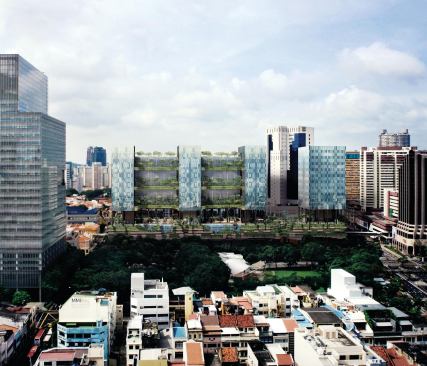
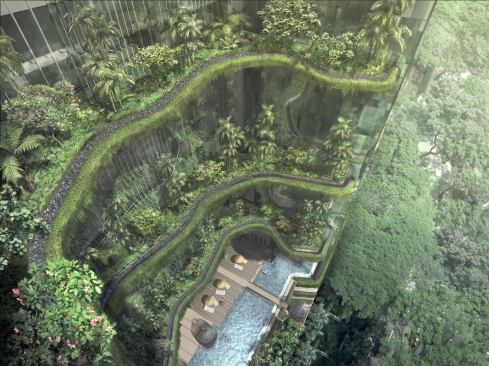
The Shore Hotel may take guests’ access to fresh air seriously, but the Pan Pacific Hotels Group’s Parkroyal on Pickering in central Singapore takes it to the extreme. Designed by Singapore-based WOHA Architects as a hotel in a garden, the Parkroyal extends the greenery from the neighboring Hong Lim Park and sends it skyward. WOHA introduced 15,000 square meters (161,458 square feet) of landscaping into the building—equivalent to 215 percent of the site’s land area—with sky gardens, water features, planted terraces, and green walls immersing guest rooms and facilities in lush greenery and waterscapes.
“WOHA was able to have the exterior of the hotel, the foliage and curves of the sky gardens, come together with the crisp, streamlined glazed tower to create visually arresting architecture,” says A. Patrick Imbardelli, president and chief executive of Pan Pacific, which envisioned the Parkroyal as a “brand-defining” hotel. “That just made incorporating sustainable features within the hotel all the more attractive.”
The extensive landscaping is a unique selling point for the hotel, making it a lush retreat in the heart of the city, says Donovan Soon, a senior associate for WOHA and project manager for the Parkroyal, which earned Green Mark Platinum, Singapore’s highest environmental certification. In addition to improving air quality and lowering greenhouse gas emissions, the greenery reduces the urban heat-island effect by absorbing heat and shading hard surfaces. The sky terraces are also attractive and highly visible from surrounding streets and buildings, providing visual relief in the built-up city center.
“Even as our cities become taller and denser, we don’t have to lose the relief and delight of our green spaces, by adapting them onto high-rise typologies,” Soon says.
Roof surfaces of the hotel collect rainwater for irrigation of the landscaping, supplemented during rare dry seasons by nonpotable recycled wastewater. A 60-kilowatt photovoltaic array powers the grow lamps in the landscaping and the building’s feature lighting in the evening. Like any good hotel, though, the Parkroyal puts the guest experience first: Instead of the traditionally drab, air-conditioned guest-room corridors, the hotel will have attractive garden spaces with fresh air, shaded by tropical trees and flanked by water features.
