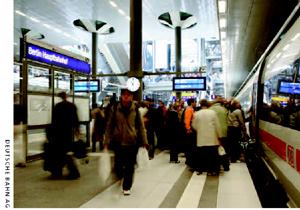
The Hauptbahnhof, Berlin’s main train station, opened to great fanfare in May 2006 after more than a decade of construction. But if a court ruling stands, it will need to undergo some reworking—possibly several years’ worth.
In fall 2005, Meinhard von Gerkan, a principal at German firm Gerkan, Marg + Partners (GMP) and the Hauptbahnhof’s designer, sued station owner Deutsche Bahn AG when it altered his plans. The rail company shortened the length of the station’s upper platform hall and changed the ceilings of the subterranean platforms from vaulted arches to flat panels (the new ceiling design is by Winkens Architekten). Deutsche Bahn claimed these changes were necessary to keep costs down on the $915 million development.
On Nov. 28, 2006, Judge Peter Scholz of the Berlin District Court ruled in von Gerkan’s favor on the issue of the ceilings. According to the Nov. 30 Berlin edition of The Times, the court said the station was a “work of art” and noted that even if Deutsche Bahn paid the bills, it shouldn’t be allowed to alter the approved blueprint.
Deutsche Bahn has appealed the decision, saying that returning the ceilings to the original design would cost $53 million dollars, would take years to finish, and would interfere with train schedules. GMP counters that it would cost, at most, $26.5 million and would not cause any disruption.
If the ruling is affirmed, it will set a precedent in German intellectual property law, strengthening architects’ arguments that their designs have the same rights as other works of art and cannot be “defaced,” as Judge Scholz described the station after Deutsche Bahn’s change.
Both Germany and the United States belong to the World Intellectual Property Organization’s Berne Convention for the Protection of Literary and Artistic Works, which includes architecture as a separately protected category, but will the ruling have any effect on similar lawsuits in the United States? Not really, says David Barker, an attorney at South Pasadena, Calif.–based law firm Collins, Collins, Muir & Stewart who represents architects. At best, he says, citing the Berlin decision “might be a footnote type of argument.” Barker also notes that if a U.S. court ruled in favor of an architect in a similar case, it would probably offer an “adequate remedy of law”—generally, the payment of monetary damages.