

In designing the NO.V.A house, Brazilian – based firm Studio Arthur Casas and Italian electricity company ENEL asked participants one simple question: “If you could start building the house you will inhabit in 2040 today, what would it be like?” The team received 4,000 concepts in response to the project’s site. A technical committee then used various solutions from the selected concepts to incorporate into the final plan to be built in Rio de Janiero.
The design features a number of integrated “smart” components, allowing the house to operate independently. One instance of this technology are remote-controlled windows enabling them to close with the forecast of rain. Appliances will also operate autonomously, which will only be in use when absolutely necessary, allowing for a more efficient use of energy. Other features include metering equipment to measure water, gas and electricity consumption, windows made from self-cleaning glass, a rainwater harvesting system, and an organic garden for food production.
These various components result in a dwelling that generates more energy than it consumes. In addition to these technologies, a series of rooftop solar panels enable the house to produce around 105% of its required electricity. The overall design prevents the use of electric lighting during the day, and the prefabricated construction will generate 85% less waste and 80% less carbon emissions than a conventional house.
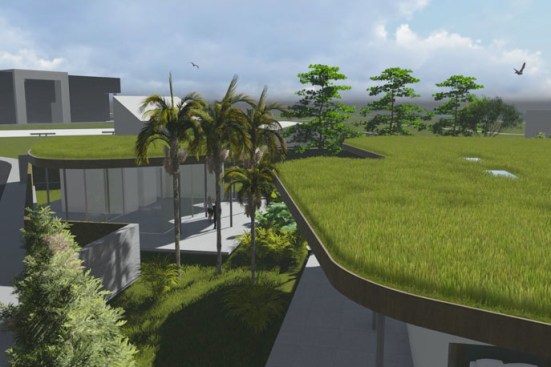
ENEL / Arthur Casas
“Using thousands of ideas, we will build a house… that will be our big laboratory, bringing a challenge into people’s everyday lives to live more sustainability, with greater environmental responsibility and in pursuit of a better future,” states the NO.V.A website.
Construction will start on site before the end of the year, and the team hopes to see the project completed before the Olympics in Aug. 2016. Once completed, residents will be able to test the house’s wide variety of technologies and features. Participants who actively contributed to the final design will likely be the chosen inhabitants.
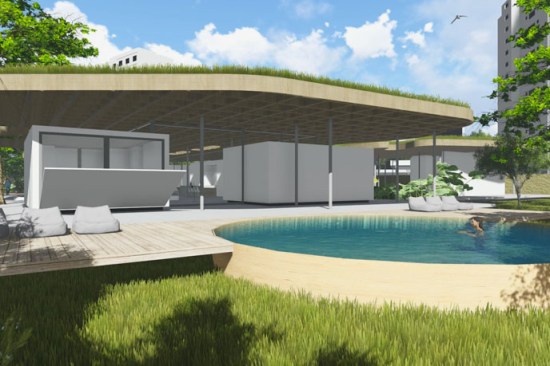
ENEL / Arthur Casas