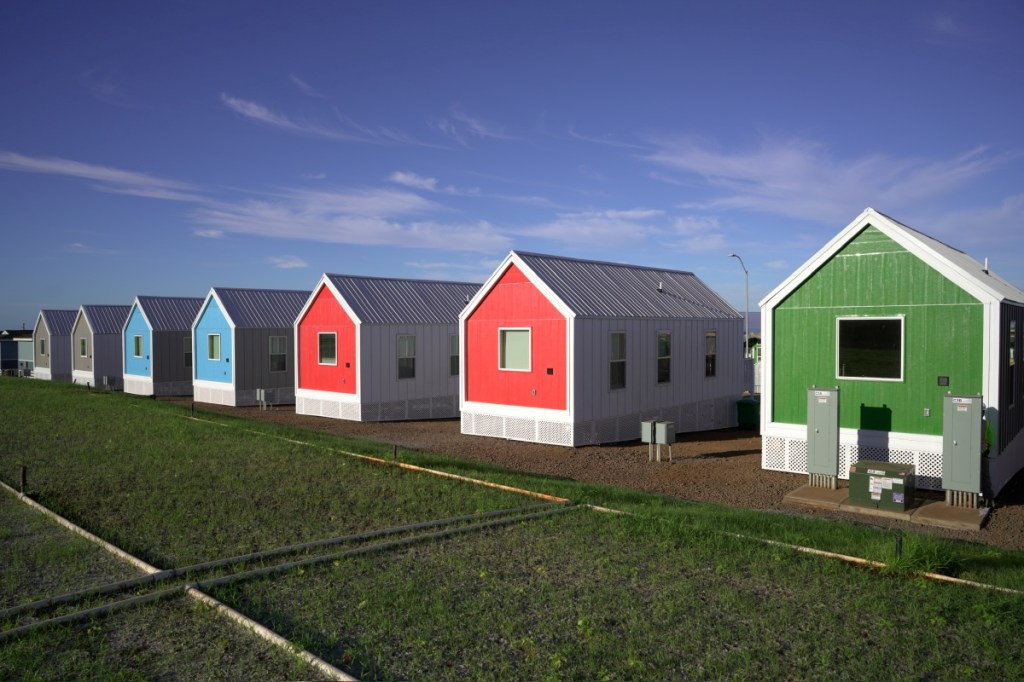
When the deadliest U.S. wildfire in a century tore through Lahaina, Hawaii, in August 2023, housing survivors became the state’s most urgent design brief.
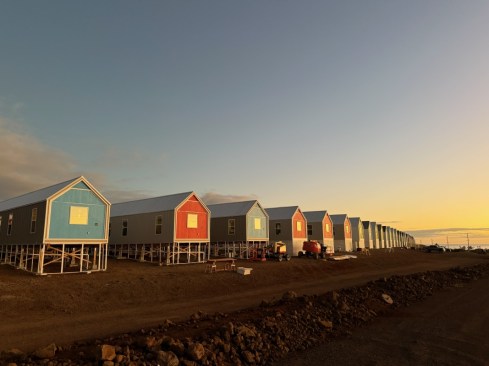
Today, nearly 170 factory-made housing units offer shelter to the displaced with more units to yet to come. They’re situated along a stretch of Maui coastline—small, bright colored dwellings that look permanent and communal. That’s by design.
New York-based DXA Studio launched Liv-Connected with the goal of deploying disaster-relief housing that doesn’t sacrifice design, health, or durability. In Maui, the result is FEMA’s first prefabricated, modular temporary homes built to the International Building Code and local amendments. One-, two-, and three-bedroom units meet Uniform Federal Accessibility Standards (UFAS), are fully furnished on delivery, and can serve as either interim or permanent housing.
“We have thoughtfully designed the homes so they are comfortable and functional enough to become permanent, and the families affected by the fires deserve to have a comfortable, safe home to recover in,” says Wayne Norbeck, co-founding partner of DXA Studio and Liv-Connected.
Credit: Liv-Connected
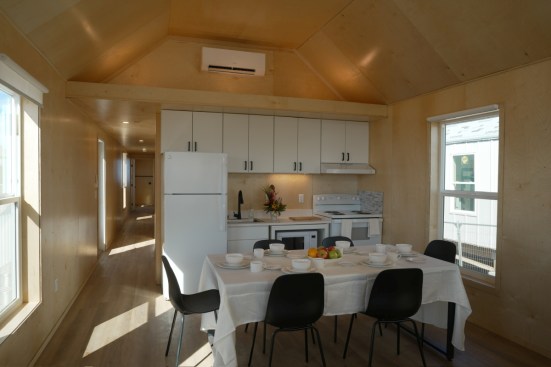
Inside the homes, Liv-Connected specified low- to no-emitting materials, generous daylight, and cross-ventilation to support indoor-air quality and thermal comfort in a tropical climate. A warm palette and high ceilings keep the small footprints from feeling cramped; windows are sized and placed to frame views and keep residents connected to the landscape.
Credit: Liv-Connected
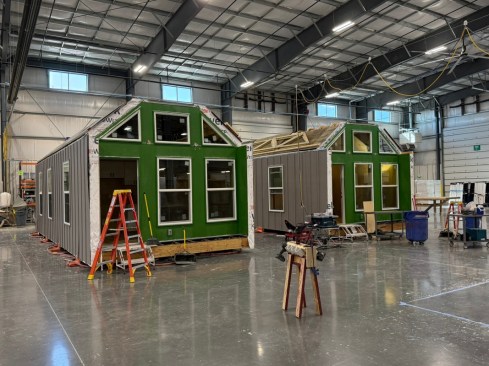
The Conexus line uses Liv-Connected’s Component Linked Construction (CLiC System)—a kit-of-parts strategy that locks repeatable elements (structure, MEP, smart tech) into a manufacturing flow, then allows finish and plan variations. That modular approach reduces rework, absorbs supply variability, and keeps field labor focused on siting and hook-ups rather than stick-building. For public clients, the predictability is as important as speed: fewer unknowns, fewer change orders, and better odds of hitting deadlines when a community is still displaced.
Credit: Liv-Connected
What It Took to Move Fast
With labor scarce and on-island costs high, fabrication took place on the mainland at Fading West’s Colorado plant, then moved through an oversized-cargo logistics chain—trucked to Seattle, rolled onto a barge, shipped to Maui, and trucked again for final placement. At pre-approved sites, crews tied units into water, sewer, and power, completing installs in a matter of days. Marex Services Group orchestrated the schedule to get families back in homes by the holidays, while ProSet Modular handled the set and installation; Dynamic Group (prime) and Alpha Construction (local GC) rounded out the delivery team.
- Procurement clarity: FEMA and state partners set aggressive schedules; delivery had to begin within months of award. (DXA notes its team turned over homes fully furnished within a week of each delivery.)
- Lean manufacturing: Modular can cut build time by half and up to 20% off cost versus site-built—a delta that compounds when labor and materials are scarce.
- Logistics discipline: Oversized loads and ocean legs introduce risk; a single coordinator (Marex) owning road-to-barge timing helped de-risk the handoffs.
Beyond Emergency Use
Although born from crisis, the Conexus platform is aimed at workforce and market-rate housing, too. The Lahaina deployment underscores the case for modular as civic infrastructure: fast when seconds count, but also robust enough to seed long-term neighborhoods.