
Since Architecture 2030 launched the 2030 Challenge in 2006, the building industry has dramatically reduced building operational emissions in the US and globally, and collectively we’ve developed robust platforms, programs, and policies to tackle building embodied emissions and climate positive design. As 2030 inches ever closer and we increasingly explore the full scope of our impact as an industry, we see that emissions from infrastructure, landscape, and sites are far from insubstantial.
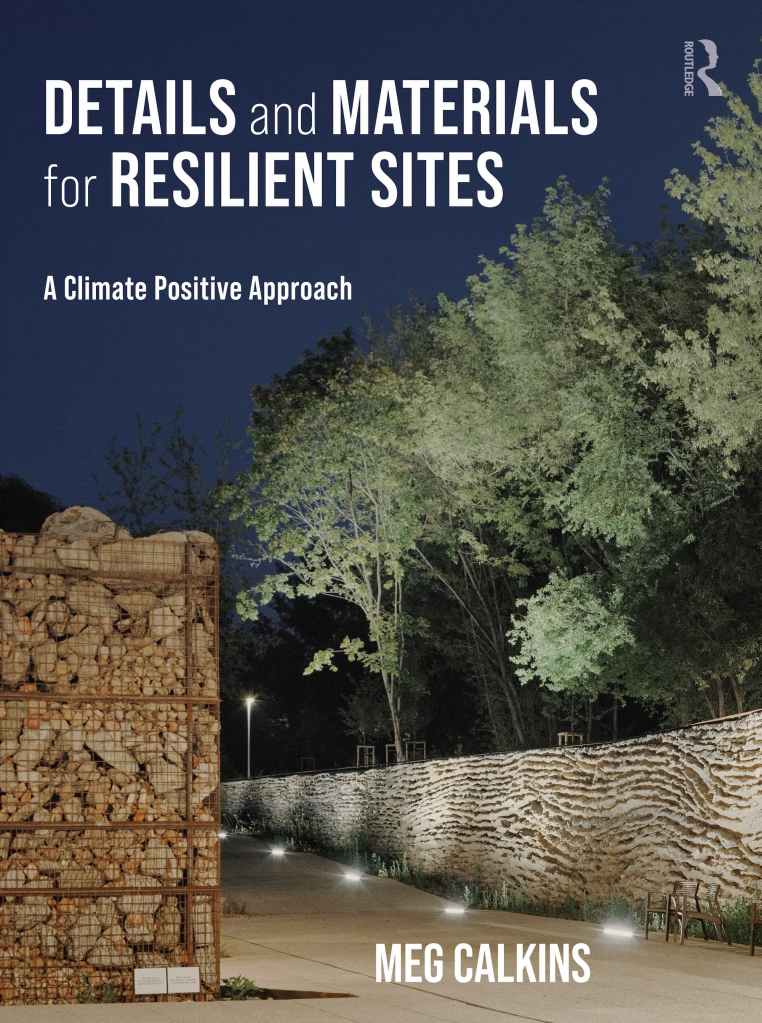
Architecture 2030 has steadily been expanding our scope of work beyond the building to address these critical emissions, and we were thrilled to preview a new publication from landscape architect Meg Calkins, chair of the American Society of Landscape Architects Climate and Biodiversity Action Plan Task Force. Here, Erin McDade, Senior Program Director at Architecture 2030, sat down with Calkins to discuss her newly-published book Details and Materials for Resilient Sites: A Climate Positive Approach.
Erin McDade: How substantial is the impact of building sites and infrastructure on global emissions?
Meg Calkins: Our current approach to the design and construction of sites and infrastructure contributes to climate change, uses non-renewable resources, and generates high volumes of waste. The materials we use to build sites and infrastructure contribute about 7.3% of annual greenhouse gas emissions and use billions of metric tons of material resources. And, as more than 80% of the life-cycle emissions come from the production, transport, maintenance, and disposal of construction materials, we must radically shift the way we design and detail these sites and infrastructure.
In my new book Details and Materials for Resilient Sites: A Climate Positive Approach I discuss this shift to lower carbon, resource efficient, and ethically sourced materials and site structures. The book provides strategies, tools, and detailed information for designers and engineers to engage in climate positive site and infrastructure design.
EM: Can you tell me a bit more about the type of strategies outlined in the book, and what tools and resources you provide?
MC: The strategies highlighted in the book include reducing carbon, resource efficient materials, and material mixes for both standard and alternative materials including stone, concrete, asphalt pavement, aggregates, brick, earth-based materials, wood, biobased materials, metals, and plastics.
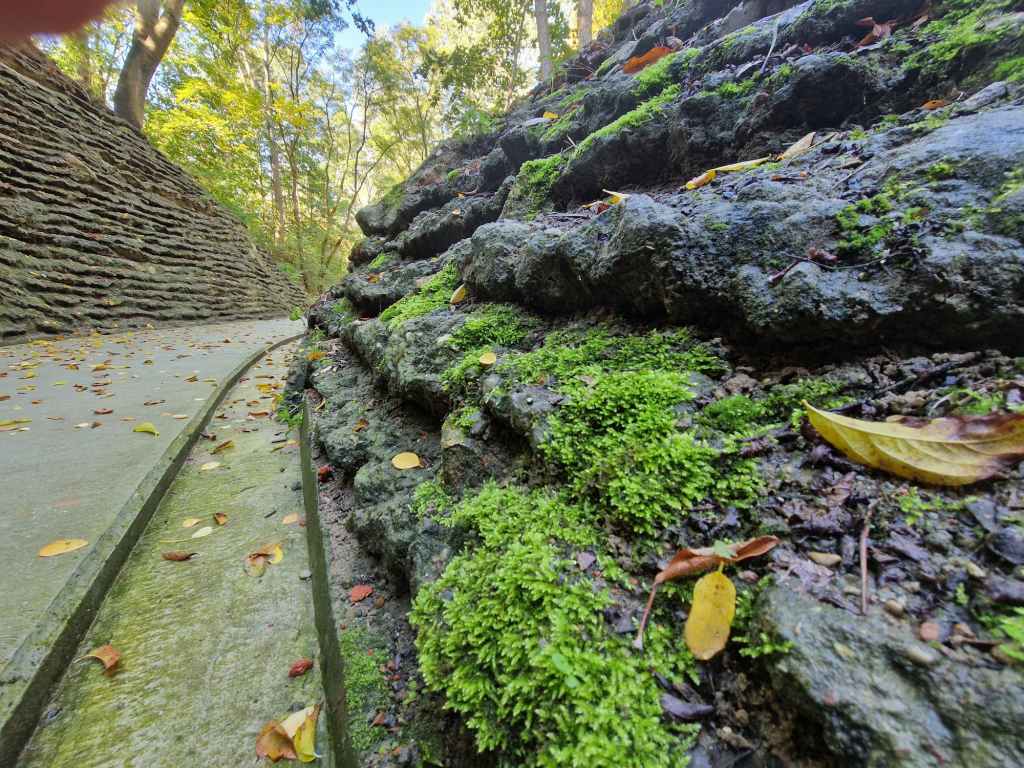
The book also highlights and illustrates critical construction considerations, and strategies to reduce environmental impacts, placing emphasis on durable, resource efficient structures, and reduced embodied carbon approaches for pavements, porous pavements, green roofs, bioengineered embankments, retaining walls, freestanding walls, decks and boardwalks, and rails, fences, and screens. I highlight exemplary case studies from around the world, and provide key resources such as assessment tools, information transparency tools, and benchmarking measures.
EM: Can you explain in more detail what climate-positive design entails for site and infrastructure projects?

MC: Climate positive design of sites means that the greenhouse gas emissions resulting from the materials and processes to build and operate a site are offset by the carbon sequestered by plants, soil, and other biobased materials on the site. Sites can become climate positive by 1) reducing the embodied carbon of site construction and operations and 2) planting trees, shrubs, and grasses, and maintaining or restoring healthy soils.
EM: So it sounds like you’re talking about taking a whole lifecycle approach to site and infrastructure design?
MC: Yes, site and infrastructure projects are different from buildings because 80 to 90% of the greenhouse gas emissions across the life of the site or infrastructure project stem from the materials and methods of constructing the project.
Unlike architecture, operational carbon is a relatively small percentage of overall site and infrastructure carbon emissions. Therefore, the decisions that we make about construction materials and site structures such as pavements, walls, subgrade structures, decks, fences, green roofs, and overhead structures are critical.
EM: What kind of materials are we primarily talking about?
MC: The resource-intensive materials used in site construction are mineral and fossil-based and are used in very high volumes. For instance, a sixty-space asphalt parking lot uses 200 cubic yards of asphalt and 450 yards of aggregate for its base. These 650 cubic yards of material are delivered in 65 full truck loads to the construction site, making the use of local materials a very important consideration to reduce transportation emissions.
EM: That’s a massive amount of material. Beyond minimizing transportation distance, how do we begin to reduce that impact?
MC: Perhaps more than buildings, site construction offers opportunities to incorporate high volumes of recycled materials. Base courses under pavements and walls can be comprised of 100% recycled concrete, and high volumes of recycled asphalt pavement (RAP).
For larger previously developed sites, this material could be removed in demolition, crushed onsite, and reused in place for new structures, saving resources and substantially reducing transport emissions. We can also incorporate high volumes of recycled aggregates in new asphalt pavement, and in lower percentages in concrete structures.
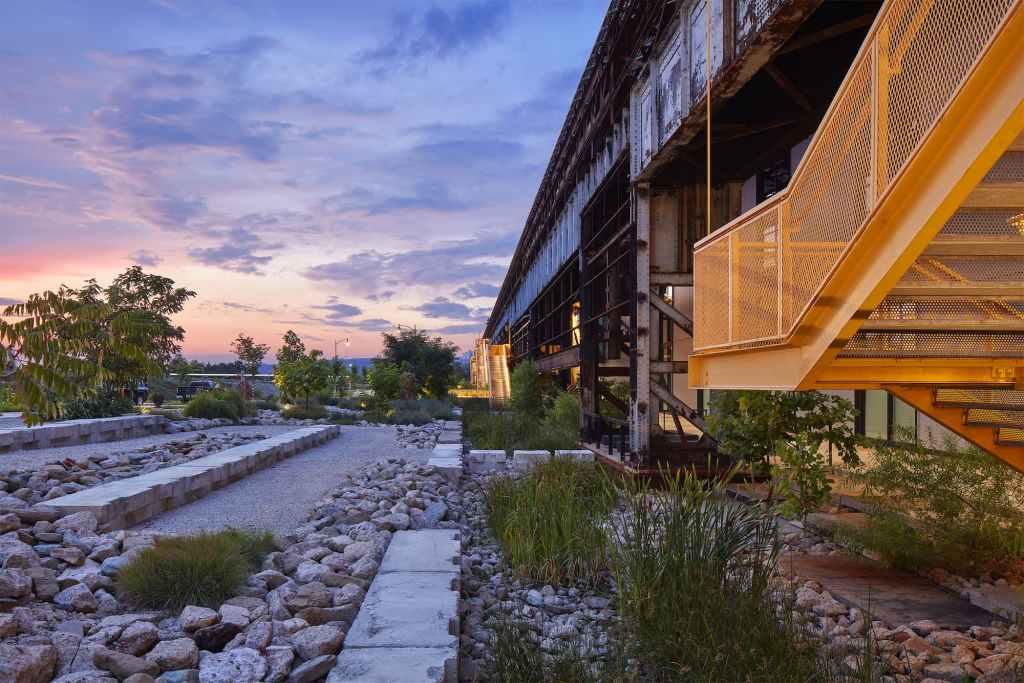
The largest resource efficiencies and embodied carbon reductions will result from reusing structures in place. Resurfacing pavements, reusing walls, or skeletons of buildings for structures in a landscape will optimize resources, reduce the production of new materials, reduce transport costs, and can reference the cultural history of a place.
EM: It’s exciting to hear you centering so many sufficiency-first approaches. Can you elaborate on the key strategies you outline in the book for decoupling carbon emissions from population growth and development? For common materials like concrete and asphalt, what practical interventions do you highlight for reducing embodied carbon?
MC: Decoupling carbon emissions from population growth will only happen if we specify low-carbon, resource efficient, and ethically sourced materials for durable site structures. We can reduce the embodied carbon of standard materials such as concrete, asphalt, brick, aggregate, metal, and wood through optimized mixes, circular strategies, and right-sizing structures. And where possible, we should consider the use of alternative materials such as earth-based construction, living materials, and sustainably produced biobased materials.
But decisions about materials are not the only tool for reducing the embodied carbon of sites and infrastructure. The way that we detail site structures such as pavements, walls, bridges, overhead structures, rails, and fences can reduce embodied carbon as well.
For instance, a 12” thick cantilever retaining wall with imported granite veneer on a 4000 psi concrete stem wall and footing has a very high carbon footprint, but if we were to use domestically-sourced stone veneer, 50% cement substitutes in the concrete, 3000 psi concrete, and a 9-inch-thick wall, we could reduce the embodied carbon by 43%.
Even better, using a living crib wall for the retaining structure would reduce the embodied carbon by an additional 66%, and the plants on the wall would sequester 3 tons of carbon over its service life.
EM: The book advocates for low-carbon, resource-efficient, and bio-based materials. How does the book recommend balancing the use of conventional materials with the push for bio- and earth-based alternatives?
MC: An underlying message woven throughout the book encourages the use of the lowest carbon, least impactful approach to site structures. The first question that should be asked during site design is: Do I need to build a structure such as a retaining wall? Or could I use a planted slope to make the change in grade?
If the slope is too steep, could I use a live crib wall or a vegetated rock wall? Living structures are nearly always lower carbon, and they sequester carbon over their service life.
We should always consider the use of flexible, living structures wherever possible before we commit to building rigid concrete walls and pavements. This approach will necessitate shifts in our aesthetic and maintenance expectations for built sites.
A live crib wall is not normally employed in an urban plaza due to a potentially “scruffy” appearance, and it could be challenging to maintain within our current maintenance regimes.
EM: You mention that “substantive, even radical change is not easy” due to existing standards, client expectations, and policies. What are the biggest barriers to adopting climate-positive design and practices, and how does the book help designers and engineers overcome them?
MC: The industry’s biggest barrier to substantive change is the nearly unquestioning use of concrete. Since the widespread use of modern concrete, we have used the material for pavements, retaining walls, and curbs without always considering alternatives.
Even freestanding brick and stone walls are primarily concrete structures with a brick or stone veneer. We even set landscape boulders, site furnishings, and gabion benches on concrete footings, when a compacted aggregate base will offer lower carbon, but stable foundation.
In site and infrastructure construction, rigid concrete structures are perceived as the most durable, but I challenge that notion. Unfortunately, concrete walls and pavement do not always last the full design life of 30 years. When they crack, they are not easily repaired and are often replaced prematurely. “Flexible” structures such as unit paving on an aggregate base, stabilized stone dust pavement, gabion walls, and interlocking block walls can be easily repaired, releveled and resurfaced, often lasting well beyond 30 years.
Another barrier to the use of low carbon structures are site maintenance frameworks that do not support the use of living structures, earth-based constructions, and flexible, repairable structures such as stabilized stone dust pavement.
Often, minimal funding is allocated to maintaining hardscapes, and maintenance workers do not know how to maintain living and alternative structures. The book discusses techniques for maintaining and repairing flexible structures to maximize the service life of these low carbon structures.
EM: Looking beyond the specific strategies in your book, what is the one shift in mindset you hope stays with a reader after they’ve finished reading and returned to their projects?
For over a decade, we have treated the consideration and quantification of the climate impacts of our construction materials as “fringe”, alternative, or optional. But ignoring the substantial impacts of making and transporting construction materials has contributed to the very dire situation of global climate change.
We must consider embodied carbon of materials, structures and whole sites along with the typical criteria of cost, aesthetics, and performance on every project. Then we must make better choices to reduce greenhouse gas emissions of our site and infrastructure projects.
