The PV-Pod combines a ballast and support system for photovoltai…
The PV-Pod combines a ballast and support system for photovoltaic panels.
Clint Ford
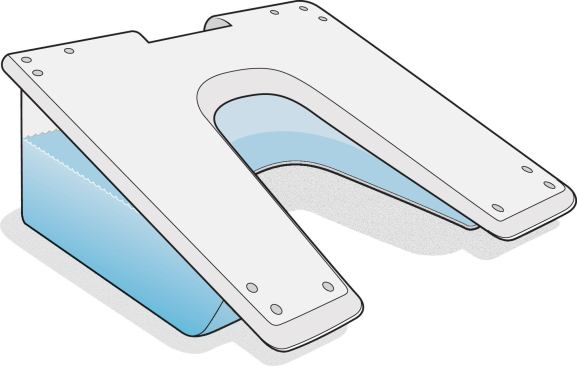
Users can fill the PV-Pod with varying volumes of water dependin…
Users can fill the PV-Pod with varying volumes of water depending on the local wind-uplift resistance requirements. As a result, the surcharge load added to the roof by the photovoltaic panels' ballast can be optimized.
Thomas Behrman / Courtesy MetaLab
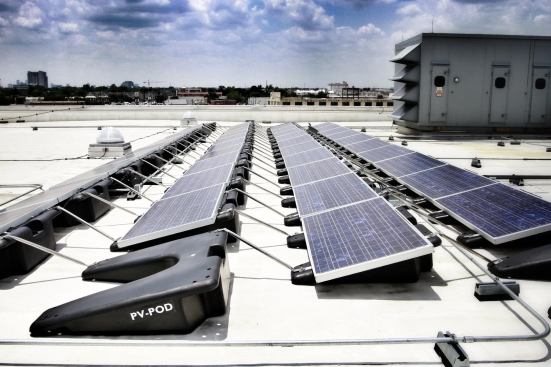
The PV-Pod is now commercially available for flat-roof installat…
The PV-Pod is now commercially available for flat-roof installations. Optional interlocking braces can increase the wind load capacity of PV Pods.
Clint Ford
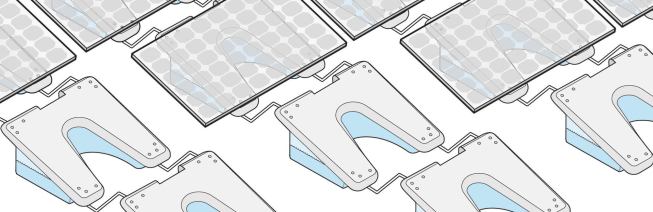
The PV-Pod offers flexibility in the positioning and alignment o…
The PV-Pod offers flexibility in the positioning and alignment of photovoltaic panels.
MetaLab
Conventional ballast systems rely on concrete blocks, which can …
Conventional ballast systems rely on concrete blocks, which can damage the roof membrane if dropped.
MetaLab
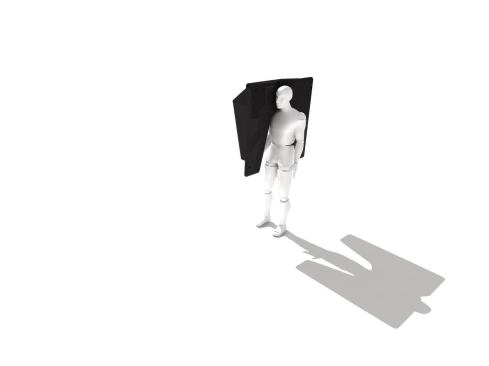
Weighing 23 pounds when empty, the PV-Pod is portable and design…
Weighing 23 pounds when empty, the PV-Pod is portable and designed to be carried on a person's shoulder.
MetaLab
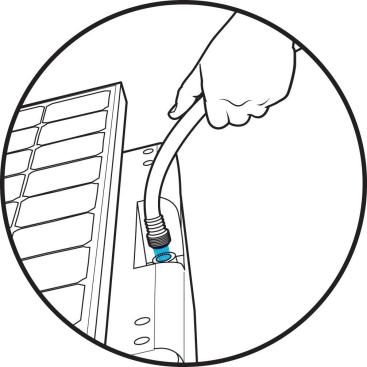
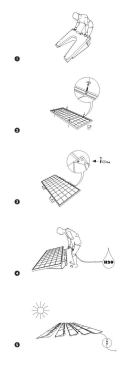
Installation procedure: The empty PV-Pod is placed on a flat roo…
Installation procedure: The empty PV-Pod is placed on a flat roof in the proper position for sun exposure. The PV panel is mounted and fastened onto the PV-Pod, which is then filled with water. The PV arrays are now ready for wiring and interconnections.
Roof-mounted photovoltaic panels can seem like more trouble than they’re worth, considering the risk of roof damage and laborious installation. Enter the PV-Pod, a high-density polyethylene vessel that serves as both a solar panel’s support and ballast. Installers need only set the PV-Pod on the roof, fasten on the panel, and fill the pod with water to provide the mass needed to resist uplift. “By using simple weight, it’s a very simple solution,” said juror Jinhee Park. The 23-pound vessel (when empty) is adaptable in case the panel needs to be realigned or removed. “You drain it,” said juror Martina Decker. “The roof has been designed to receive water anyway, so there are many levels of why it makes sense.”
Project Credits
ProjectPV-Pod Initial Installation Client City of Houston Central Permitting Center Primary Investigators Joe Meppelink, Assoc. AIA (principal, MetaLab; director of applied research/adjunct assistant professor, University of Houston Gerald D. Hines College of Architecture); Andrew Vrana (principal, MetaLab; visiting assistant professor, University of Houston Gerald D. Hines College of Architecture); Travis McCarra (research and design assistant) Project Development Grant University of Houston Gerald D. Hines College of Architecture, Green Building Components Program Fabrication Deep South Plastics Electrical Engineer Chris Boyer Structural Engineer Insite Structures—Brad Dougherty
Wanda Lau, LEED AP, is the former executive editor of ARCHITECT magazine. Along with 10 years of experience in architecture, engineering, and construction management, she holds a B.S. in civil engineering from Michigan State University, an S.M. in building technology from MIT, and an M.A. in journalism from Syracuse University's Newhouse School. Her work appears in several journals, books, and magazines, including Men's Health, ASID Icon, and University Business. Follow her on Twitter.