
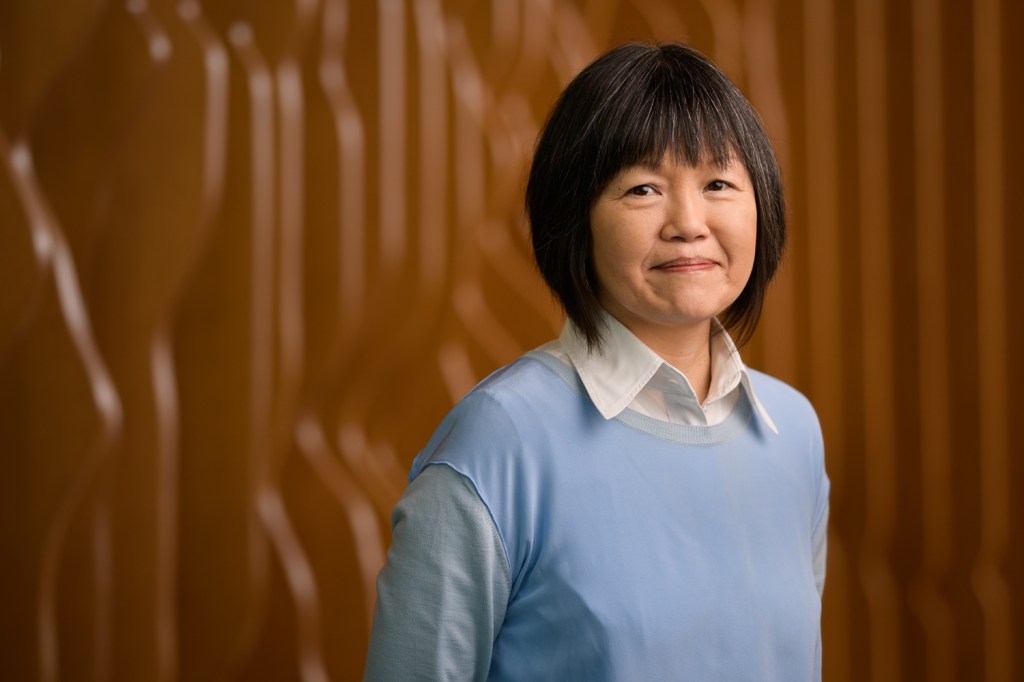
Pamela Sams, AIA, is the southeast design realization leader at Gensler in Washington, D.C., and she has her hands in several major projects at the same time. That’s a big departure from her theory-heavy master’s program at Princeton University but something Sams has been building toward over a lengthy career that included serving as 2016–17 chair of the AIA Building Performance Knowledge Community. “I had this feeling I would thrive working on big projects,” she says, and a résumé that includes the western expansion to Washington Dulles International Airport and a forensic laboratory campus for the U.S. Department of Justice indicates that is indeed the case.
My focus on building performance mirrors the industry’s emerging focus on sustainability. At a certain point in my career, I tasked myself to become more knowledgeable about building science. To me, building enclosure performance and material selection are the two areas where architects have the largest impact on the sustainability of a project. They’re squarely within the architect’s area of expertise, and we should be leading those efforts in every single project we do. I believe very strongly that all architects should have a good and fundamental base in building science knowledge.
Our clients should expect us to be delivering something other than base minimum when it comes to energy performance in their spaces. Building codes are becoming more stringent, but they’re still very attainable and they still represent minimums. A firm like Gensler—or any firm that prides itself on good project design—should strive for a baseline of 30 percent above minimum. That should be the starting point for everyone. That’s not a high mark to have to meet.
What I like about the work I do is that there are a lot of opportunities to learn. I think of myself as an expert generalist. I love working on these complex projects because the team has a lot more flexibility in crafting the solutions to particular aspects of the problems being solved. Such large projects are very engaging and immersive, which I need. I could never be a part-time architect; I’d be terrible at it.
These days, I don’t always have a leading role on only one project; sometimes I play a support role on several projects, as a technical resource for all these teams simultaneously. That’s a new challenge for me; over the last 20 years, I was only assigned to one project at a time. Being more of a resource requires a different kind of thoughtfulness and creativity; I have to look at the teams, understand what they need, and try to be exactly that. But that’s why I came to this firm: to challenge myself in a new environment and push myself. To step through that door, even if I don’t know what’s on the other side. —As told to Steve Cimino