
Although our profession is highly regarded, the public has at best an imperfect idea of the many ways our work touches their lives. A case in point is this year’s AIA Honor Awards. Writing for Interior Design, Misty Milioto asked what this collective group of award recipients said about the current state of architecture. My response was to point to the extraordinary breadth of achievement, the examples of which (despite their range) share a strong commitment to social consciousness.
An obvious example is this year’s
Whitney M. Young Jr. Award recipient. The justly acclaimed Rural Studio works
closest to the earth where people live, providing beauty, delight, and cultural
pride to those often underserved. At the other end of the scale is AIA Kemper Award recipient Edward
Mazria, FAIA, whose focus is global. Here is an architect who is mobilizing our
profession to save the planet. Spanning decades and continents, the work of AIA
Gold Medalist Moshe Safdie, FAIA, celebrates people and place in a manner that
respects, and is enriched by, the cultures with which he interacts. And
consider the dynamic juxtaposition of AIA Architecture Firm Award recipient
Ehrlich Architects with Topaz Medallion recipient Peter Eisenman, FAIA. The
former subtly weaves modernist and traditional multicultural design elements to
shape projects that have a popular, vernacular feel, while Eisenman reminds us
that thorny intellectual questions and creative disruptions are as central to
the human spirit as sustenance and shelter.
As this year’s honor awards make clear, we have amazing stories to tell. Shining a bright light on the many different ways our work enriches lives and entire communities is the goal of the AIA’s three-year “Look Up” public awareness campaign. A member priority, this multimedia initiative gives us a platform to engage the public with stories about the contributions that our profession makes to improve the health, resiliency, sustainability, and, yes, beauty of our communities.
Sometimes the impact of our work is immediately visible, like Houston’s Centennial Gardens in Hermann Park. Sometimes, however, it takes years before the full impact of our contribution to the physical and spiritual health of a community can be fully seen. Whether the impact is immediate or over time, the power of architecture to make a positive difference is a message the public wants to hear and, if I’m right, will be eager to tell. When the public becomes our storytellers, imagine the possibilities. Certainly it will surpass our wildest dreams.
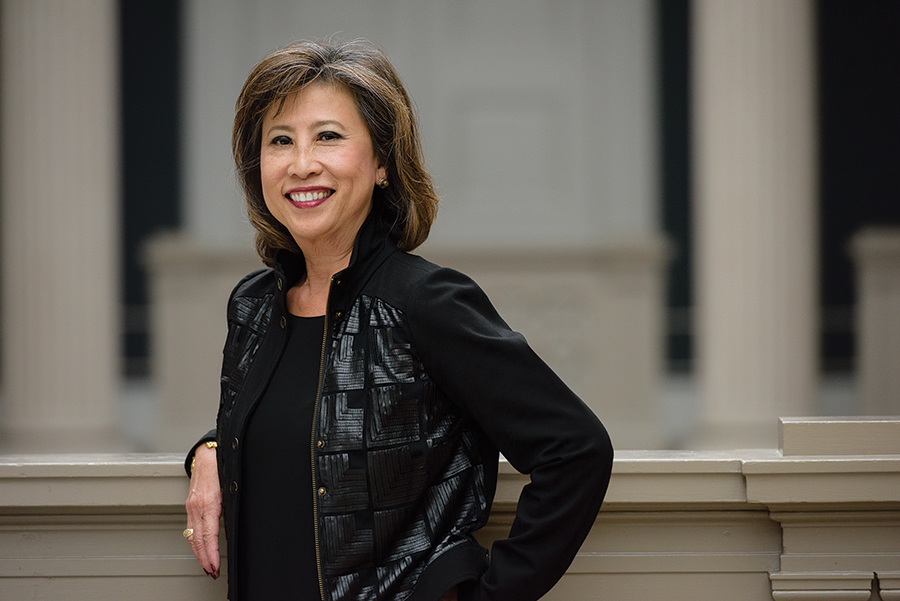
Elizabeth Chu Richter, FAIA, is the 2015 AIA President