
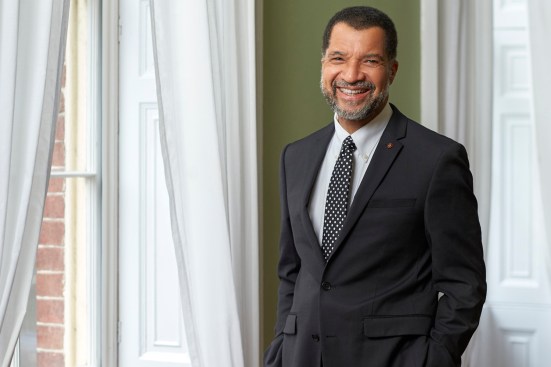
Greg Powers
Becoming an architect is one of my proudest accomplishments. My path from undergraduate to licensure to practicing professional is central to the person I am today, and I cherish the experience.
Put simply, being an architect is a defining characteristic of who I am. However, as I look at the changes in society since I became an architect, it is clear to me that the system that creates tomorrow’s architects has to evolve to meet the challenges of the 21st century.
Today, the education of an architect requires the development of a growing list of technical skills. Of the sheer volume of information that future architects will have to incorporate into design thinking, perhaps topping the list is climate science. Helping society mitigate and adapt to a changing climate will demand a shift in how we train future architects, as well as how we practice and where, and when we apply our design thinking skills.
I am pleased that in a variety of ways, AIA and its collateral organizations are working together to change the process behind how someone becomes an architect. The overarching goal is to remove the remaining barriers that still obstruct success and stifle the voices of far too many underrepresented groups.
To that end, a few months ago, the leadership of AIA, NCARB, AIAS, ACSA, and NAAB met to discuss ways to work together, and to seize this once-in-a-generation opportunity to modernize our profession. Broadly, our discussions focused on how to adapt to rapid and profound environmental, social, demographic, and economic change. Ideas such as shortening the time it takes to get an architecture degree and focusing the scope of licensure to health, safety, and welfare were discussed. For many, these ideas are controversial today. But that doesn’t alter the fact that change will continue, whether we like it or not, which makes modernizing the process of becoming an architect inevitable.
Additionally, the Transforming Architectural Education Working Group of the AIA Strategic Council continues to advocate for the creation of a standing committee within AIA to work with schools and other partners to oversee and implement updates to architecture curricula that address the needs of a rapidly changing society and talent pool.
Change is needed not because the current system is broken, but because the society we serve is vastly different from that of just a few years ago. If we want 21st-century architects to remain at the forefront of creating a more equitable, compassionate, and environmentally responsible built world—and, by extension, society—we need to synthesize a new approach to how someone becomes an architect.
More than two-and-half millennia ago, the Greek philosopher Heraclitus observed, “Everything changes, and nothing stands still.” To lead in the future, we must start to change how the profession educates, employs, and rewards, because society isn’t standing still. The system we use to create an architect can’t either.