
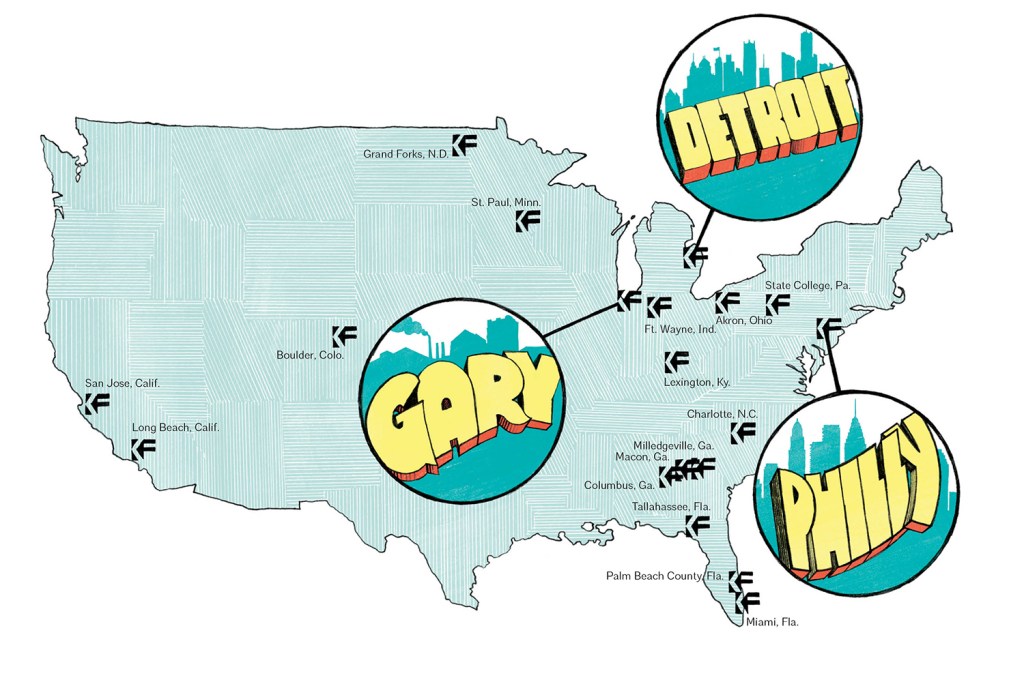
When $5 million is on the table, the best and brightest design ideas come to play. The Knight Foundation’s second-annual Knight Cities Challenge attracted 4,500 applicants who were looking for funding for projects of all shapes and sizes with the express aim of improving pieces of their respective cities. From Boulder, Colo., to Milledgeville, Ga., 37 projects were chosen for their promise to promote the public interest by reinventing unloved spaces and empowering local residents to address a specific community need. Here are some of the highlights:
Detroit
- Six winning projects (the most of any city) range in scope from monthly bike tours through historic neighborhoods to sustainable microparks to a pop-up market with individual shops made from shipping containers along the Dequindre Cut Greenway.
- $184,080, the most rewarded to a Detroit project, went to the People First Project by Chad Rochkind, founder of neighborhood consultancy Human Scale Studio. The aim of People First is to create a network of urbanists who, year by year, choose a challenge that can be solved with quick, low-cost improvements.
Philadelphia
- Two projects that won here are related to music, which was tops among cities with multiple awards. Philly’s history is awash with musical mastery, so it’s no surprise that several of its winning ideas include hands-on business training via hip-hop and a traveling playground for local musicians.
- $873,364, the total amount of funding for Philadelphia’s projects, is the most for any city. Of the $5 million available, the City of Brotherly Love garnered over 17 percent to support projects like ethnic-food cooking classes and cooperative business–based book clubs in over 20 neighborhoods.
Gary, Ind.
- The city’s only winning project is a substantial one: $385,000 will go towards funding a reuse facility for building materials such as cinder blocks, joists, sill plates, studs, and trusses. The source of those materials? Vacant homes, where structural elements will be reclaimed for use in job creation and collaboration on future community endeavors. The reuse facility grant goes to the Delta Institute, a nonprofit organization based in Chicago and Lansing, Mich., which pursues community betterment projects related to energy, ecological systems, and waste.