
“Our firm is based on a fusion of design and performance,” says Kevin Sullivan, president of Boston-based firm Payette, which won AIA’s 2019 Architecture Firm Award. Payette has received accolades for its sustainable and innovative designs for some of the most energy-intensive building types: health care, science, and academic facilities. Powered by a firm culture of curiosity and inclusiveness, Payette continues to push the envelope in its work. Below, we highlight two Payette projects, both in progress in Massachusetts, that prioritize sustainability in the form of energy reductions and the presence of embedded nature in the health care environment.
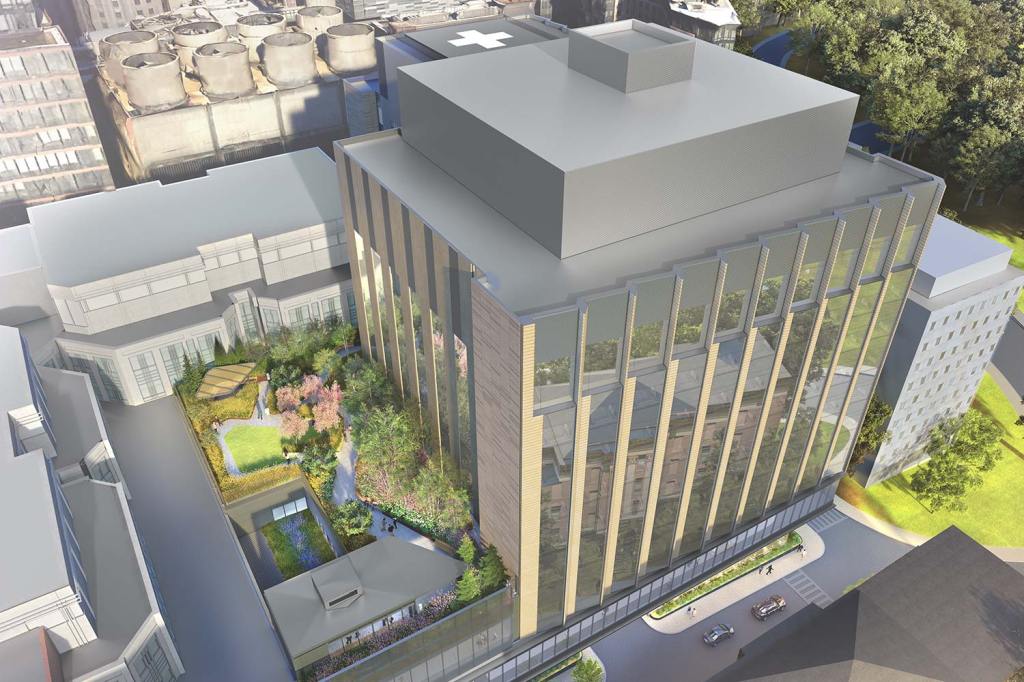
Beth Israel Deaconess Medical Center, Boston (above)
A new inpatient building at Boston’s Beth Israel Deaconess Medical Center, scheduled to be completed in 2022, aims to put energy use 32% below the 2030 baseline while expanding the operations of an existing building on the medical campus. Chilled beams were identified early on in the design process as the best available energy-saving strategy, and their usage became one of the design drivers for the serrated façade that shades and tilts the glazing toward a north and south orientation, boosting the envelope performance.
A roof garden in between the existing Rosenberg Building and the new tower offers patients, families, and staff a view of Frederick Law Olmsted’s famed Emerald Necklace of parks, which also inspired the design of the building lobby.
Payette
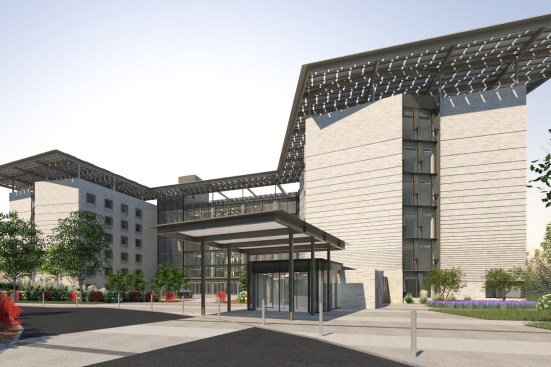
DCAMM Chelsea Soldiers’ Home Community Living Center, Chelsea
Perched on Powder Horn Hill in Chelsea, Mass., this long-term-care facility for veterans targets a goal of net-zero energy while making the most of natural light and panoramic views of Boston Harbor.
Payette’s net-zero goal was the driver for key design decisions. Geothermal heating and cooling, natural ventilation, a 0.5-megawatt rooftop-mounted solar array (which will hit state and federal fossil fuel reduction targets), a heat recovery system, a high-performance building envelope, and natural ventilation in all resident spaces allows for a building that eliminates the use of fossil fuels during typical operation.
The completion of the Community Living Center, slated for 2021, will herald the demolition of the nearby Quigley Building, enabling development of the full 7-acre site into an accessible landscape, and restoration of the adjacent Malone Park as a public amenity.