Last week, I wrote about the surreal turn in architecture, which I noticed at final reviews at the California College of the Arts (CCA). There, San Francisco’s “Painted Ladies” Victorian houses were turned into Shady Ladies that disturbed as much as they delighted. One student even designed suburban homes with construction faults that he planned with precision. Another budding designer proposed cladding apartments in tiles you would normally find on the local subway.
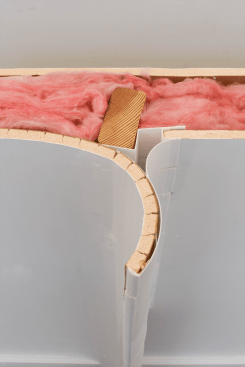
Courtesy Taylor Metcalf
From Taylor Metcalf's "Out of Tolerance" thesis project for CCA
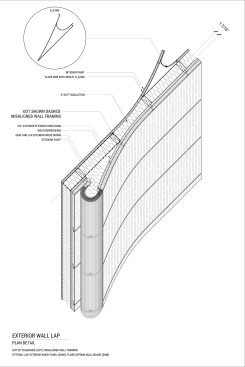
Courtesy Taylor Metcalf
From Taylor Metcalf's "Out of Tolerance" thesis project for CCA
Truth be told, this tendency towards design weirdness is all over the place, and not just in trend-conscious California, or even exclusive to the United States. If there is one dichotomy that should be evident across the world of architecture today, it is the push and pull between those who are pursuing social agendas with little interest in form or image and those who are delighting in their ability to invent shapes and colors that shock and amuse. This tension is renewing the old fight between those who think of architecture as a social and engineering project and those who think of it as an aesthetic one.

Courtesy Abraham Rivera
Student work from the School of Architecture at Taliesin
In reality–or, maybe, in surreality—these position have become conflated in the work of the most interesting designers today. This is, I believe, because social relations and, therefore, power relations are operating through images that surround us nonstop and which are completely malleable. Words are losing their power—or at least their conviction, logic, and singular meaning. Images and forms, however, can evoke or mollify; they can terrorize or comfort. So you want to be an architect who is both socially engaged and part of the culture in which we all live, you have to operate by means of such images.
Courtesy Rajah Bose
Rajah Bose's project for "Odd Facades," which was the jury prize runner up
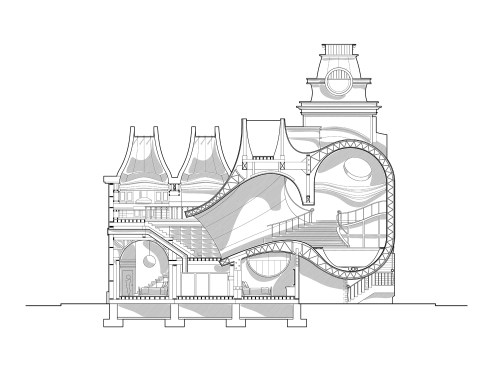
The projects produced by the students at CCA—as well as by our own students at the School of Architecture at Taliesin—are part of a world of Instagram, Photoshop, and Snapchat. Their projects reflect that pop-up, slide-together, morph-into-each-other, appear-disappear reality more than they do an architectural school of thought that mandates a particular style or way of working.
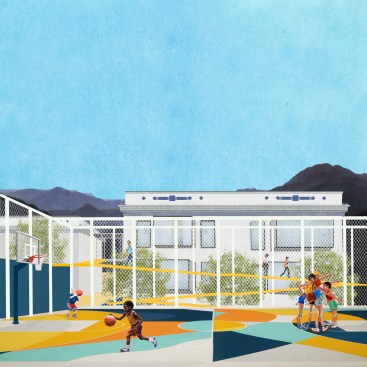
Courtesy Lorraine Etchell
Student work from the School of Architecture at Taliesin
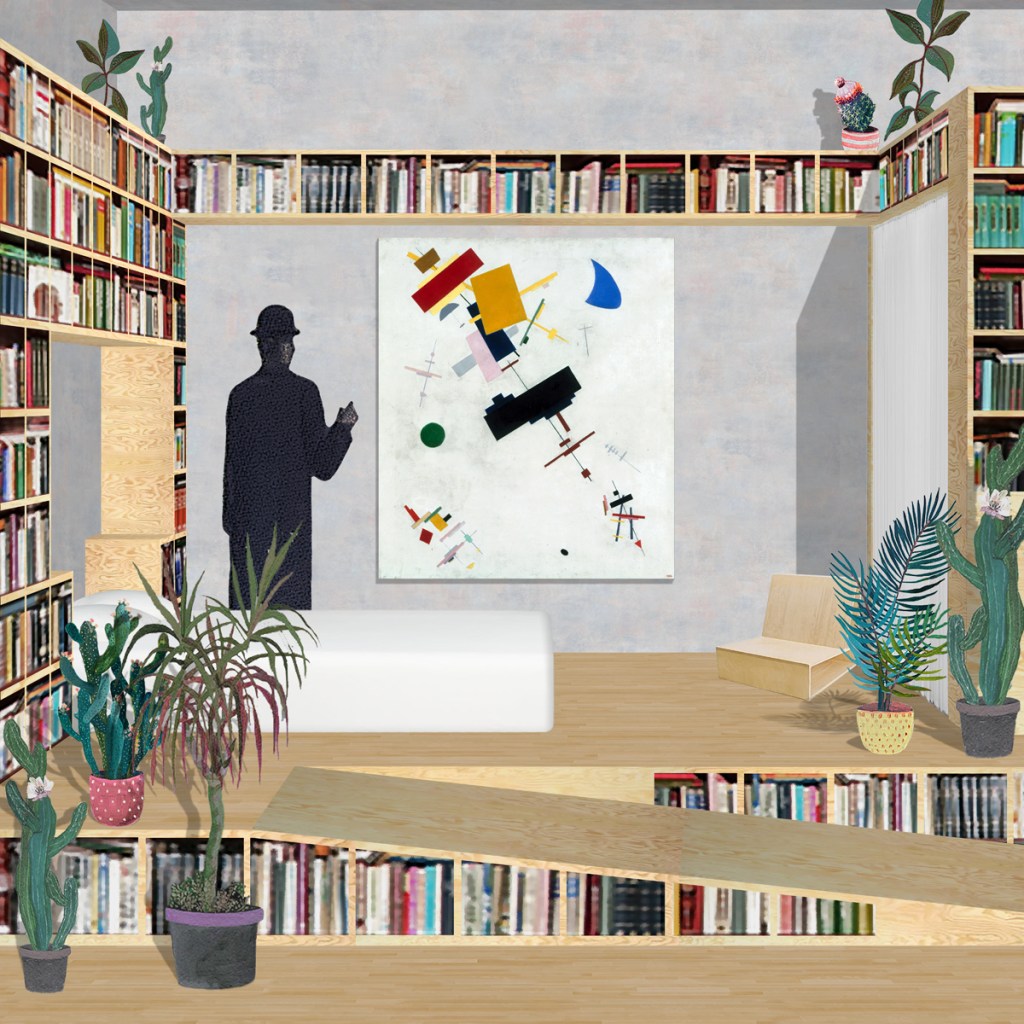
Students and young architects work in a surreal way because that is the style of our time. It is a style that ranges from the fluid blobs of parametricism to the self-conscious raiding of 1980s imagery. With roots in utopian imagery—especially strange concoctions like El Lissitzky’s “Cloud Prop,” the work of Jean-Jacques Lequeu, or the more recent images of Aldo Rossi or Lebbeus Woods—this Neo-Morphism proposes another world, but one made up of the bits and pieces of our consumer culture and populated by people that the architects have clipped from popular movies or paintings. David Hockney and Frida Kahlo’s characters wander through fragments of grids into which bits of color and consumer goods that would have done James Rosenquist or Roy Lichtenstein proud appear out of the gray, while humor derived from South Park and Trailer Park Boys permeates throughout. I think it is telling that my students had movies like Ice Age and Shrek running on repeat while they were on charrette this spring. This is cartoonitecture, and I do not mean that as a slam. It is an architecture for those who grew up, and some of whom are still growing up, on shows like South Park and who take it seriously enough to want to be not just Frank Gehry, FAIA (who appeared in a 2005 episode of The Simpsons) but a Bart Simpson version of him.
In other words, it is one thing to be woke and another to figure out how to make your consciousness come alive in architecture. And it is art, from the most popular to the most refined, that is the well from which you can draw ready-made samples of your woke state.
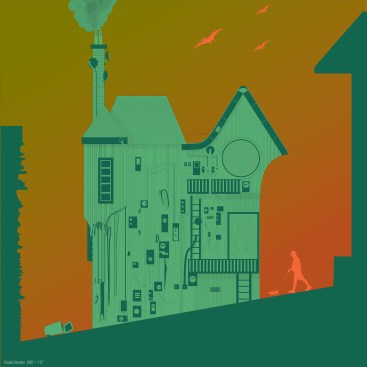
Courtesy Maya Annotti
Maya Annotti's project for "Odd Facades"
To look at this work as critics, or merely as elders, we have to adjust our standards. That is not to say that there is no discipline to what these kids are doing. Neo-Morphism has all the advantages of Postmodernism in its fascination with and use of history, but does so without that movement’s drive toward the making of fake monuments and insider jokes. Like Postmodernism, Neo-Morphism embraces popular culture, but it does so with the genuine love of those who do not see the acceptance of their world as an acquired skill. Instead, it is the students speaking in their vernacular. Taking their work seriously does mean that you have to accept that these are not necessarily proposals for “real” buildings. For instance, despite some of the students’ own seriousness, there is a large chance that floor plans, sections, models, and images will not add up to a coherent proposal for a piece of inhabitable construction—because they were never meant to. You have to accept all of these bits and pieces as versions of different possible realities, perhaps as different versions of the apps that beg to be updated every time you turn on your phone.

Courtesy Nelson Schleiff
Student work from the School of Architecture at Taliesin
All of this brings up the question of what it will mean when these future architects and designers try to become part of the profession. Will they grow up, calm down, and do the right thing? Or will they keep morphing, both in their personal life and in their designs? I, for one, am hoping for the latter, and if that means they wind up renovating existing structures and reimagining them for temporary uses, as is more and more common, and decorating them inside and out, or “just” making movies and collages, then all the more power to them. Old monuments and buildings can be dead and wasteful. Let them be morphed into something that is part of our continually changing, socially connected world. Neo-Morphism can help us be the change.