
Any discussion of modern architecture in the Middle East is likely to conjure images of supertall skyscrapers rising over the desert, fueled by the age of oil. CHANGE: Architecture and Engineering in the Middle East, 2000-Present, however, shows that over the past decade, architects moved beyond skyscraper-philia.There is now a regional architectural vernacular that draws on a rich cultural history and heritage. The Villa Skhirat in Morocco (pictured), for instance, designed for Sheikh Sultan Bin Zayed Al Nahyan, president of the United Arab Emirates, by architect Patrick Tighe, FAIA, uses the strength and structural logic of the native Atlas cedar tree. The tree is a symbol of immortality and purity, and inspired the reinforce- concrete building’s natural forms. A concurrent exhibit, “City of Mirages: Baghdad, 1952-1982,” examines an earlier architectural period, when Baghdad was a flourishing, cosmopolitan city that attracted influential modern architects from around the world—leaving a legacy worth revisiting as the city begins to rebuild. Through June 23. • cfa.aiany.org.
Exhibit: ‘Architecture and Engineering in the Middle East, 2000-Present’
1 MIN READ
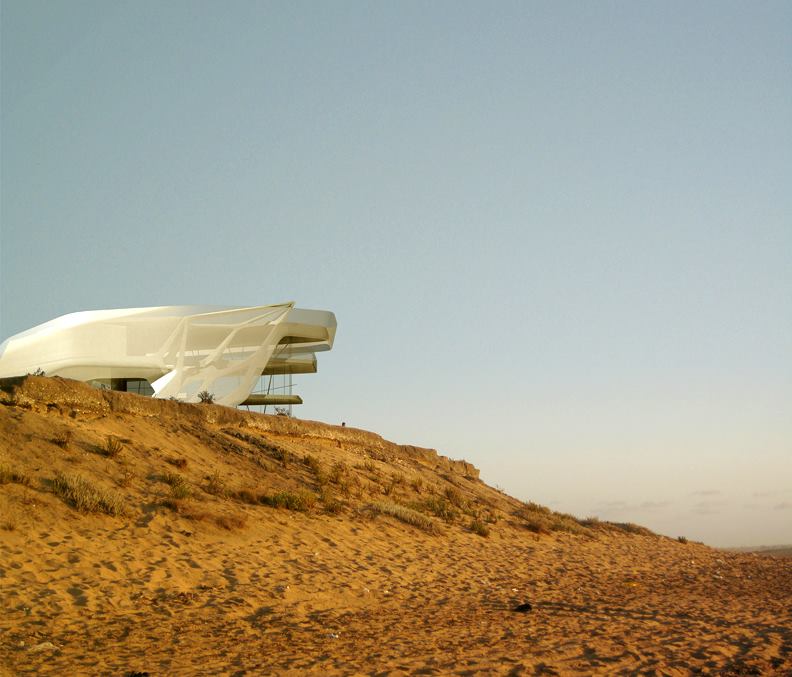
Courtesy Patrick Tighe Architecture
