Comedian Brian Regan has a joke about log trucks: “Sometimes, you’ll be out on a highway, and you’ll see two big trucks, each loaded up with logs, and they pass each other. I don’t understand. I mean, if they need logs over here, and they need them over there, you’d think a phone call would save a whole lot of trouble.”
That phone call could save not only trouble, but also a whole lot of fuel, emissions, erosion, and road damage, which is why green building standards such as LEED encourage the use of local and regional materials. Yet LEED accepts anything within a 500-mile radius—which means an area of nearly 800,000 square miles. If you’re building in Denver, you can ship in anything between El Paso, Texas, and Billings, Mont., two cities that are hardly in the same region, much less the same locality.
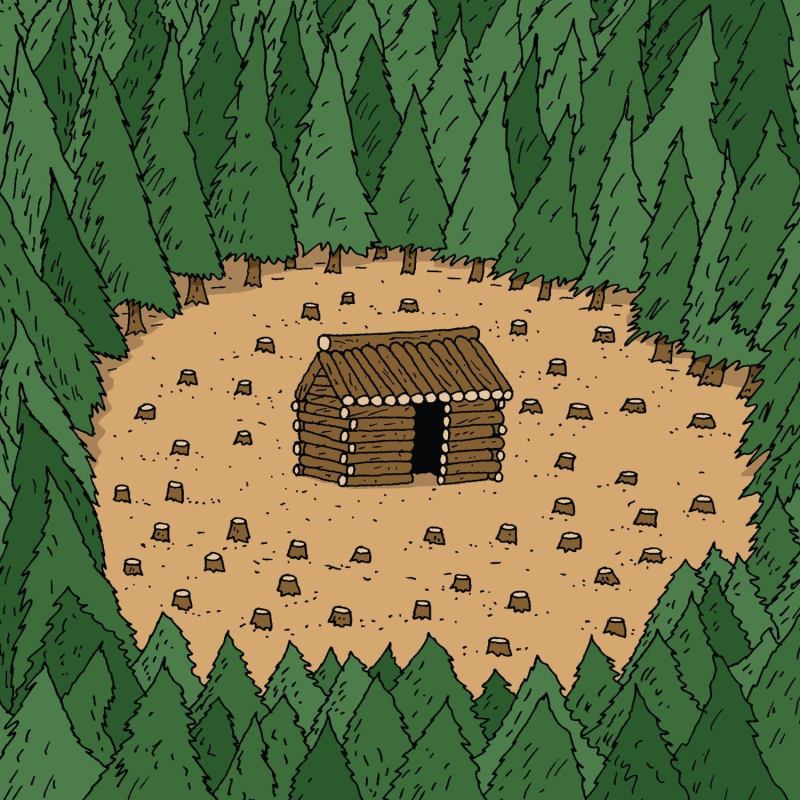
Imagine collapsing that radius to include only your immediate surroundings. How would the construction industry change if builders were limited to what’s in their own backyards? Far from a radical proposal, this is in fact how vernacular structures, so loved by “green” architects, have always been built. The ice for igloos, the mud for adobe, the stone for cliff dwellings, and the thatch for huts are all drawn from within more like 500 yards, not 500 miles. Log cabins aren’t made from imported logs. I once worked on an education center in a large woodland preserve where the annual number of naturally fallen trees could produce 3,000 board-feet of lumber. (If a tree falls in a forest, and no one’s there to haul it …)
In Costa Rica, I stayed at an eco-lodge that had been built from the timber of a forest planted 35 years earlier by the owner, who had the time and patience to wait for the trees to mature. If every project benefited from the kind of foresight and planning it takes to grow materials on site, the results would include not just a reduction in transportation damages but also the kind of long-term commitment that builds lasting communities.
Another joke, this one from Saturday Night Live’s old “Deep Thoughts” segment: “If trees could scream, would we be so cavalier about cutting them down? We might, if they screamed all the time, for no good reason.”