
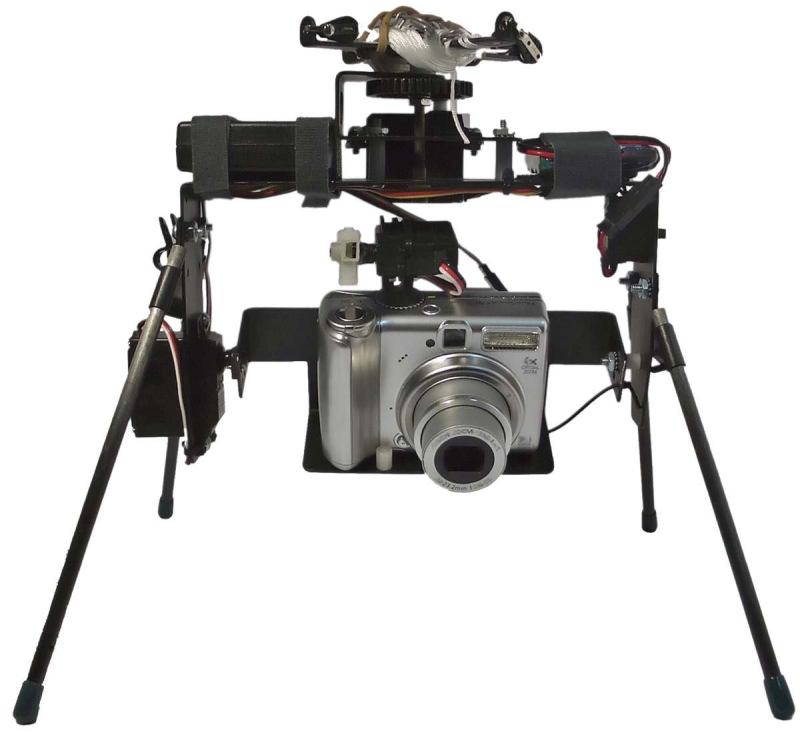
Kite Aerial Photography Camera Cradle Kit $155
GOOGLE EARTH CAN’T GET THIS CLOSE. Kite aerial photography, known as KAP among enthusiasts, lets you get personal with the tip-tops of buildings. Landscapes take on a new dimension when you can see the big picture but also see details: the tracks of animals that share terrain with humans, for example, or the patterns in grass from a foundation that used to be there.
Most KAP practitioners design and build the cradles that carry their cameras aloft, borrowing advice from a handful of KAP websites on what type of kite, camera, and rig to use for different shoots and skill levels. Options range from a radio-controlled contraption to simple devices that marry garage-sale cameras with Silly Putty to control the shutter release.
Charles C. Benton is a KAP enthusiast and a professor of architecture at the University of California, Berkeley, who teaches building science. He sees his hobby as a natural extension of his job. Not only can he get a bird’s perspective on how a building weathers, but he can exercise that part of the brain essential to practicing architecture: the imagination. “I watch the camera as it lofts into the air and try to frame what it sees,” he says. “You form a hypothesis. When you get the image back, you can compare what you imagined with what it actually captured.”
Benton has been working with a microbiologist on a project called “Hidden Ecologies” (arch.ced.berkeley.edu/kap2/php/Hidden_Ecologies) that examines the salt ponds in the San Francisco Bay area, documenting change from 10 million meters high—the level of a satellite image—to microscopic levels of one-millionth of a meter. Benton’s KAP images hover between 100 meters and one meter high, filling the gap between Google Earth and humans tethered to the ground.
“As designers in the building world, we’re trained to visualize relationships,” Benton says. “This is a way of literally realizing that.”
EXHIBIT
BOOK