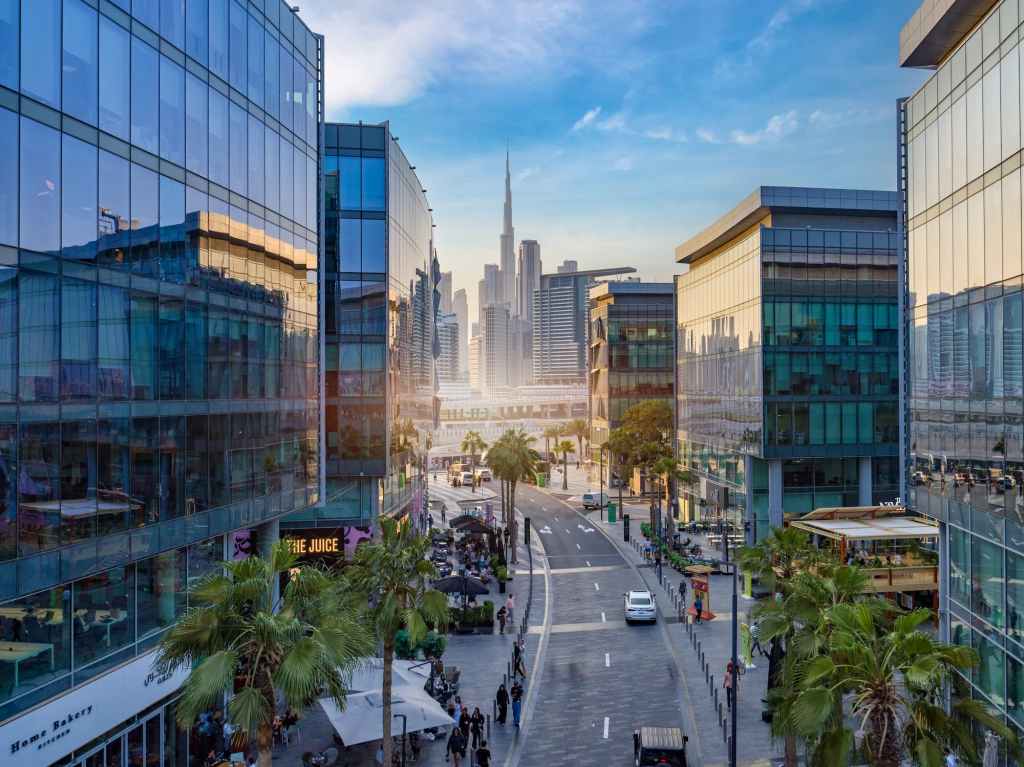
As the November sun lowered behind the glass towers of Dubai Design District (d3), the entire neighborhood began to resemble an improvised city within the city—one built not from steel or concrete, but from palm fibres, textiles, timber, sound, scent, and light. During Dubai Design Week 2025, more than 135,000 visitors moved through this temporary landscape of installations, workshops, exhibitions, and architectural experiments, encountering over 1,000 designers and creative practitioners from 50-plus countries in the process. Together, they staged one of the most expansive and diverse design events the Middle East has ever seen, transforming Dubai—already a global crossroads—into something more like a global design commons.
This year’s edition, held under the patronage of Her Highness Sheikha Latifa bint Mohammed bin Rashid Al Maktoum and staged in strategic partnership with Dubai Design District (d3), sharpened the festival’s focus on design as a civic and cultural force. Rather than treating design as an aesthetic afterthought or marketplace of objects, the 2025 program presented it as a shared social infrastructure, capable of shaping how communities live, gather, remember, and imagine the future. “Visitors weren’t just observing installations,” said Dubai Design Week Director Natasha Carella. “They were actively questioning ideas around provenance, resilience, and the systems that shape daily life.”
That recalibration was palpable across d3’s walkways and plazas, where more than 30 installations reinterpreted regional craft, interrogated ecological fragility, and embraced new forms of digital and material experimentation. The district felt less like a design fairground and more like an outdoor research campus—an open, accessible laboratory where design’s public role came into full view.
A City-Wide Dialogue, Told Through Space
One of the strongest currents running through Dubai Design Week 2025 was a renewed attention to spatial typologies native to the Gulf, reframed for a contemporary context. This was nowhere more evident than in Urban Commissions 2025, where the annual competition invited designers to explore the notion of the courtyard.
The winning proposal by the UAE-based research and design studio Some Kind of Practice—evocatively titled When Does a Threshold Become a Courtyard?—reimagined the Emirati housh not as a static architectural element, but as a fluid spatial condition shaped by shifting walls, open thresholds, and the social rhythms of communal life.
The resulting structure, built from palm-based materials and calibrated to the desert climate, offered visitors a shaded, breathing space that felt perpetually in transition. It was as much an anthropological study as it was an architectural one, and across the week it became a gathering point, an informal classroom, and a stage for spontaneous conversations about place, climate, and memory.
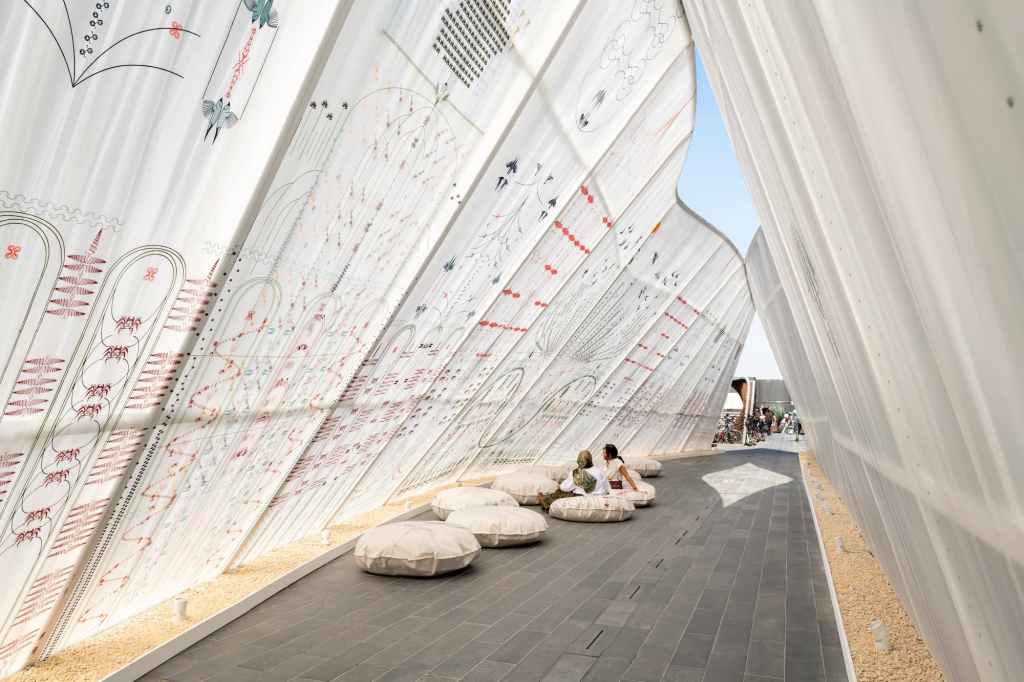
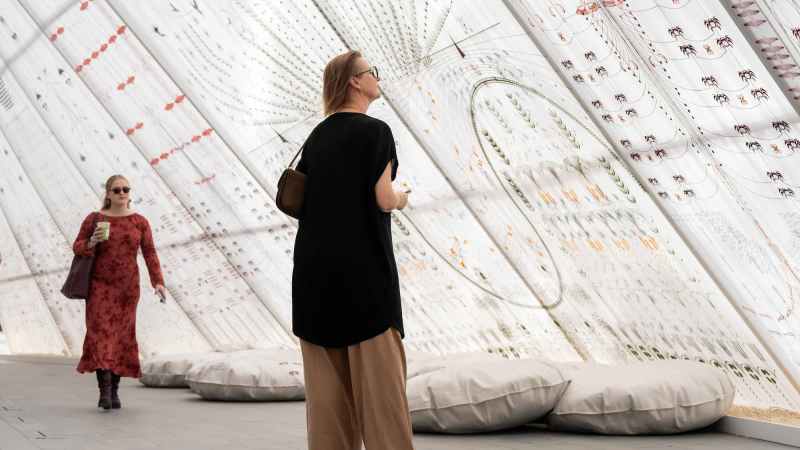
A similar sensitivity to cultural and environmental specificity animated the 2025 edition of Abwab, the festival’s long-running pavilion dedicated to regional practitioners. This year’s commission, themed “In the Details,” asked designers to rediscover ornament as a structural and narrative tool. The winning installation—Stories of the Isle and the Inlet by Bahraini design platform Maraj, founded by Latifa Alkhayat and Maryam Aljomairi—draped a large tensile canopy in illustrated textiles depicting the flora, fauna, and oral histories of Nabih Saleh, a small island undergoing rapid ecological change.
The pavilion was fabricated in collaboration with Bahraini artisans, folding craft techniques like thob alnashil into a contemporary environmental narrative. Visitors reclined on low cushions beneath its illustrated surface, reading the island’s story as it unfurled overhead. Alkhayat spoke of wanting to create an experience that intertwined craft, ecology, and storytelling, noting how meaningful it was “to have a voice in the Gulf’s design scene” through such a public, immersive installation.
Together, Urban Commissions and Abwab charted the thematic trajectory of the festival: a movement toward design as lived experience, grounded in regionally attuned research rather than spectacle.
The Installations That Turned d3 Into a Living Laboratory
The breadth of this year’s installations—spanning architecture, material experimentation, AI, tactile environments, and brand-driven spatial narratives—underscored the festival’s evolution into a city-scaled design platform.

Sustainable materials played a starring role. One of the most talked-about contributions came from ARDH Collective, whose pavilion showcased building components made from DuneCrete and DateForm, materials developed from desert sand and date-palm byproducts. These experiments suggest a near-future where the UAE’s agricultural and geological resources form the foundation for a genuinely local construction industry.
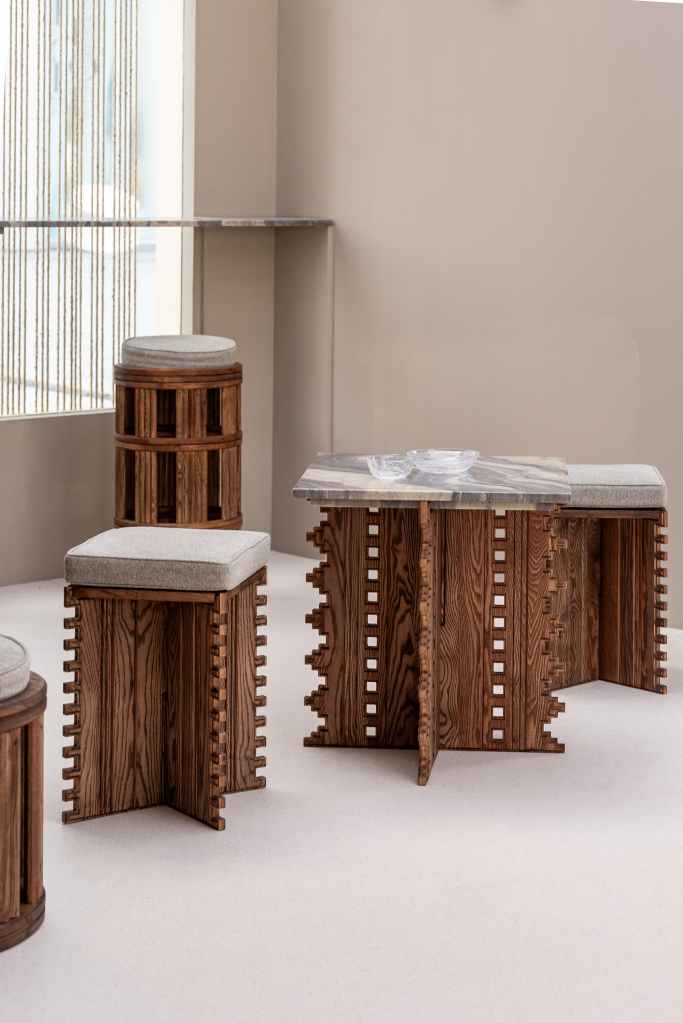
Nearby, AJZAL, an Emirati design studio, created a contemporary majlis using Sharjah stone and locally sourced leather, demonstrating how tradition can be reimagined through careful material stewardship.
Students and academics also occupied a visible and influential place in the design ecology. Professors Tania Ursomarzo and Iman Ibrahim collaborated with design students to build a modular seating system from recycled LDPE fused with crushed seashells, compressing marine and urban waste into a new furniture typology. Their intervention—pragmatic and poetic—embodied the festival’s growing commitment to circular design.
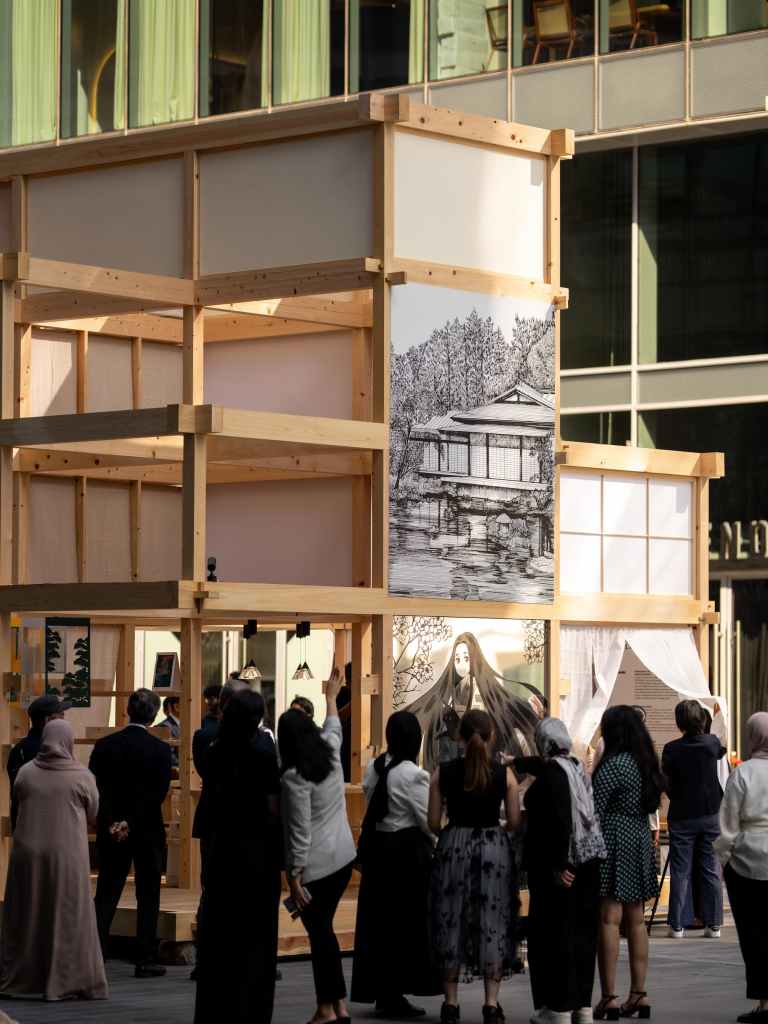
Across the district, global firms introduced a different scale of architectural engagement. Japan’s Nikken Sekkei and Sobokuya presented CHYATAI, a timber structure assembled using traditional sashimono joinery techniques. The installation’s calm, measured presence stood in productive tension with Dubai’s typically high-tech skyline, offering a meditative pause in the festival’s flow. Nearby, Designlab Experience wove sculptural forms from regional basketry traditions, creating large undulating volumes that filtered sunlight into patterned shadows. Throughout the week, visitors gravitated toward the structure’s tactile textures, rediscovering handmade craft at a monumental scale.
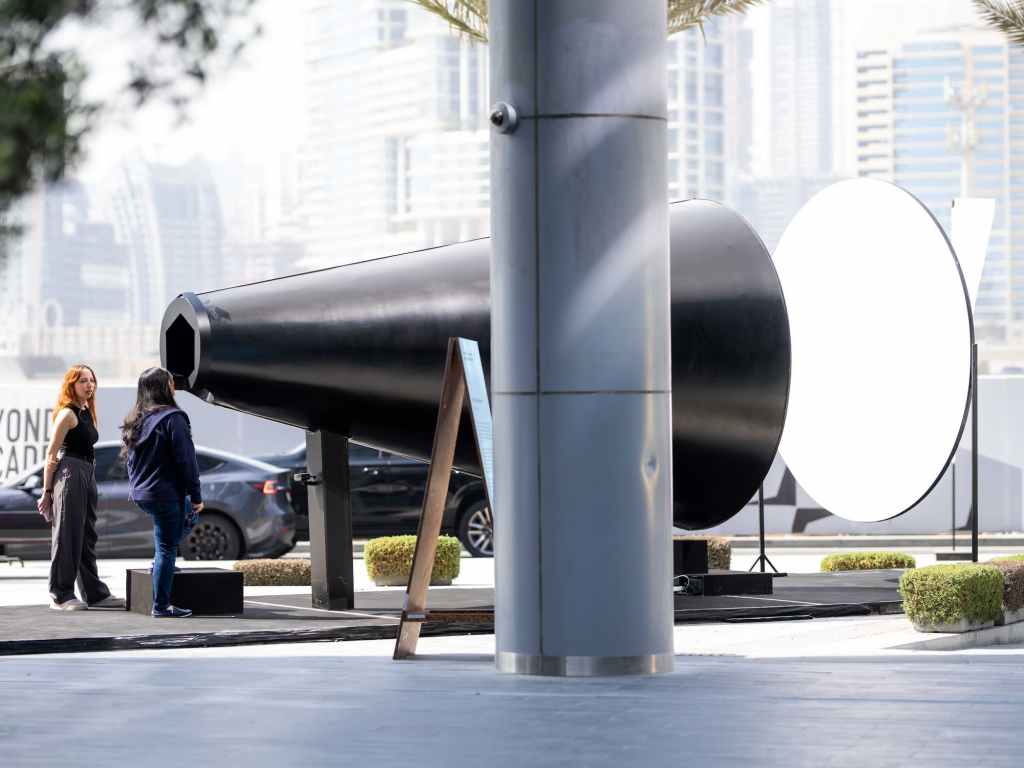
Digital and sensory experimentation added yet another dimension. The Hybrid Xperience Collective premiered AIM Shared Dreams, an AI-enabled environment that changed in response to collective emotional data, rendering the invisible dynamics of human presence as a shifting choreography of color and sound. Artist Annabelle Schneider’s INTERLUDE: In Between is Now, developed with ArtKōrero, offered a controlled sensory retreat—a place of quiet, movement, and breath inside the high-activity environment of the fair. And WCI Lab’s Breath Print transformed thermal scans of visitors’ breath into ambient visualizations, reminding audiences that design can engage with the most elemental aspects of human life.
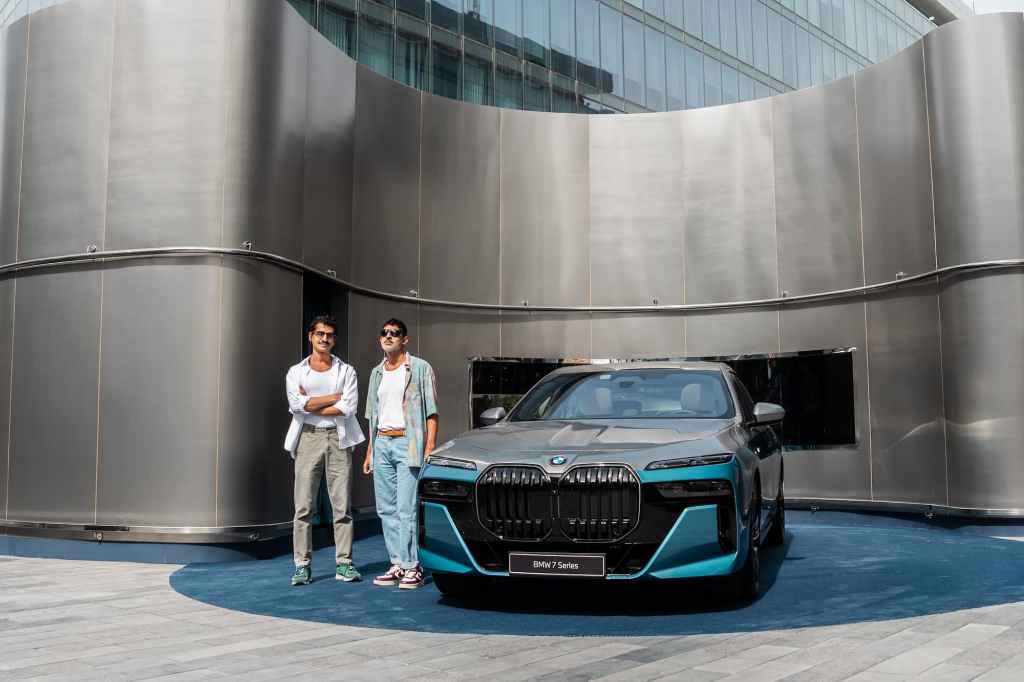
Even brand activations, long a staple of global design weeks, achieved a level of architectural and curatorial sophistication unusual for corporate commissions. BMW Middle East collaborated with Jeddah-based studio Bricklab to present Ellipse, a pavilion whose metallic exterior concealed a sculpted, upholstered interior inspired by the language of the BMW 7 Series. Inside, a seating area modeled on the majlis hosted daily talks and displayed objects by regional designers—including Talin Hazbar, Dima Srouji, Karim + Elias, Datecrete Studio + Lab, Rand Abdul Jabbar, and others—foregrounding a new model of corporate support for regional craft and experimentation. Bricklab co-founder Turki Gazzaz described the process as one defined by meaningful relationships and sustained exchange.
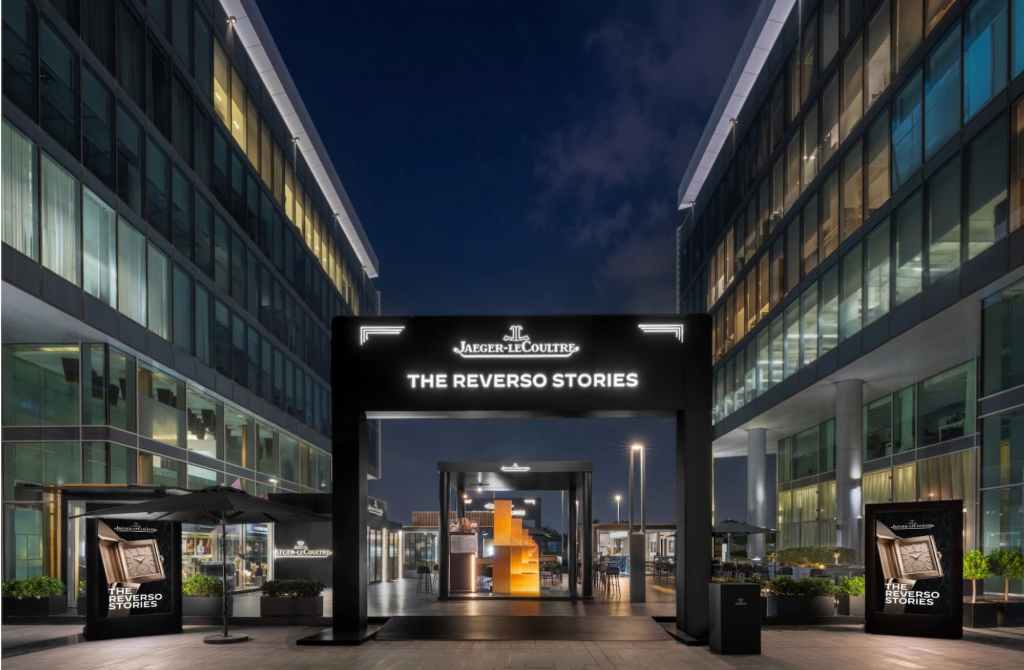
Jaeger-LeCoultre, meanwhile, used architecture, comics, and culinary design to narrate the history of its iconic Reverso watch. The installation, Reverso Stories, brought together architect Abdalla Almulla—whose 30 Sunsets composed a golden-ratio-inspired light environment—with webcomic artist Olivecoat and pastry chef Nina Métayer, who crafted golden-ratio pastries for the brand’s ephemeral 1931 Café. Few brand interventions achieve such conceptual cohesion; this one illustrated how craftsmanship, precision, and storytelling can merge across media.
Downtown Design and the Expanding Commercial Landscape

Within the festival, the international fair Downtown Design remained the commercial anchor, drawing over 25,000 visitors and presenting 330+ brands and designers from 35 countries.
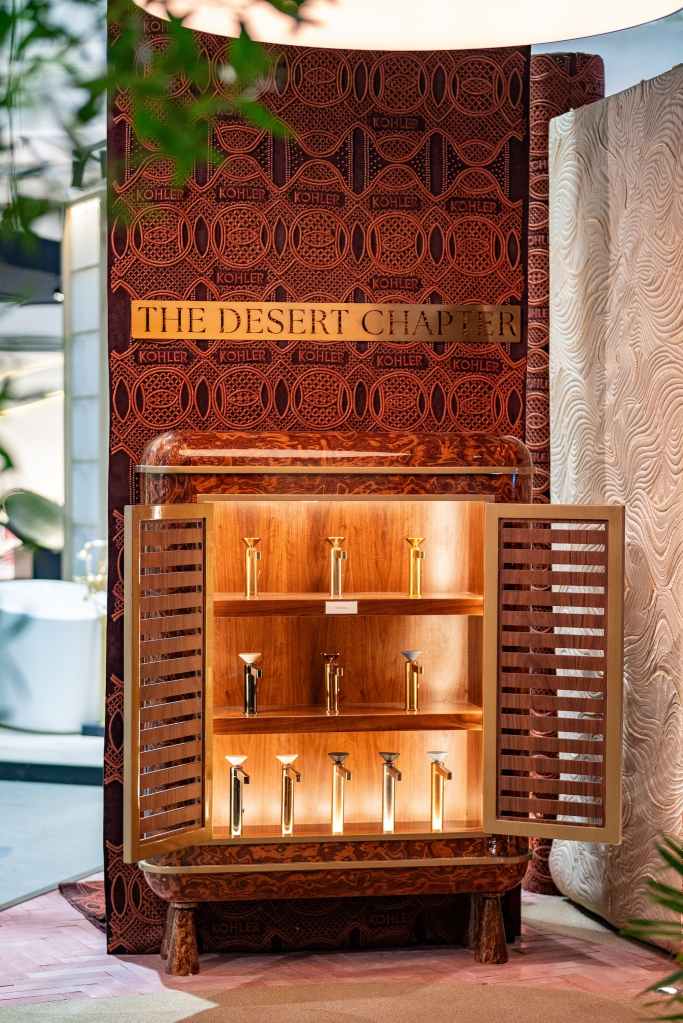
The fair’s energy reflected a marketplace in rapid expansion, with global brands such as Kartell, Kohler, Poltrona Frau, Roche Bobois, and Stellar Works appearing alongside rising regional studios.
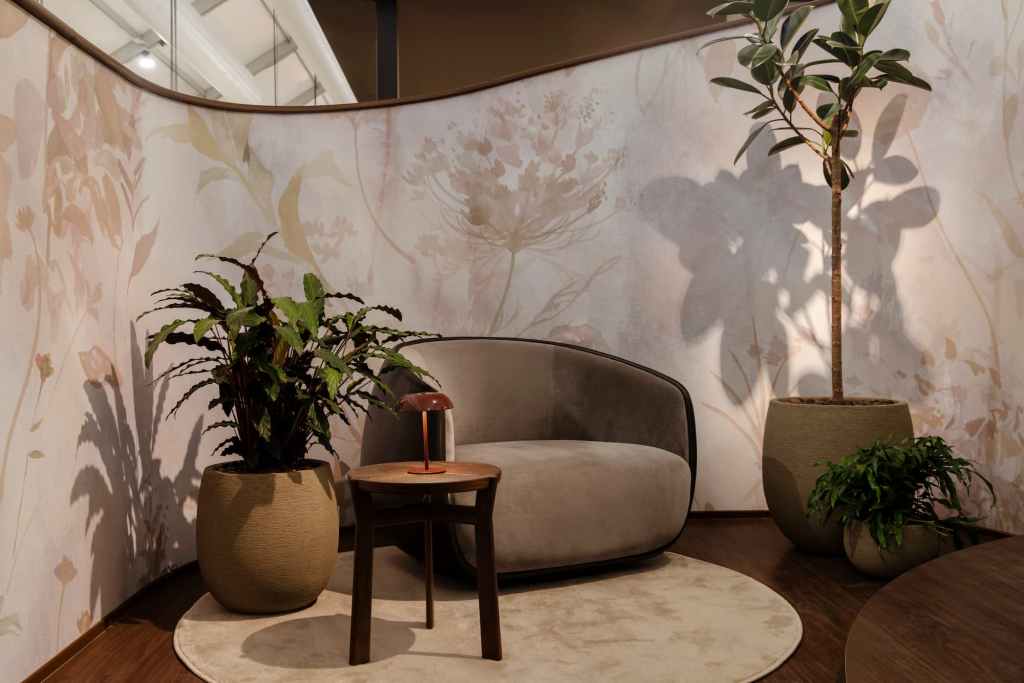
Emirati architect Omar Al Gurg designed the joint Stellar Works and Calico Wallpaper installation, which blended Japanese and Emirati design sensibilities in a unified environment—one of many examples of cross-cultural design dialogue that defined this year’s fair.
A Cultural Economy in Motion
One reason the festival continues to grow in scope and influence is the intellectual infrastructure surrounding it. The Forum, this year designed by Lebanese architect Roula Salamoun, hosted keynotes and panels led by global figures like Tom Dixon, Marcel Wanders, Lee Broom, and David Hicks, alongside regional leaders such as Pallavi Dean, Rabah Saeid, and Meshary Al Nassar. The programmed conversations ranged from AI-assisted craft and sustainable material development to the cultural responsibilities of design practitioners in the Global South.
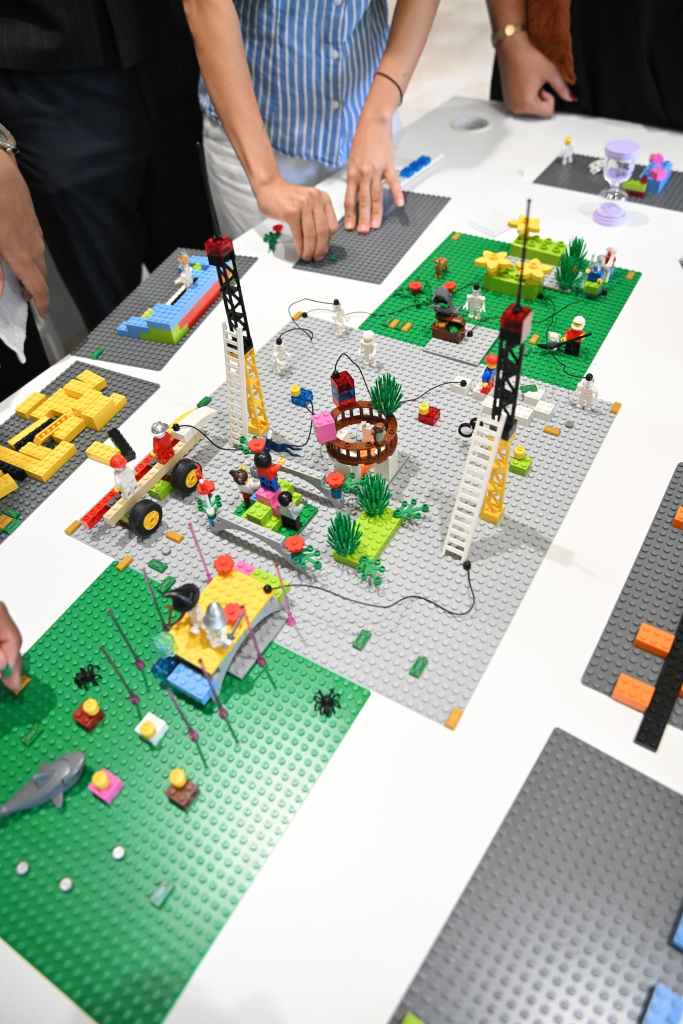
Workshops in the Maker Space—led by institutions ranging from the University of the Arts London to MIT and Northeastern University—further expanded the educational mandate of the festival. Attendees engaged in clay making, analog photography, AR storytelling, portfolio development, and design-for-longevity sessions, making the festival equally valuable to professionals, students, and families.
The weekend Marketplace added yet another layer of community-building, convening over 90 homegrown makers in a vibrant bazaar of crafted objects, live performances, and culinary programming. Across the district, the public nature of the festival ensured that design was not confined to elite audiences—it was lived, touched, debated, and shared.
A City Built by Design
If one idea crystallized during Dubai Design Week 2025, it was this: Dubai is designing itself in public.
The installations on display—whether woven from palm fibre, stitched with ecological histories, assembled from industrial waste, or shaped by algorithms—revealed a city willing to ask difficult questions about the future. Design here is not a decorative veneer applied to real estate; it is an evolving civic language that shapes everything from materials to mobility, memory, and community.
Carella described the festival as an engine of maturity and depth. The evidence was everywhere. In the courtyards reimagined for contemporary climates; in the pavilions documenting fragile ecologies; in the classrooms overflowing with students; in the multinational conversations unfolding beneath the district’s canopies; in the quiet moments where a visitor paused inside a timber structure from Japan or beneath a textile ceiling from Bahrain and felt, for a moment, part of a larger cultural dialogue.
The city that emerges during Dubai Design Week is not temporary. It is a preview of Dubai’s future—a place where design is not a luxury, but a shared tool for building a more interconnected, imaginative, and resilient society.