Zonda’s Elevate Conference returns to Miami, December 8–10 at the Kimpton EPIC Hotel, uniting the most influential voices in global real estate to explore the trends reshaping luxury high-rises. Now in its third year, Elevate brings together top developers, architects, and investors to discuss design innovation, market shifts, AI, wellness, and experiential living in a $1.5 trillion market—revealing what’s selling now, what’s next, and how to stay ahead.
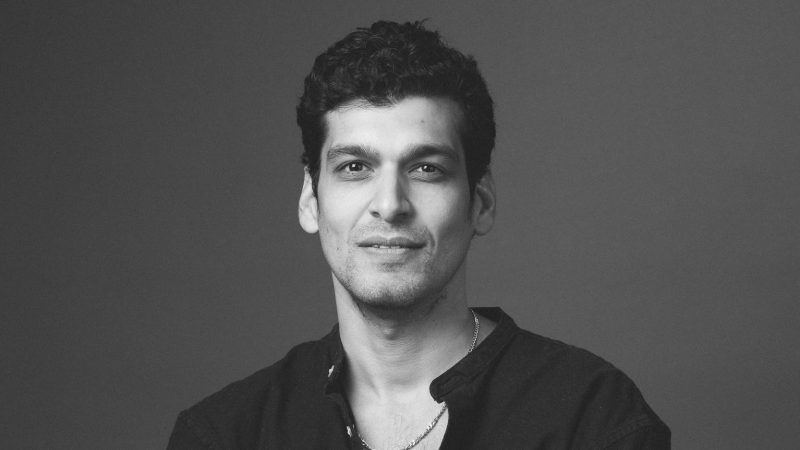
Among this year’s standout speakers is Anant Sharma, founder and CEO of Matter Of Form, whose work sits at the intersection of design, behavior, and brand strategy.
Known for challenging conventional ideas of luxury and innovation, Sharma brings a distinctly human perspective to the conversation on what “high-resolution living” really means in the decade ahead.
Over the past 14 years, he has built a reputation for combining craft, creativity, and strategic clarity—helping global clients redefine what luxury means in an era of rapid change. A futurist and behavioral design enthusiast, Sharma is driven by a fascination with what motivates people and how design can shape perception, behavior, and value.
Beyond his work at Matter Of Form, Sharma co-founded the design thinking school Experience Haus, hosts the podcast “What The Luxe”, and serves on the Board of Trustees for the Crafts Council UK. When he’s not advising brands or teaching, Sharma moonlights as a DJ and producer—bringing the same sense of rhythm, experimentation, and creative disruption to both his music and his work.
ARCHITECT caught up with Sharma ahead of Elevate Miami to discuss how emotion, behavior, and design are converging to redefine the meaning of luxury—and why the next era of “high-resolution living” will prize depth over display.
ARCHITECT: As a futurist and innovation advocate, how do you see the concept of “hi-res luxury living” evolving over the next decade?
Anant Sharma: ‘High-resolution luxury living,’ to me, is about perceptual fidelity – the sharpness of how we feel the world. The next decade of luxury won’t be defined by ownership, not by stuff. Rather by sensation, by depth. By how vividly something can be experienced.
Luxury is permission to take the slower, more sensory path. That matters now more than ever, in a world that’s optimised itself into numbness. When you pay for luxury, you place value on the irrational. Joy lives in the irrational – we’ve streamlined the joy out of the everyday – and with it, lost fragments of community, connection, and presence. We all know this.
What comes next feels inevitable: new ways of living, gathering, and spending time that put emotion back at the centre. Not efficieny.
The role of design (in this context) is to shape that emotional hypothesis – to choreograph the journey that follows.
ARCHITECT: You often emphasize craft and timelessness over trend—how can luxury brands maintain relevance in a fast-moving digital age while still holding onto that sense of permanence?
AS: Too often, luxury brands lean too heavily on history and heritage. Important, but no longer enough. Meaning today comes from process as much as product. The value lies in the inputs: the choices, the craft, the thinking that shape what we eventually hold in our hands.
In a digital world, this is how we now read worth, by tracing the story upstream. Tech & AI innovation keeps asking us to re-evaluate what we care about, and why. Its forcing a crisis of meaning. I find it healthy reflection.
The best brands understand this balance instinctively. They know what must evolve, and what must never change. That’s why those who outlast the trend cycle rarely touch their core values. They don’t simply speak of heritage, they embody it. They method act their founders. They channel the original maverick spirit that set them apart in the first place.
Because every enduring luxury house began with someone who saw the world differently. The task now isn’t to celebrate them – it’s to see through their eyes once more.
ARCHITECT: As a student of behavioural design, what consumer behaviours are shaping the future of luxury living—and how can designers and brands respond to them?
AS: I think the better question is this: how is the world reshaping behaviour – and how can our environments help us repair what’s being lost?
The rise of wellness, longevity, and “slow living” isn’t just a trend; it’s the best example of counterreaction. We’re living in an age of constant stimulus – fast feeds, short attention spans, perpetual motion. It’s no surprise that people are reaching for stillness, for rituals that create space and meaning.
Activities once considered ordinary – cooking, traveling, writing a letter, picking ingredients – used to offer something we’ve quietly misplaced: flow. Gentle absorption where time softens, and the mind resets.
So the task now is to design for flow. To re-engineer our physical environments to nurture what once happened naturally. Spaces that don’t just look good, but feel calm. That slow the pulse. That invite presence. Salutogenic design. Biophilia. Etc.
ARCHITECT: How should emerging technologies—AI, immersive environments, even Web3—be integrated into luxury experiences without diluting authenticity or exclusivity?
It starts with the brand promise. What are we really offering, emotionally? What’s the feeling people are buying into? Until that’s crystal clear, format and function are secondary. Story first, structure later.
A self-service check-in kiosk makes perfect sense at CitizenM. At The Dorchester, it would feel like a mistake. Simple example, but one worth repeating – because in the race to innovate, brands often forget that not every new idea belongs everywhere. When innovation becomes decoration (which it too often is), it chips away at perceived value. Kills magic. There’s a cost to gimmickry, even when it wins attention.
The real question isn’t whether to use technology, it’s what form it takes in the context of your brand promise AI, immersive environments, and Web3 all serve very different purposes.
AI might quietly live in the background helping teams anticipate guest preferences, refine service, or optimise supply chains through data and insight. Immersive tech can make the brand’s promise tangible, giving someone a high-fidelity glimpse of the world they’re about to enter. We do a lot of work in this space. Web3 can bring truth and transparency to luxury: proof of provenance, second-hand ownership history, even a digital twin of a rare vintage whiskey. Something to be carried, admired, shared, that might otherwise be locked in a cellar.
Used this way, technology strengthens the story. It supports the brand’s essence instead of competing with it.
But when it turns into a cheap loyalty program, a clunky game, or an empty virtual event – it stops being innovation and starts becoming noise.
ARCHITECT: You speak about developing meritocratic cultures that nurture ideas and learning. How does this philosophy apply within the luxury sector, which can often be seen as hierarchical or exclusive?
AS: Every business carries a set of healthy tensions that must be managed, not erased. Luxury, especially, lives in this space. Control and chaos, vision and reason. Mystique, allure, and faith in a visionary to define what’s next, even if it feels unfamiliar now.
There’s truth in the saying that too many colours in water always turn grey. Luxury should hold its shape. This industry was never meant to follow; it was built to set the path – to create desire, to design perception. Neither can luxury ‘crowdsource’ its future from within, nor can it ‘ask its customers how to build faster horses’ (in the words of Henry Ford)
But that conviction doesn’t excuse poor management. A strong company listens. It nurtures its people. It’s transparent about how it operates. The key is balance – openness within a clear framework. Because if everyone’s opinion carries equal weight, all of the time, direction dissolves.
There is a singular gut instinct that must ultimately prevail.
ARCHITECT: Through your work at Experience Haus and EHL, you’re shaping the next generation of designers and brand leaders. What’s the one mindset shift you believe is most critical for them to embrace in the luxury industry?
AS: The future of business is in creative facilitation. A lot of the students who come into Experience Haus learn ‘design’ techniques that would do well in a boardroom. A lot of my (older) MBA students are inflexible and trapped in a mould, and struggle with lateral thinking.And its borne of a culture obsessed with optimisation. We measure, tweak, and refine – usually around numbers like conversion or engagement. But what if we optimised for something less tangible? For felt experience. For joy.
It sounds idealistic, but it isn’t. When you understand behavioural psychology, you realise emotion can be designed. You can build the conditions that trigger presence, connection, even transformation. And I really push on that as a theme to consider. When considering what problem design solves, the conditions in which it will exist, how its presented.
Design isn’t objective. It’s perceptual. It lives in how something is felt, not how it’s built. It’s a journey of references and beliefs – an orchestration of meaning. A bit over-romanticised that. But when it works, it doesn’t just look right; it feels right. Its proudly, unmistakably, relevant.
Even if a little uncomfortable.
ARCHITECT: You’re also a DJ and producer—has music influenced your approach to design and innovation? And do you see crossovers between sound and the way we experience luxury environments?
AS: Absolutely. Music is about energy. It’s about reading a room, feeling and shaping it – guiding people through tension and release, surprise and familiarity. Mixing unexpected references.
Every set has a story arc; it unfolds over space and time. Luxury brands would do well to remember this, especially in such a multi-channel world (where we counterintuitively run risk of creating things in isolation)
The best brands know how to conduct emotion – when to build, when to hold back. We actually refer to this at Matter Of Form as ‘the choreography of the customer’.
The dance is the same. Only the medium changes.
Join us at Elevate Miami, where real estate’s leading minds exchange ideas shaping the future of luxury development.
REGISTER NOW
December 8–10, 2025
Kimpton EPIC Hotel, Miami, FL