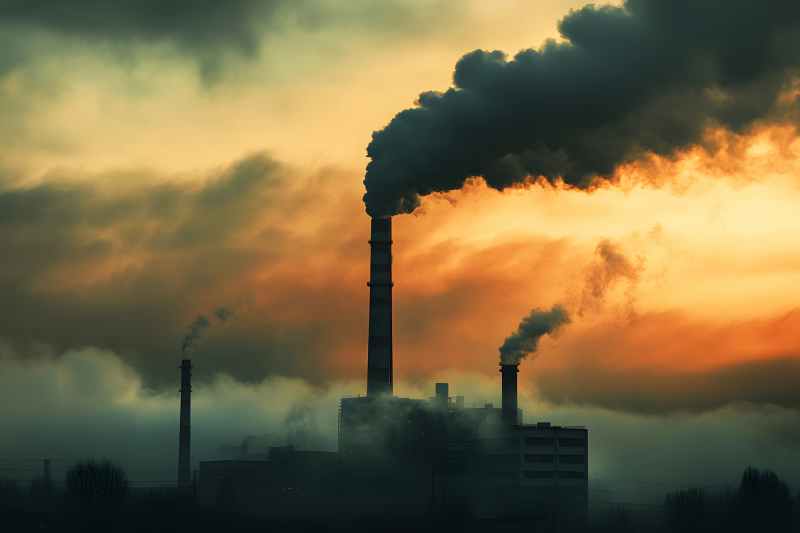
Air pollution remains one of the most pressing environmental health challenges of our time. Despite decades of effort, particulate matter continues to proliferate in cities worldwide, contributing to millions of premature deaths each year. While global mortality from broad air hazards has declined since 1990, deaths explicitly linked to ambient particulates have nearly doubled—a stark reminder of the limits of conventional mitigation strategies.
Filtering with Bricks: Carmen Trudell’s Breathe Brick

Rather than accept the building as a passive container, architect Carmen Trudell asked whether the envelope itself could help filter polluted air. Drawing inspiration from the kidneys’ ability to remove toxins, Trudell envisioned a structural component that simultaneously bears loads and cleanses incoming air. Collaborating with environmental engineer Tracy Thatcher and students at California Polytechnic State University, she developed the “Breathe Brick,” a load-bearing concrete block with a built-in filtration system.
Each module features angled exterior fins that channel air into an inlet, where cyclone filters induce a spinning motion to separate particulates, depositing them in a removable basin. When assembled into a wall, the blocks create continuous vertical shafts that guide airflow, delivering cleaner air to interior spaces or HVAC systems. In this way, the facade becomes both a protective barrier and an active mediator between city and occupant.
Reimagining the Building Envelope as a Filtration System
The Breathe Brick exposes the limitations of traditional approaches to filtering air in buildings, which typically align with one of two approaches: either filter outdoor air via HVAC systems or introduce unfiltered air via operable windows. The reality that a third approach—filtering outside air through building envelopes—is not common is a failed opportunity. Notably, this method is not uncommon in other design fields. For example, materials like Gore-Tex, which breathe while filtering solid particulate matter and water, are now ubiquitous in apparel design. In landscape architecture, plant-based systems are recognized for cleaning and tempering the air. Such approaches suggest that architecture is an unexplored field for similar methods.
The Wall House: Passive Bricks and Active Plants
The Wall House shares Breathe Brick’s strategy of increasing air flow via ventilated masonry units. Designed by Vietnam-based Creative Architects and located in Dong Nai, Vietnam, the house is wrapped in repurposed fire-damaged bricks that are turned on their sides, so that their cores are oriented horizontally. With these cells exposed to the elements, they increase airflow via the Venturi effect, creating constrained air passages that leverage ambient wind pressure. The bricklaying orientation and relative depth of these modules is intentionally informal, with angles shifting throughout the height of the wall—creating a haphazard visual effect more akin to a casually draped textile than a masonry wall. This relaxed approach also varies the daylight penetration through the envelope.
A Living Filter: Vegetation as a Second Skin
Behind this outermost filtering layer is a second layer consisting of a perimeter garden. While the hollow bricks ensure adequate fresh air delivery, the vegetation zone filters pollutants, moderates temperatures, absorbs carbon, and further oxygenates the air. Composed of trees, shrubs, and other plantings, this green buffer enshrouds an outdoor living room, several small courtyards, and an outdoor stair. Assisted by the air circulation effects of the outer masonry wall, this interstitial foliage zone plays a dual filtration role, improving the quality of both the outdoor and indoor air in the house.
Breathing Skins: Adaptive Facades That React Like Organisms
Tobias Becker’s Breathing Skins project consolidates the multilayer approach into a single adaptive facade. The architect was inspired by biological examples in which organisms’ outer skins can dynamically adjust to changing circumstances, offering protection while enabling exchanges between inside and outside. Human skin is another example that demonstrates sophisticated adaptability and sensitivity to the environment, manipulating pore size, blood flow, pigmentation, and other means of anatomical regulation.
The installation consists of a staggered array of pneumatic cells that inflate or deflate as needed to adjust internal temperature and airflow in response to exterior conditions. When fully deflated, the cells freely permit ventilation in the interstitial spaces, whereas completely inflated cells block all but a minimum quantity of air exchange. The cells’ dark outer color functions as adaptive pigmentation, regulating light and views between inside and outside. These light- and air-regulating functions impart Breathing Skins with the capacity to optimize a building’s operational footprint, since heating and cooling loads can be minimized whenever outdoor conditions suit.
Breathe.Austria: Turning Architecture into Forest Infrastructure
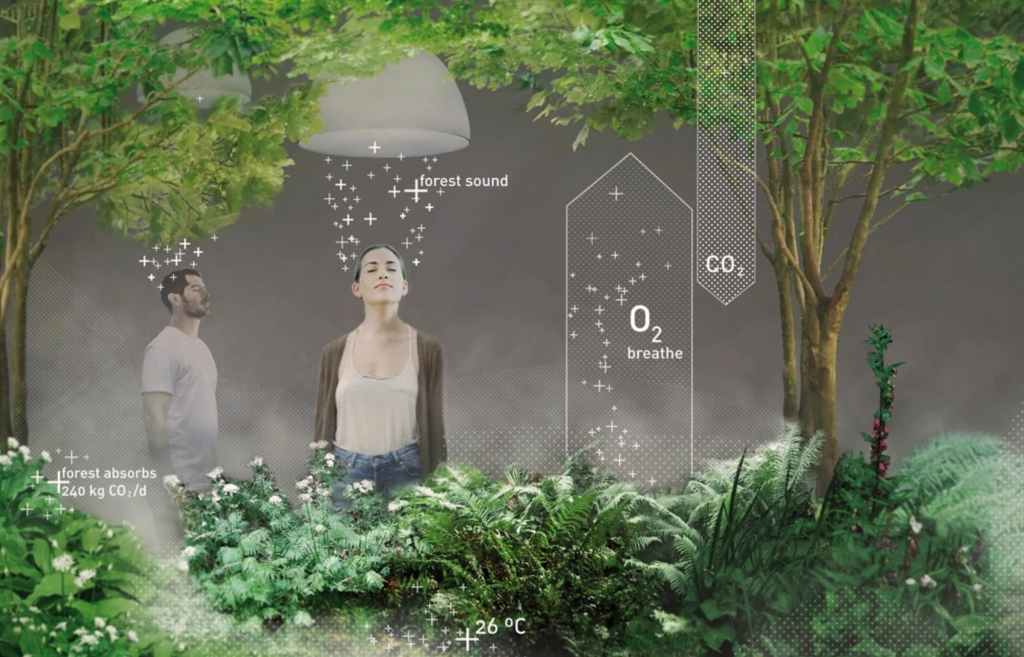
Breathe.Austria expands the concept of the filtering envelope to a contained green buffer zone. Designer Klaus K. Loenhart and team.breathe.austria based the pavilion design on a radical premise: air itself is nourishment. Rather than specify breathable inert materials as an envelope strategy, the design team encapsulated a micro-forest within the building enclosure as a significant way to improve human health—a kind of “forest bathing” integrated within architecture.
Like an enlarged version of the Wall House’s vegetated buffer, this living woodland was not symbolic but functional, operating as an immense photosynthetic engine. Its canopy encompassed more than 43,000 square meters of foliar surface, generating oxygen, moderating humidity, and cooling the air through evapotranspiration. On sweltering July days exceeding 100°F, the pavilion offered a perceptible oasis of refreshment without mechanical conditioning. Mist drifted among trunks while illuminated messages whispered reminders to breathe, underscoring the essential role of natural processes.
Rethinking the Role of Architecture in Environmental Health
The pavilion’s most radical move was to invert the hierarchy of architecture: the forest became the infrastructure, and the building merely its vessel. By positioning ecology as the mediator of thermal comfort and air quality, Breathe.Austria pointed toward a future where buildings partner with living systems to sustain health. In this way, the notion of a breathable facade expands to become a zone full of vibrant, living ecosystems with an exceptional capacity to filter, clean, and temper air.