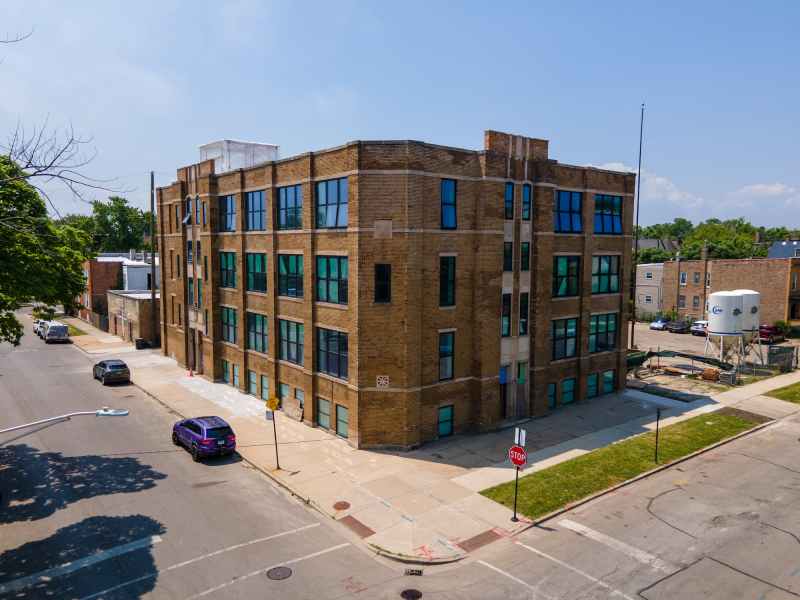
On September 14, 2025, Theaster Gates and his Rebuild Foundation will inaugurate The Land School—a 40,000-square-foot adaptive reuse project in Chicago’s South Side that fuses architectural imagination, land stewardship, and cultural memory. For architects and designers, the project represents more than just another revitalization story. It is a model for how underused civic buildings can be transformed into sites of radical pedagogy, collective creativity, and spatial justice.
“This marks a radical milestone,” Gates said ahead of the opening. “As a small, experimental arts organization invested in space redemption—we now own our tools and our facility. As we consecrate the building and celebrate our archives in this first phase of opening, we are excited for the space to continue to reveal itself to us over the years. It is precisely this iterative, durational approach to our work that allows us to cultivate the full promise of Black space and creative intelligence.”
From Vacancy to Vision: The Architecture of Reclamation
When St. Laurence Elementary School closed its doors in 2002, the sprawling building on 72nd Street and Dorchester Avenue stood vacant for over a decade. The empty structure—its masonry walls cracking, plaster ceilings peeling, windows boarded over—stood as a monument to disinvestment and neglect.”
By 2014, the threat of demolition loomed. That’s when Gates and Rebuild Foundation intervened, purchasing the property for under half a million dollars. What followed was a seven-year, $12 million effort to reconstitute the building while preserving its architectural character: its decorative brickwork, its historic plaster, its broad hallways and generous classrooms.
Adaptive Reuse as Spatial Justice
For architects, The Land School embodies a critical shift in how we think about adaptive reuse. It is not simply preservation for nostalgia’s sake. Instead, Gates uses the language of architecture to confront histories of dispossession and erasure on Chicago’s South Side.
By transforming a vacant building into a site of artistic production and cultural learning, Rebuild Foundation offers a blueprint for how architecture can serve communities beyond economic development metrics. This is about stewardship, reclamation, and cultural self-determination—concepts rarely at the center of architectural discourse yet essential to the future of equitable cities.
A Constellation of Cultural Spaces
The Land School joins a growing network of spaces operated by Rebuild Foundation, including the Stony Island Arts Bank, Dorchester Art + Housing Collaborative, Kenwood Gardens, and Archive House. Over fifteen years, Gates has stitched these sites into a cultural ecosystem that blends art, architecture, and land reclamation.
What distinguishes The Land School is its explicit pedagogical mission. Here, Gates and his collaborators will share strategies learned from years of transforming abandoned structures into cultural anchors. Workshops, lectures, and artist residencies will center on how land, archives, and architecture can become tools for community empowerment.
Opening Day: Performances, Rituals, and Cultural Exchange
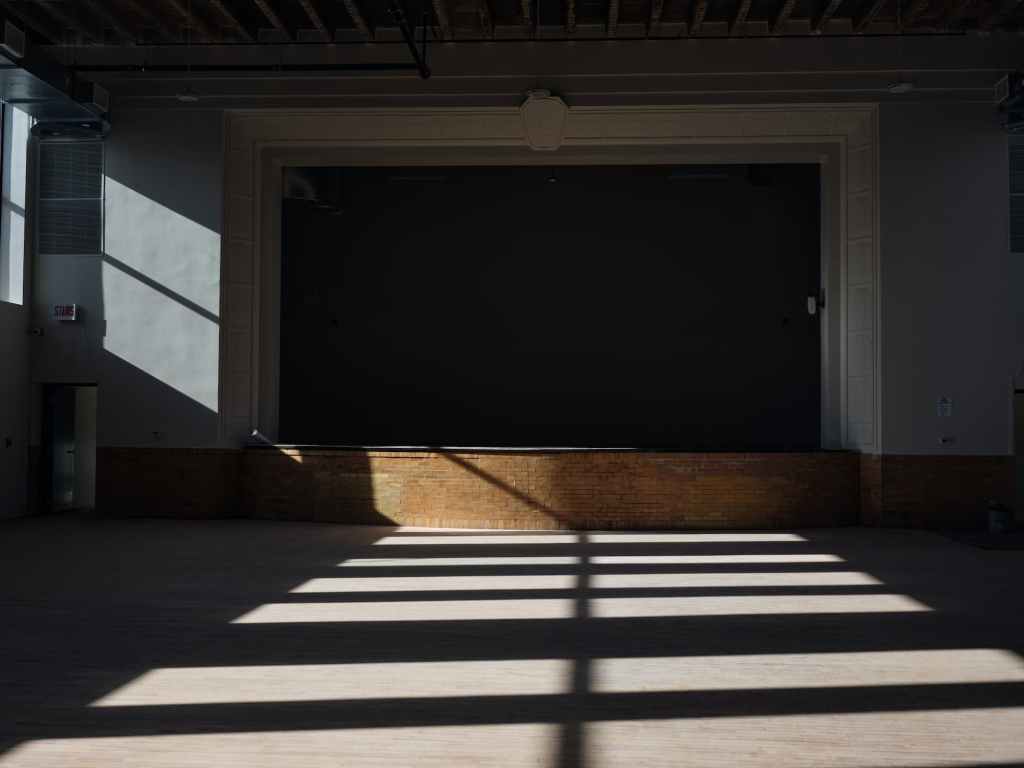
The September 14 opening will unfold across multiple sites, beginning at Kenwood Gardens with events like live honey extractions by The Roof Crop and yoga sessions led by April Falcon.
At 1 p.m., the ribbon-cutting ceremony at The Land School will welcome the public for the first time, followed by experimental performances and discussions featuring an intergenerational roster of artists: jazz luminaries Makaya McCraven and Angel Bat Dawid, Black chamber music collective D-Composed, DJ Duane Powell, historian Dr. Carol Adams, and many others.
This inaugural cohort of creative partners-in-residence signals the interdisciplinary ambitions of the project: music, history, performance, architecture, and urbanism will converge under one roof.
Architectural Pedagogy for the 21st Century
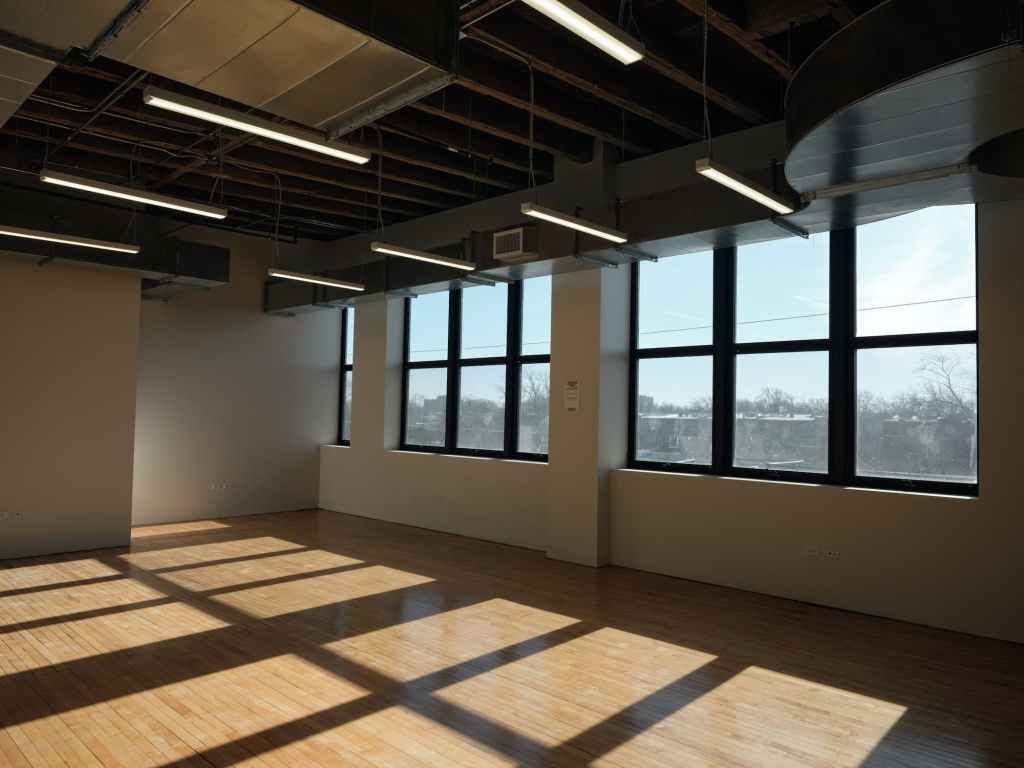
What makes The Land School especially significant for architects is its iterative model of development. Rather than delivering a “finished” building, Gates embraces a process-driven approach where programs evolve over time. Spaces will adapt to the needs of artists, residents, and collaborators, blurring boundaries between classroom, performance venue, archive, and civic forum.
This stands in stark contrast to the conventional architectural model of design-bid-build-deliver. Instead, The Land School offers what Gates calls “durational practice”—a way of working that values flexibility, experimentation, and long-term stewardship over fixed endpoints.
Funding a Vision of Cultural Infrastructure

Support for The Land School comes from a broad coalition of foundations, philanthropies, and civic organizations, including Bloomberg Philanthropies, Mellon Foundation, MacArthur Foundation, Pritzker Traubert Foundation, and the City of Chicago’s Neighborhood Opportunity Fund.
Such backing underscores the project’s role not only as an arts initiative but as a civic infrastructure investment—a recognition that culture, architecture, and land stewardship are deeply intertwined in shaping urban futures.
Why Architects Should Pay Attention
For architects and urbanists, The Land School is more than a local story. It raises urgent questions about the afterlives of buildings, the politics of preservation, and the role of design in communities historically marginalized by urban development.
Can architecture move beyond form-making to become a tool for cultural resilience? Can adaptive reuse center not just history, but justice, pedagogy, and imagination?
By treating architecture as both a physical and cultural project, Theaster Gates and Rebuild Foundation challenge designers to think beyond aesthetics toward the ethics of space-making itself.
A Living Laboratory for Spatial Futures
As The Land School opens its doors, it does so not as a finished project but as a living laboratory—a site where the lessons of the past meet the possibilities of the future. Its walls carry the memory of a Catholic school, the scars of vacancy, and now the imprint of artists, thinkers, and architects working collectively to imagine new spatial futures.
“Over the past twenty years,” Gates reflected, “it has become evident that the challenges, lessons, and opportunities we’ve encountered in this work form critical pedagogies and heuristics for how we can imagine and realize new spatial futures for our communities.”
For architects, that may be The Land School’s most radical proposition: that buildings are not endpoints but beginnings, not monuments but methods, not static objects but dynamic agents in the life of a city.